
Power

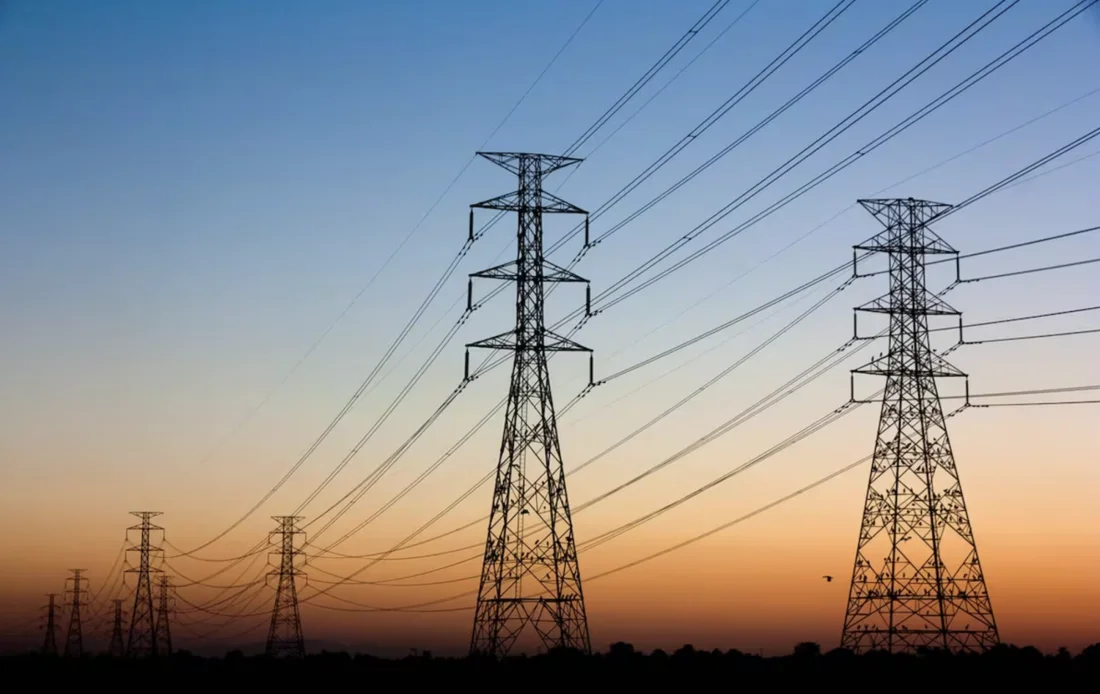
A regional plan to 2040 puts the net benefit of integrating Latin American and Caribbean power grids at $1 billion to $5 billion a year.
The Regional Electricity Interconnection Plan to 2040 evaluated 16 candidate interconnections and concluded that 12 belong in the optimal portfolio under the base scenario, while all 16 add value in at least one of the scenarios analyzed. The upper end of the benefit range assumes high electrification across the region, according to the Latin American and Caribbean Energy Organization (OLACDE), the intergovernmental energy body formerly known as OLADE, which put the portfolio's initial investment at about $3.5 billion when it presented the plan in Montevideo in June.
Whether those gains materialize will depend less on the modeling than on regulation, financing and cross-border governance, the issues that dominated a panel where representatives of governments, development banks, companies and international organizations reviewed the plan's results and the conditions needed to turn its corridors into projects.
OLACDE leads the plan alongside the Community of Latin American and Caribbean States (CELAC) and the European Commission, through its EUROCLIMA program, with implementation by GIZ, Germany's international development cooperation agency. The goal is to provide evidence to guide long-term infrastructure, regulatory and investment decisions by identifying strategic corridors and testing their performance against different demand, price and climate scenarios.
Twelve of 16 Links Hold Up in the Base Case
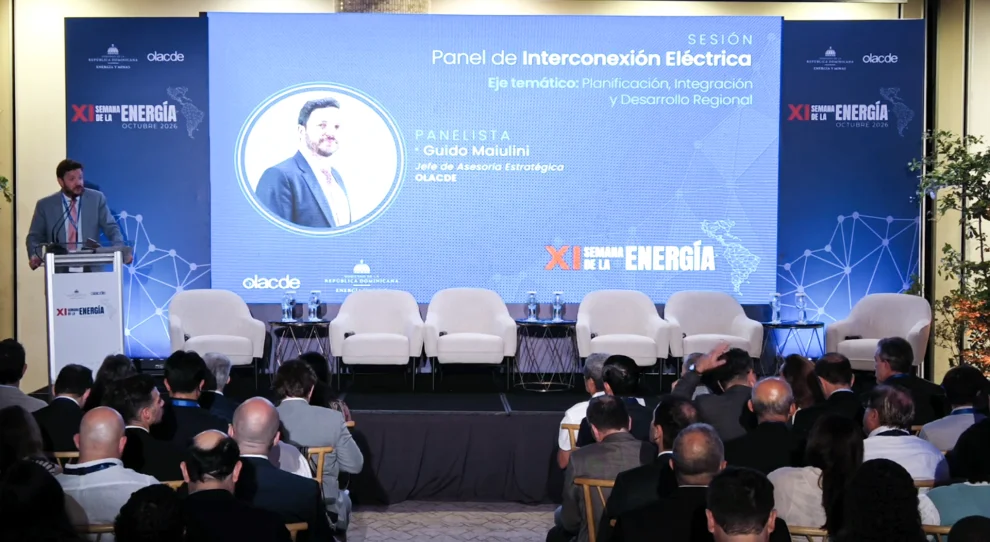
Opening the panel, Guido Maiulini, head of strategic advisory at OLACDE, stressed the strategic role of power integration as electrification advances. "Integration is not only a political value: it allows for more economical supply, greater energy security and lower emissions," he said, adding that countries need to keep working together and plan with a long-term view.
Myriam Ferrán, of the European Commission, said interconnections are essential to allow electricity to flow between countries. Their development, she added, requires coordinated planning of generation, transmission and grid connections, along with regulatory frameworks, financing and business participation that make the investments viable.
Rodrigo Moreno, director of ENLACE, the Latin American and Caribbean energy center hosted by the University of Chile, presented the study's main results. He said the team analyzed 16 potential interconnections across six scenarios, which accounted for changes in fuel prices, higher electrification and climate events such as El Niño and La Niña, the Pacific weather patterns that swing hydropower output across the region's hydro-dependent systems.
Twelve of the 16 interconnections form part of the optimal portfolio in the base scenario, Moreno said, while all 16 projects show value in at least one scenario when conditions change.
Panama–Colombia and Peru–Chile Among Strategic Corridors
The Panama–Colombia link would deepen integration between the Central American and South American power systems. Lisnely Valdés Bosquez, director of electricity at Panama's National Secretariat of Energy, highlighted its importance for strengthening regional resilience to climate events.
She cautioned, however, that the project still requires further work on governance and regulatory harmonization, conditions needed to ease coordination among the countries involved.
The Peru–Chile interconnection would connect the Andean power system with the Southern Cone and widen the scope for electricity trade between markets.
Identifying these corridors is part of a regional strategy to tap complementarities between power systems, improve supply security and reduce the cost of supplying energy.
Regulation and Financing Will Decide Execution
Beyond the technical results, a central theme of the session was the need to advance the institutional, regulatory and financial conditions required to build the interconnections the study identified.
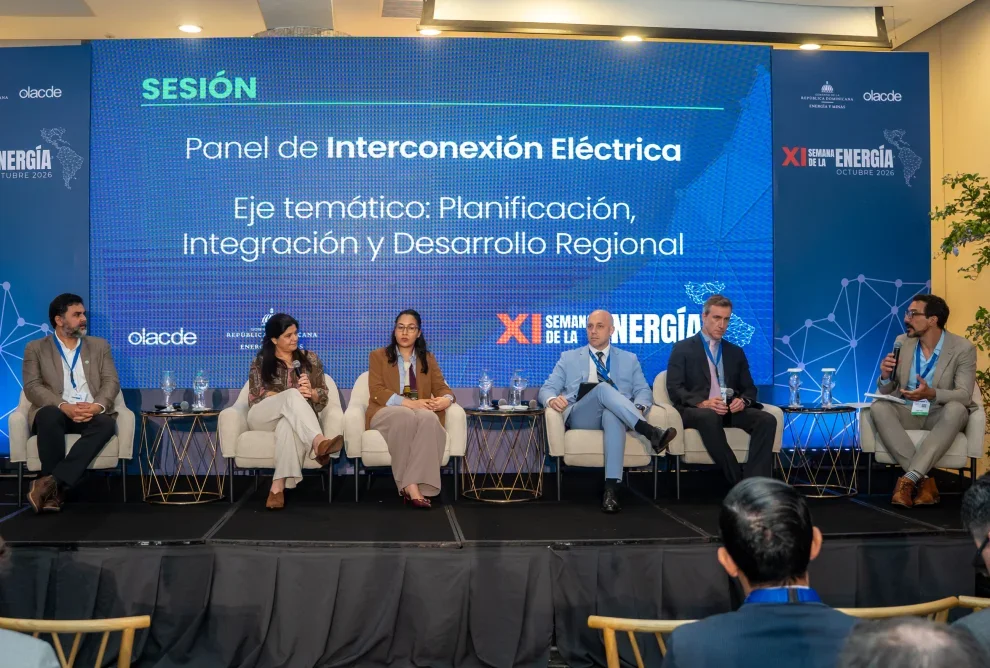
On the panel, moderated by Esteban Kiper of OLACDE, Arianna Spinelli, Uruguay's national director of energy, said that "energy integration is an instrument, not an end in itself." She pointed to Uruguay's experience with long-term planning to cut supply costs and said there is still room to make better use of existing interconnections.
Álvaro González, of ISA Energía Chile, said that "technical planning and regulatory planning have to move forward at the same time." He identified trust, governance and adaptability as the three conditions needed to drive the projects.
On financing, Blas Rozada, of FONPLATA, the development bank of Argentina, Bolivia, Brazil, Paraguay and Uruguay, focused on structuring initiatives that are viable technically, institutionally and economically. "Projects have to be technically sound, institutionally governable, economically sustainable and financially viable," he said.
Rozada also stressed the importance of combining public and private funds and allocating risks appropriately to get the investments built.