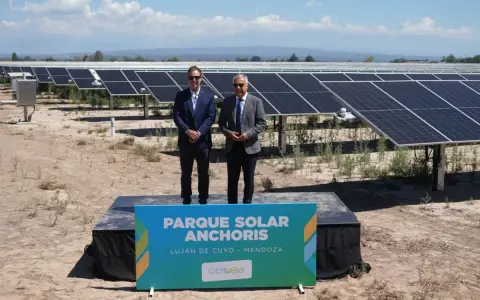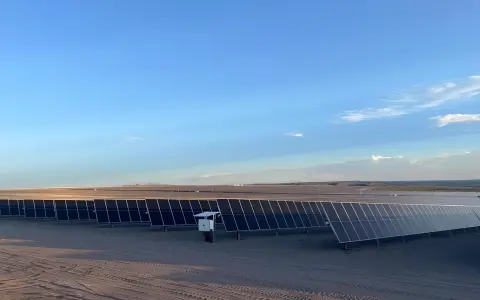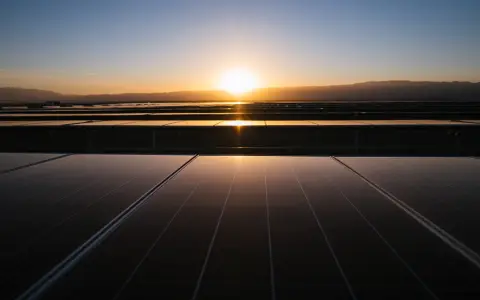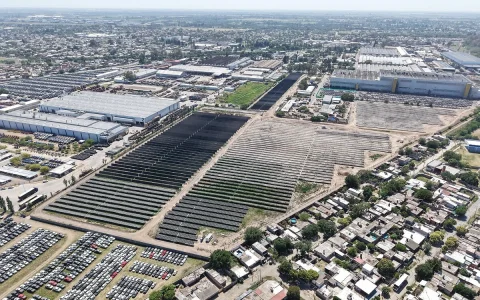
Mendoza: Genneia launches Anchoris, one of Argentina’s largest solar parks
The new development, located in Luján de Cuyo and carried out by Genneia, required an investment of $160 million and adds 180 MW of installed capacity.
The Argentine company will develop Diamond Tail Solar + Storage, a 220 MW solar park with a 440 MWh battery energy storage system aimed at powering 60,000 homes, interconnecting with the grid of Public Service Company of New Mexico and strengthening its renewable expansion in the U.S. market.
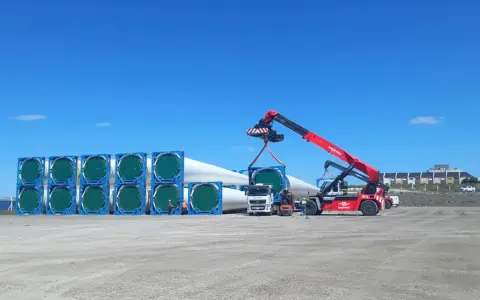
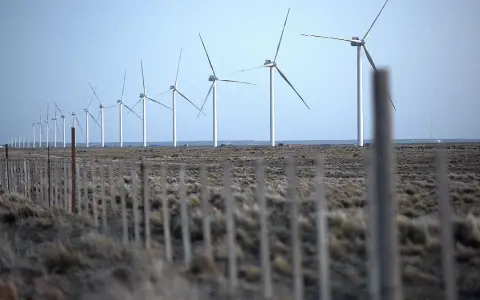
The successful operation by Loginter and Vestas at the Port of Bahía Blanca strengthens the terminal’s position as a strategic logistics hub for the arrival of wind turbines and components, supporting the expansion of renewable energy in Argentina.
Argentina’s renewable energy sector is entering a period of strong dynamism, with local and multinational players vying for leadership. Major international developers are playing an increasingly prominent and decisive role, aiming to reshape the country’s energy landscape.
It became one of the first 35 facilities, out of the Swiss multinational’s 170 worldwide, to obtain the certification.
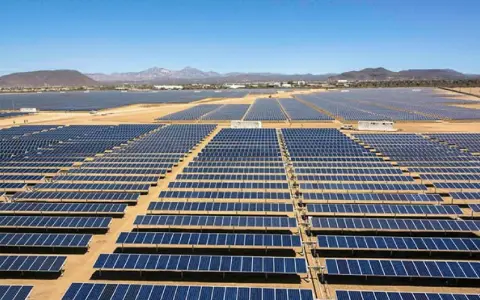
It began early operations with 140 MW online. The project involved a $180 million investment and features 400,000 solar panels. The electricity generated will be integrated into the Mercado a Término de Energía Renovable (MATER).
A detailed snapshot of the economic, environmental, social and governance performance of the energy holding company, which operates in Argentina, Ecuador, the United States and Chile and spans three capital-intensive businesses: hydrocarbons, cement and renewable energy.
Genneia expanded its presence in the green bond market and strengthened its access to long-term financing.
The plan aims to cut planet-warming net emissions by 90% by 2040 and ease the burden on industries regarding carbon credits.
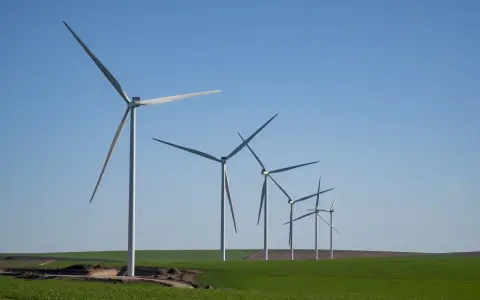
The wind turbine complex, operational since early 2024, integrates 25 turbines that generate a base power of 112 megawatts, while the solar addition incorporates 35,000 panels equipped with automatic tracking systems, raising the total capacity to 130 megawatts.
The report “Delivering on the UAE Consensus: Tracking progress toward tripling renewable energy capacity and doubling energy efficiency by 2030”, prepared by the International Renewable Energy Agency (IRENA), the Brazilian presidency of COP30, and the Global Renewables Alliance (GRA), warns current progress is not enough.