Power
360 Energy Solar has more than doubled its installed solar capacity in two years and reshaped its revenue mix around direct industrial offtake under Argentina's Renewable Energy Term Market (MATER), moving away from the regulated public-sector contracts that defined its earlier portfolio.
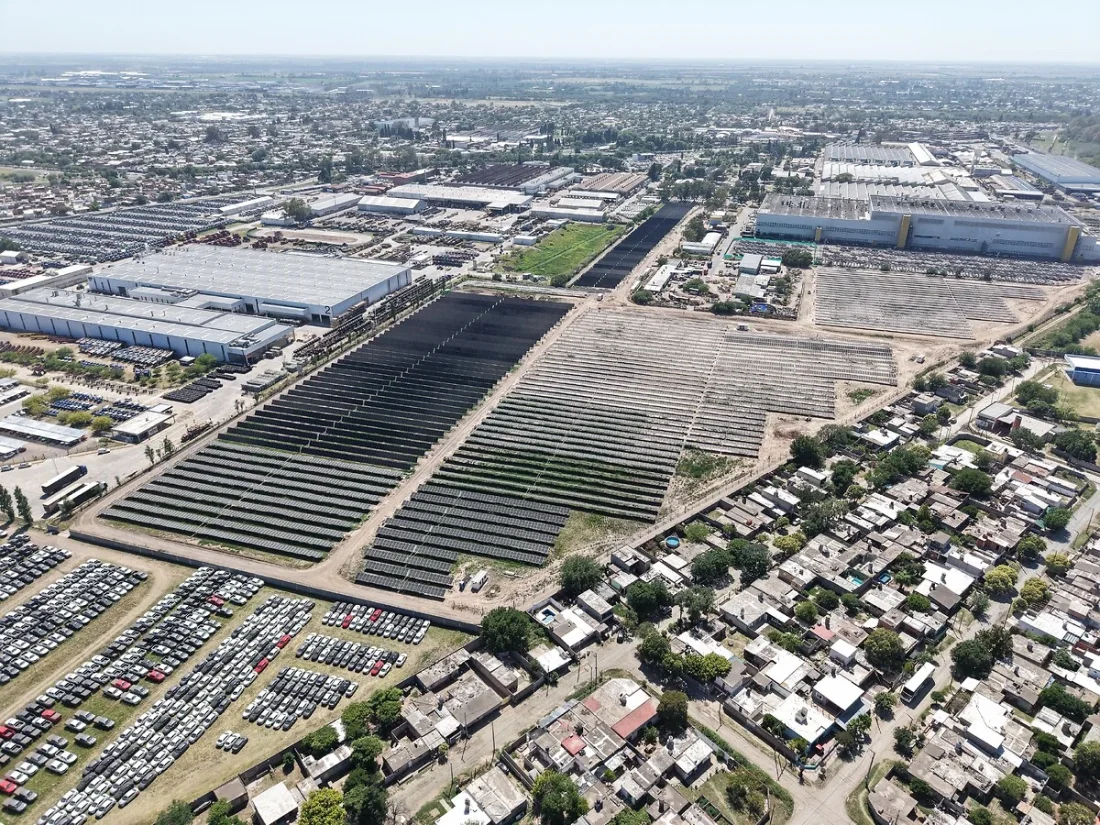
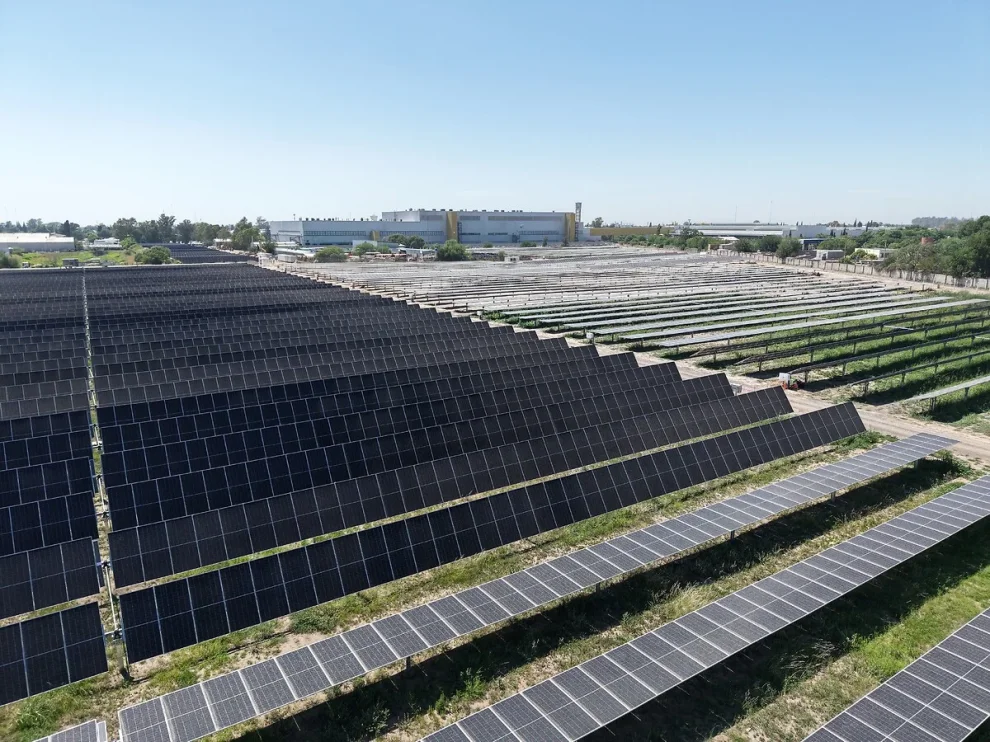
The Argentine family-controlled developer closed the quarter by commissioning an 8 MW solar park in Ferreyra — the industrial corridor bordering Córdoba city — that will supply Stellantis's manufacturing facility in the Córdoba Industrial Hub. The park features bifacial panels and tracker technology and forms part of a $100 million joint investment with Stellantis.
The pivot underway is structural. In 2023, 99% of 360 Energy's generation flowed through public-sector offtake — contracts with CAMMESA, Argentina's wholesale electricity market administrator, under the GENREN and RenovAr programs. By 2025, 57% of generation was going to private clients and 43% to public contracts. The revenue split is different: 60% still comes from CAMMESA and 40% from MATER, reflecting the higher tariffs embedded in regulated contracts versus direct-industrial deals.
Whether the pivot holds the pace set in 2023–2025 will depend on factors the company's current pipeline does not yet settle — among them the irradiance profile of expansion markets outside Argentina's northwest, industrial demand in those markets, and the regulatory treatment of MATER-equivalent regimes elsewhere.
The scale shift
In 2023, 360 Energy's own portfolio totaled about 119 MW of installed capacity, distributed across San Juan and Catamarca provinces — all under CAMMESA contracts through GENREN and the RenovAr rounds. The parks — Cañada Honda, Chimbera, Nonogasta, Fiambalá, Saujil and Tinogasta — generated an estimated 246 GWh per year.
The ramp began in January 2024 with the commercial commissioning of the first modules of the La Rioja Solar Complex. La Rioja III (30.1 MW) came online that month; La Rioja II (23.1 MW) followed in March; and La Rioja I, with 69.1 MWdc of installed capacity, received commercial authorization in August 2024. With the three parks operating, the complex covers 299 hectares and generates an estimated 300 GWh per year from 122 MW of installed capacity — almost matching the entire prior portfolio by itself.
By the close of 2024, 360 Energy reached 247 MW installed and a projected 555 GWh per year from seven owned parks. In 2025, Argentina's Secretariat of Energy authorized the 360Energy Colón park — 20 MW in the Buenos Aires province district of Colón, with an estimated annual output of 44,900 MWh — as a new wholesale market agent. Total capacity thus reached 267 MW.
La Rioja: the hinge between two business models
The La Rioja Solar Complex did more than change the company's scale. It changed its commercial model. All the energy from the complex is sold under MATER contracts — direct supply deals between generators and industrial consumers. That shift is what reshaped the revenue mix.
The private-client portfolio includes Danone, Coto, John Deere, Bridgestone, Dow, Acerbrag (part of Brazil's Votorantim group), and Smurfit Westrock.
Technical performance behind the commercial case
360 Energy's MATER pitch rests on a technical edge. The company reports a capacity factor of 28% — well above the 17% global solar average — with a performance ratio of 73%. The parks in Argentina's northwest generate more energy per installed megawatt than the global mean, reducing the levelized cost for industrial clients. Data from the International Renewable Energy Agency (IRENA) for the best sites in Jujuy and Salta — Argentina's high-irradiance northwestern provinces — places local photovoltaic levelized cost of energy (LCOE) at $38/MWh, the most competitive level in the Southern Cone.
"It is a source of pride to commission a new solar project within the framework of our joint plan with Stellantis. We are continuing our growth plan without interruption, both in the renewable solar supply segment and in state-of-the-art storage solutions, with projects in Argentina and other Latin American countries," said Federico Sbarbi Osuna, CEO of 360 Energy Solar.
The capital that financed the expansion
The company placed more than $120 million in green bonds during 2022, 2023 and 2024, with an A(arg) rating and a BV1(arg) green certification — Argentina's top environmental category. The most recent placement, with an initial $15 million target, raised $22.3 million on investor demand.
The shareholder structure has also shifted. Stellantis confirmed a 49.5% stake in 360 Energy Solar as part of its Dare Forward 2030 strategic plan, which targets carbon neutrality by 2038. The remaining 50.5% is held by the Ivanissevich Family Trust. Control remains Argentine.
"Our goal of offering clean, safe and affordable mobility forces us to rethink every part of our operations and the infrastructure that supports them. A sustainable electric-mobility ecosystem is not possible without available clean energy," said Emanuele Cappellano, Stellantis president for South America, when the investment was confirmed.
What is next
360 Energy has more than 15 solar and storage projects in development across South America, North America, and Europe — a project portfolio that could quadruple installed capacity over the next five years, according to the company.
In Argentina, new projects include the PSF Córdoba solar park, the PSF Palomar park under MATER, and the Colón and Arrecifes parks under the RenMDI tender. The firm also has projects in Brazil, Mexico, Spain, and Italy to supply Stellantis industrial facilities in those countries.
The park inaugurated in Córdoba this week is the first concrete demonstration that the model works beyond Argentina's northwest. The question now is whether 360 Energy can replicate the speed of the 2023–2025 cycle in markets where irradiance is lower and competition greater.