
MIDSTREAM

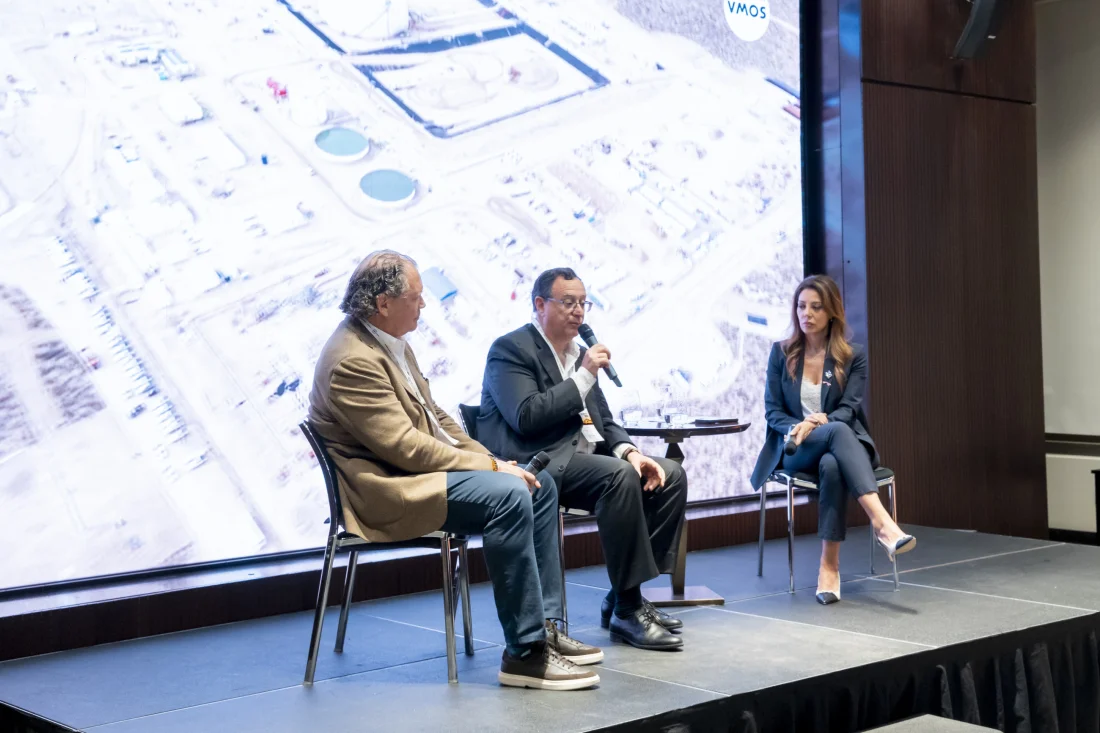
Gustavo Chaab, CEO of Vaca Muerta Oil Sur (VMOS), said the company expects to load the first oil tanker at Punta Colorada between late March and early April 2027. It is also already working on engineering to expand the pipeline before it starts operating. The first expansion would take capacity to 750,000 barrels per day (bbl/d) by 2029, and the company has already been asked to advance engineering to reach 1 million bbl/d. "They're already asking us for the expansion, and we haven't even started up yet," he said.
Chaab spoke on a panel devoted to the sea outlet for crude from the Neuquén Basin, Argentina's main hydrocarbon-producing region, at the Energy Sessions, the energy and capital markets event that Grupo SBS and Shale24 held at the Park Hyatt Buenos Aires.
The panel, moderated by Flavia Royón, national senator for Salta and chair of the Senate's Mining, Energy and Fuels Committee, brought together the two terminals that will ship that crude to the Atlantic: VMOS and Otamérica.
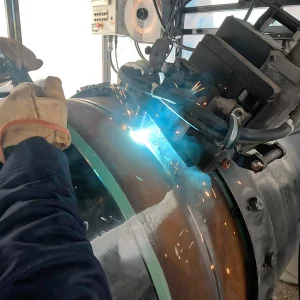
The project is 86% complete. The pumping station and the 437 kilometers of pipeline between Allen and Punta Colorada, both in Río Negro province, are being commissioned, with tests so far run without crude. The company expects to start injecting oil in January. Before the first shipment, the entire line must be filled with nearly 1.5 million barrels, which will remain as permanent linefill to enable transport.
At the marine works, the subsea pipeline has already been installed. What remains are the connections and the installation of the single-point mooring buoys, which are waiting at the port of San Antonio Este. At the terminal, electrical connections are being completed. "We are confident that we will be able to meet the date I just gave," Chaab said, with the project already in its final-detail stage.

The 550,000 bbl/d Will Be Available in September 2027
VMOS will start operating at 180,000 bbl/d and expects to reach 550,000 bbl/d, equivalent to 88,000 cubic meters per day, in the second half of 2027. That is the capacity it has already contracted and sold. The contractual date for reaching it is September, although the company expects to get there slightly earlier.
The project was made possible by an agreement among its partner oil companies which, according to Chaab, were used to competing and had to join forces to capture economies of scale.
According to the company's preliminary analyses, those 550,000 bbl/d were enough to keep pace with the basin's growth through 2031. But the new evacuation capacity accelerated producers' plans: with an export outlet secured, they are adding drilling rigs and output is growing faster. As a result, the pipeline would be running at its limit by around 2029. "2031 looks like it's going to be 2029," Chaab said.
That is why the company is already studying a first expansion to 750,000 bbl/d, which could be done "fairly quickly." "These days, quickly means a year and a half to two years," he explained. The next step would be 1 million bbl/d.
The idea, he explained, is to keep expanding the pipeline until production from Vaca Muerta, one of the world's largest shale plays, reaches its ceiling. "We are going to be operating and expanding continuously," Chaab said.


Punta Colorada Will Load 2 Million-Barrel Supertankers Bound for Asia
Punta Colorada's main advantage is water depth close to shore. The first single-point mooring buoy will sit 5 kilometers offshore and the second 8 kilometers out, with a draft of 35 to 40 meters. That depth allows the terminal to handle very large crude carriers (VLCCs), with capacity for 2 million barrels, the vessels that supply large Asian consumers. The smallest ships the terminal will be able to load are Suezmax tankers, which carry 1 million barrels.
That is why Chaab identified Asia as the main market that VMOS opens up for Argentine crude. "When I started with VMOS, I said: I'm going to have to compete. Now I say: I'm going to have to complement," he said, referring to Puerto Rosales, the terminal Otamérica operates in Punta Alta, near Bahía Blanca.
In his view, that terminal will remain connected to the country's refinery network and to exports to closer destinations such as Europe and the Americas, while VMOS will focus on distant markets it can supply more competitively. "We will most likely have to expand both systems," he said.
VMOS Peaked at 2,500 Workers, 80% From Río Negro
The entire project runs through Río Negro province, from the pipeline head to Punta Colorada, so it falls under the province's Compre Rionegrino and Trabajo Rionegrino laws on local suppliers and local hiring. At peak hiring, VMOS had 2,500 people working, 2,100 of them at Punta Colorada. Eighty percent are from Río Negro. According to Chaab, demand for workers already exceeds supply along the Atlantic coast, so the company is bringing in staff from the province's interior.
VMOS and its subcontractors signed 509 contracts with between 250 and 350 local companies, providing services that range from building a pumping station to supplying office stationery. Many of those companies, he added, were created to supply VMOS. By mid-2026, the project had injected nearly $500 million into the provincial economy.
For Chaab, the 2,100 people trained on the project will form the workforce base for the province's next major projects.