
Power

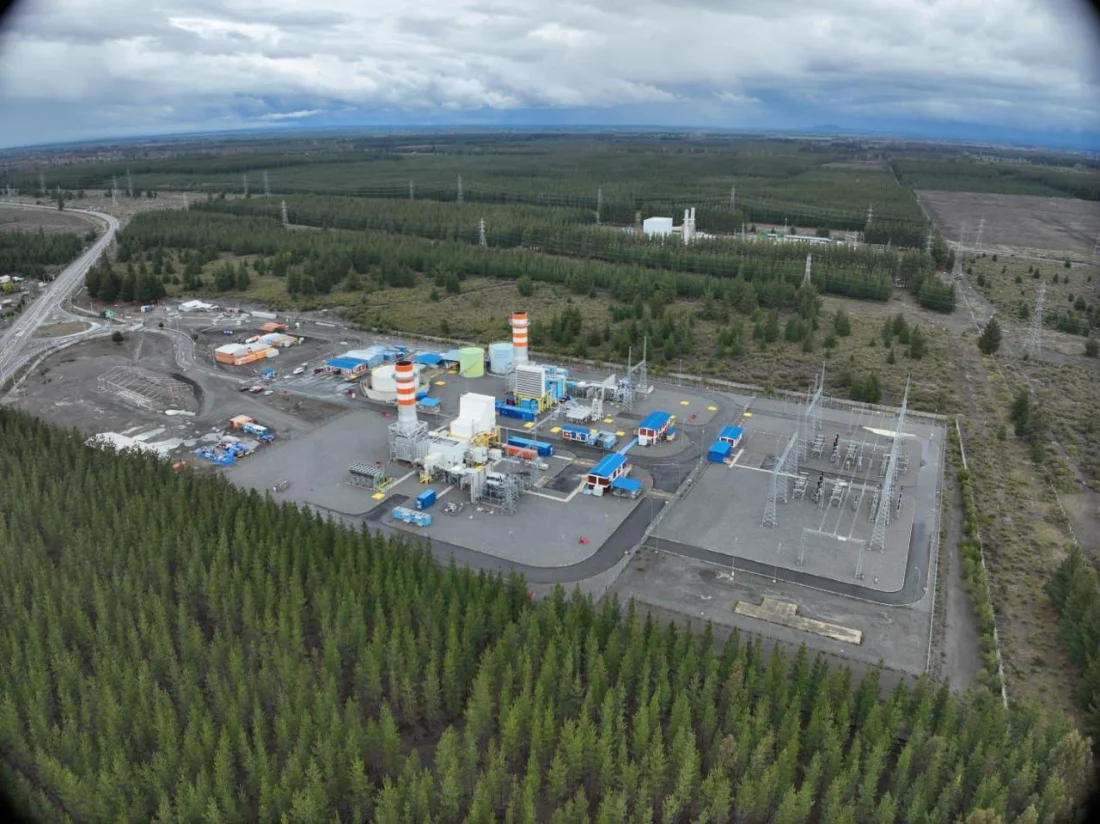
Trafigura has bought its way into Chile's power sector, anchoring firm new demand for Vaca Muerta gas on the far side of the Andes.
Trafigura, the employee-owned commodities trading house registered in Singapore and run from Geneva, and Generadora Metropolitana, one of Chile's largest power generators, jointly acquired the Los Guindos plant in Cabrero, in Chile's Biobío region, on July 1.
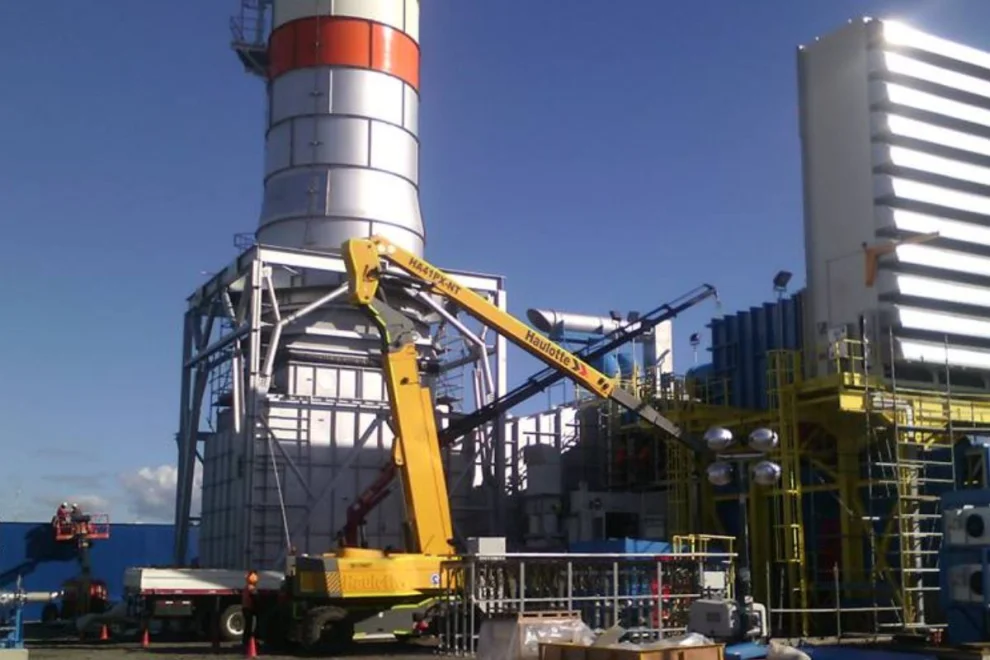
The 273-MW plant runs on diesel across two turbines and will begin converting to natural gas this year, with Generadora Metropolitana taking full operational control. Neither the purchase price nor the seller was disclosed.
The significance is not the change of hands but the location. Cabrero sits in the basin that receives Vaca Muerta gas through the Gasoducto del Pacífico, the cross-border pipeline that links the Loma La Lata area in Neuquén to Concepción and routinely moves around 400,000 cubic meters per day (m³/d).
Converting 273 MW of diesel capacity to gas in that municipality is the equivalent of installing firm demand on the very stream Neuquén's output has been filling. Whether that demand fully materializes depends on a conversion that has not yet begun, but the geography already fixes the logic of the move.

A firm consumer on the Pacific side
The corridor is already in use. Pampa Energía, a diversified Argentine energy company, has shipped 183,000 m³/d of firm gas from its Sierra Chata block in Neuquén along the Gasoducto del Pacífico to Biobío since 2025, on top of the roughly one million m³/d it already places in Santiago through the GasAndes pipeline.
The link's sensitivity was on display on April 1, 2026, when Chilean authorities closed the border valve after detecting off-spec quality parameters, leaving industry in Biobío and Ñuble without supply for several days until the gas composition was corrected.
Against that backdrop, a flexible 273-MW plant switching to gas is not a detail. It is an additional customer at the Chilean end of a pipeline that until now carried mostly industrial load. The conversion will also raise the plant's maximum output, the companies said, so the volume to be contracted could grow beyond its diesel-era configuration.

From financing the molecule to anchoring its demand
The buyer already knows that molecule from the wellhead. In Argentina, Trafigura's local arm finances production in Neuquén, holds stakes in upstream companies and has moved deep into gas logistics. In the June 2026 tender for the Escobar regasification terminal near Buenos Aires, the trader took 100% of the regasified LNG left over from the first two rounds — close to 8.2 million cubic meters per day (MMm³/d) for June and 8.7 MMm³/d for July.
The face of the Chilean announcement was not a Santiago executive but Gerardo Zmijak, Trafigura's commercial director in Argentina. "Chile represents a strategic market for Trafigura in Latin America, and this deal marks our entry into the country's power sector with a long-term commitment," he said. The sequence traces an end-to-end integration: capital in the field, placement of imported gas in the Argentine market and, now, a generation asset in the Chilean region linked by pipeline to that production.
According to Shale24, Trafigura, present in Chile for years, pursued the deal to add flexibility and backup to the Chilean grid alongside Generadora Metropolitana, viewing the country as a stable, reliable market.
People close to the talks said the move also opens the door to expanded activity in Argentina's natural gas market, where Trafigura has traded gas from every Argentine basin since 2018, along with imported Bolivian gas and LNG.
A recent license from ANEEL, Brazil's electricity regulator, to trade wholesale power there extends the electricity push to a third country. Registered in Singapore, run from Geneva and owned by its employees, Trafigura counts Los Guindos as its first power-generation asset in Chile.
Who runs it, and who stands behind it
The operating face is Generadora Metropolitana, owned by local group AME and France's state utility EDF (Électricité de France), present in Chile since 2014. The firm is no newcomer to Cabrero: it already runs the Santa Lidia plant there and has been carrying out the same diesel-to-gas switch at its Los Vientos plant, so Los Guindos consolidates a flexible thermal cluster in the south, conceived as firm backup as renewables advance. "Converting the two units to natural gas will let us add capacity with lower emissions," said Diego Hollweck, the company's general manager.
The asset has history. Los Guindos passed in 2016 to General Electric Financial Services, which took 75% alongside builder Inprolec, and had already been slated to complete a gas-fired combined cycle. The backdrop is a binational agenda that accelerated in June 2026, when Neuquén and Biobío signed the Pichachén Integration Corridor joint declaration to strengthen the oil and gas pipelines running from the Neuquén field.
Analysts say gas integration between Argentina and Chile has gained unusual urgency from volatile global prices, pressure on Argentina's foreign reserves and Chile's need to diversify its supply.
The conversion has not started, and the purchase price is unknown. But the geography already sets the direction: an operator that carries the Vaca Muerta molecule from the well to the terminal now has, in Biobío, a consumer of its own to feed.