
Energy policy

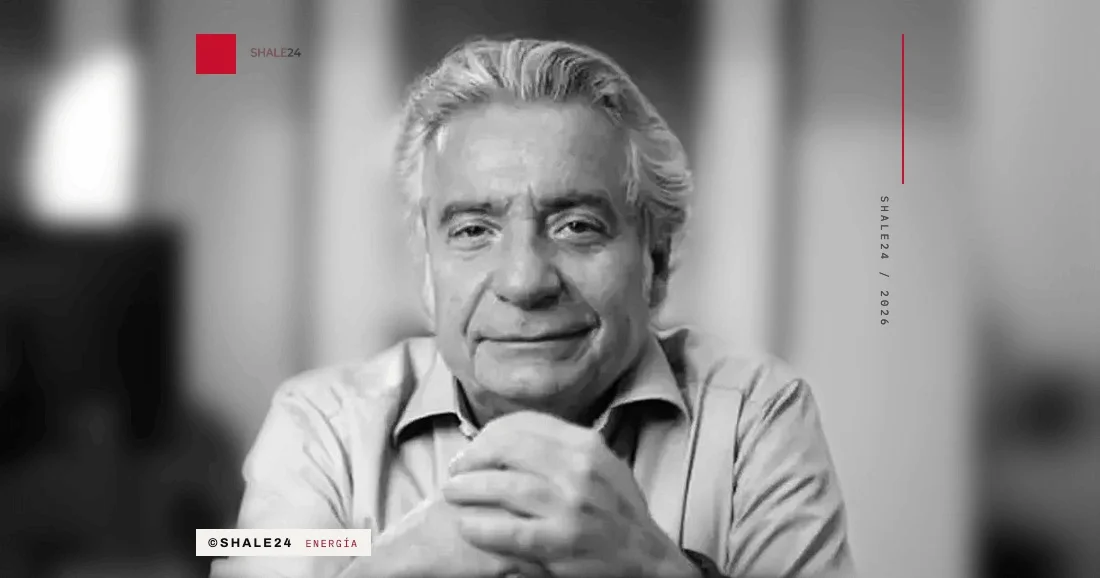
Adriano Pires, a veteran consultant and former regulator, has emerged as the energy policy voice of Flavio Bolsonaro's campaign ahead of Brazil's Oct. 25 runoff.
Energy policy in Brazil almost always turns on two questions: how much of the market Petrobras, Brazil's state energy company, should occupy, and how it sets its prices. The debate has outlasted governments of opposite political stripes and reopens at every election.
Sen Flavio Bolsonaro, the son of former President Jair Bolsonaro, reached the runoff after taking roughly 47% of valid votes in the Oct. 4 first round, against about 45% for President Luiz Inacio Lula da Silva.
None of what follows is policy yet. The positions are drawn from Pires' own record and from the campaign's proposals, and whether they are implemented depends on the runoff and, in the case of fracking, on a pending court ruling. Pires is no newcomer to the debate. He holds an economics degree from the Federal University of Rio de Janeiro (1980), a master's in energy planning from the university's COPPE engineering institute (1983) and a doctorate in industrial economics from the University of Paris XIII (1987).
He is founding partner and director of the Brazilian Infrastructure Center (CBIE), the consultancy through which he advises companies and industry associations, and earlier worked at the National Agency of Petroleum, Natural Gas and Biofuels (ANP), the oil regulator, as adviser to the director general and as superintendent for supply and for imports and exports of oil, refined products and natural gas. In 2022, then-President Jair Bolsonaro nominated him to run Petrobras; Pires withdrew, saying he could not reconcile the post with his consulting work.
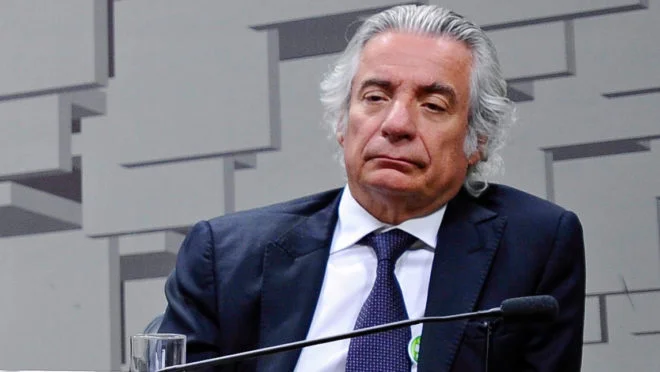
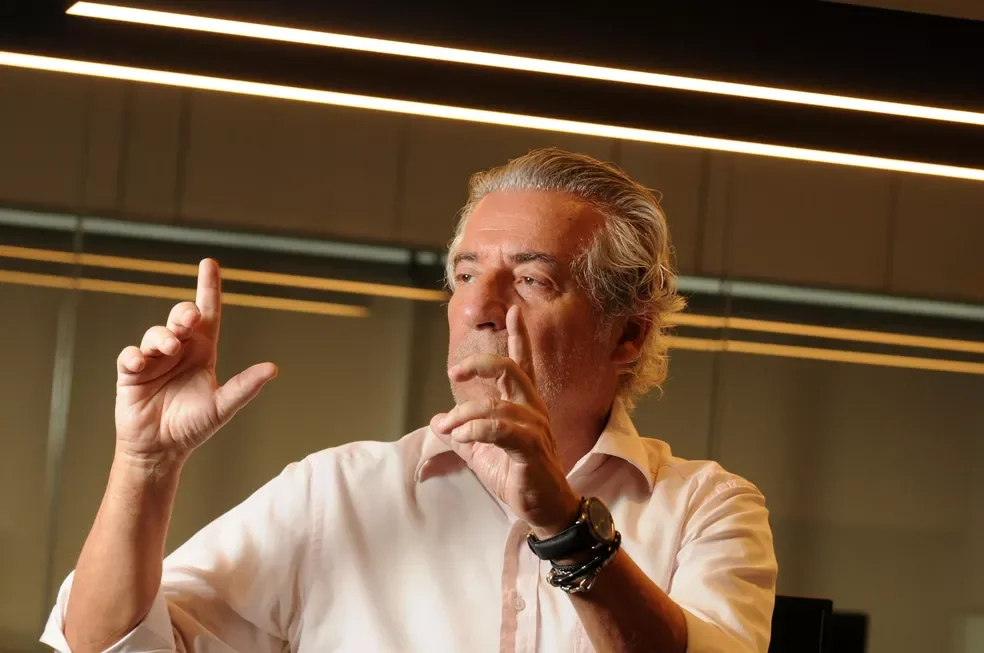
His role in the campaign became known on Aug. 14, at a lunch where, as Shale24 reported, he set out the candidate's technical vision to executives from PRIO, Shell, Equinor, BP, TotalEnergies, Perenco and Eneva, a mix of international majors and Brazil-focused producers. The meeting was arranged by Daniella Marques, a former president of state bank Caixa Econômica Federal and an economic adviser to Bolsonaro, and followed the presentation of the campaign's energy plan.
Market Pricing and a More Autonomous Petrobras
Pires is a long-standing advocate of import parity pricing (PPI), the rule that tied Petrobras' domestic fuel prices to international values and was changed in 2023. His argument is that selling below international prices discourages private importers and ends up compromising supply. He does not propose full pass-through, however: he calls for a fuel stabilization fund that would absorb crude price volatility without passing it on in full to consumers and without forcing the state company to bear the cost.
On the company itself, he has raised the possibility of a capitalization similar to that of Eletrobras, the power utility privatized through a 2022 share offering, to give Petrobras greater autonomy. That mechanism does not appear explicitly in the campaign platform. He has also said previous administrations interfered in the company, and has argued for faster environmental licensing in the Equatorial Margin, the offshore exploration frontier along Brazil's northern coast around which much of the candidate's proposal revolves.
Pires has also taken a position on timing. On Sept. 30, the Ministry of Mines and Energy announced a schedule of power auctions for 2027–2029, and the economist responded publicly by calling for new regulatory measures or tenders in the sector to be postponed until the election is decided. He has also criticized the exclusion of natural gas from incentive regimes for data centers and argued that thermal plants and nuclear power should be treated as backup sources.
Gas Release, Fracking and the Vaca Muerta Case Study
In natural gas, his flagship proposal is gas release, the scheduled release of Petrobras volumes to the market. In 2024 he suggested capping each player's share at 10–20%, in a market where the state company accounts for 70–90% of domestic production.
It is the same market Argentine gas exporters are targeting with a proposed firm supply module of 10 million cubic meters per day (MMm³/d), so the outcome is being watched closely on the Argentine side of the border.
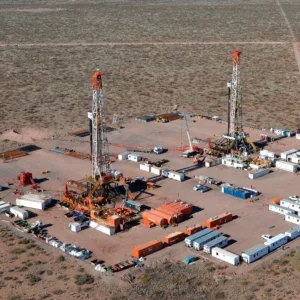
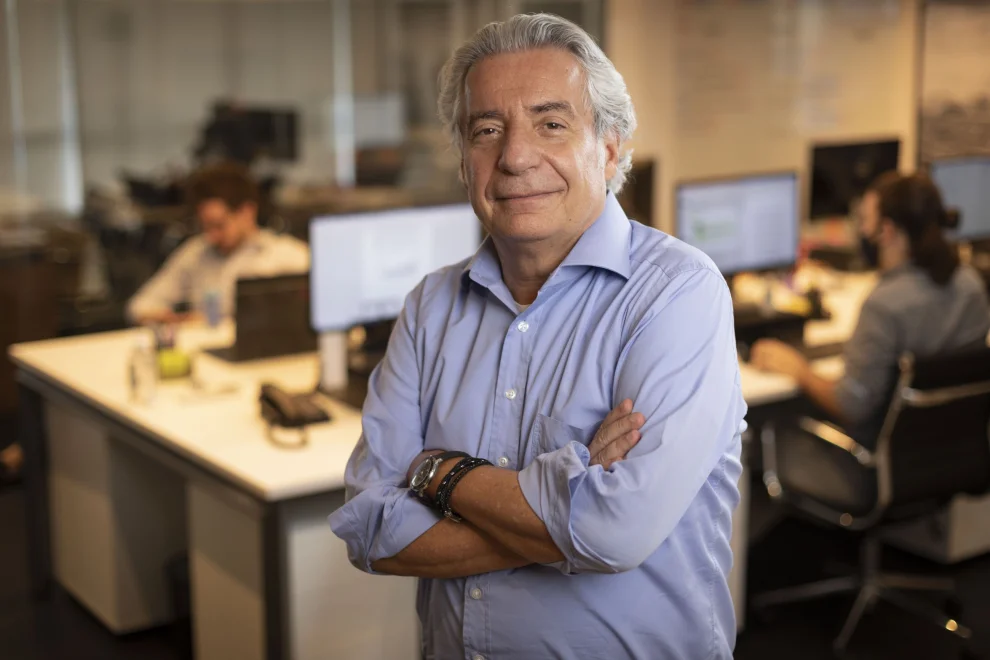
That opening does not exclude the state. Pires supported the Brasduto scheme, a public financing mechanism for the gas pipeline network, and the installation of gas-fired power plants in regions without pipeline infrastructure, a measure written into the Eletrobras privatization law. The underlying principle is one he repeats: the state should incentivize the initial investment so that private capital follows. The same logic appears in the proposal to connect regions that are currently isolated from the gas grid.
The other front is unconventional resources. In December 2025, Pires took part in the public hearing on hydraulic fracturing held by the Superior Court of Justice (STJ), one of Brazil's top courts, and has argued that continued delay in allowing the technique carries a cost for the country. He later said shale gas requires priority treatment within the sector.
His case study is Vaca Muerta, the shale play in Argentina's Neuquen Basin. He cites more than 1,600 unconventional wells drilled in Argentina through 2023 and the fact that the technology now accounts for most new wells. The approach has been folded into the campaign's proposals, which link fracking to energy security, more gas supply and lower costs, pending the court's ruling. Brazil is not the only country in the region looking to Neuquen: Colombia has reopened the race for its first fracked well.
The Former Minister, the Lawyer and a Return to Concessions
Pires does not work alone. He coordinates the agenda with two other figures on the team, each with a different profile.
The first is Adolfo Sachsida, an economist and lawyer and a career official since 1997 at the Institute for Applied Economic Research (Ipea), a federal think tank. He served as secretary of economic policy and then as minister of mines and energy from May to December 2022, when he led the final stage of the Eletrobras capitalization and supported studies on privatizing Petrobras. He now coordinates the economic side of the project.
The second is Alexandre Chequer, a partner at law firm Mayer Brown and global head of its energy practice, based in Houston and Rio de Janeiro. He advised on transactions including the acquisition of 90% of gas pipeline operator TAG by France's Engie and Canadian pension fund CDPQ, for $8.6 billion, and the divestment of gas distributors in Brazil's Northeast. He joined the team as a specialist in petroleum contracting and capitalization processes, the two subjects on which the most ambitious part of the platform rests.
That part dates to June, when Bolsonaro proposed replacing the production-sharing regime with concessions in acreage auctions, with a focus on the Equatorial Margin. The scheme revives the model of the 1997 Petroleum Law, which governed until production sharing was introduced in 2010 for the pre-salt, the deepwater province that holds Brazil's largest fields. The legal groundwork and model contracts for that law were drafted in the late 1990s by lawyers at Tauil & Chequer, the Brazilian firm Chequer co-founded, which is now associated with Mayer Brown.
Adriano Pires · Brazil · Flavio Bolsonaro · Fracking · Petrobras · Vaca Muerta
<figure class="image"><img loading="lazy" class="cst_img" src="https://statics.shale24.com/2026/10/crop/6ac51ea001396__990x990.webp" data-src-origin="https://statics.shale24.com/2026/10/6ac51ea001396.jpg" alt="Pires supported the Brasduto scheme, a public financing mechanism for the gas pipeline network, and gas-fired power plants in regions without pipeline infrastructure"><figcaption>Pires supported the Brasduto scheme, a public financing mechanism for the gas pipeline network, and gas-fired power plants in regions without pipeline infrastructure</figcaption></figure> <figure class="image"><img loading="lazy" class="cst_img" src="https://statics.shale24.com/2026/10/crop/6ac383a22f5c9__990x990.webp" alt="Flavio Bolsonaro. Pires' role in the campaign became known on Aug. 14, at a lunch with executives from PRIO, Shell, Equinor, BP, TotalEnergies, Perenco and Eneva"><figcaption>Flavio Bolsonaro. Pires' role in the campaign became known on Aug. 14, at a lunch with executives from PRIO, Shell, Equinor, BP, TotalEnergies, Perenco and Eneva</figcaption></figure>