
World’s largest mining company


In a move that has shaken international markets, mining giants Glencore and Rio Tinto have confirmed that they have resumed preliminary talks over a potential merger or business combination.
The news, confirmed by both companies in official statements, could lead to the creation of the world’s largest mining company, with a combined market value exceeding $200 billion, surpassing even BHP.
If completed, the deal would not only consolidate dominance in key metals such as copper — essential for the energy transition — but would also have significant implications in regions such as Argentina, where both firms are developing large-scale projects.
This marks the second time in just over a year that the two companies have explored a combination. Initial discussions in 2024 stalled due to disagreements over terms and valuations, but the current environment — shaped by rising demand for critical minerals and mounting competitive pressures — appears to have revived interest.
Under the U.K. Takeover Code, Rio Tinto has until Feb. 5, 2026, to announce a firm offer or walk away from the transaction entirely. Glencore has stressed that there is no certainty the talks will progress, but the announcement alone has sparked intense speculation across the sector.
The strategic context: energy transition and critical minerals
A potential merger between Switzerland-based Glencore, which specializes in commodities trading and diversified mining, and Rio Tinto, the Anglo-Australian heavyweight focused on iron ore, aluminum and emerging metals, would follow a clear strategic rationale.
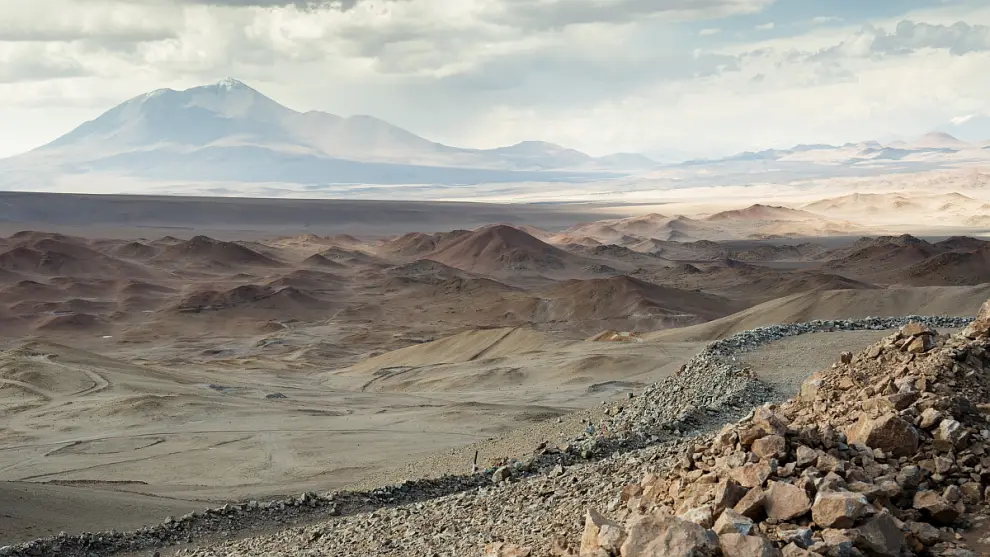
Together, the companies would control a significant share of global copper production, a metal whose demand is expected to surge in coming years due to global electrification, electric vehicles and renewable infrastructure. Analysts estimate the combined entity could produce more than 2 million metric tons of copper per year, positioning it as a market “superpower” and enhancing resilience to price volatility.
Beyond copper, the merger would diversify the portfolio. Glencore would contribute expertise in zinc, nickel and coal, while Rio Tinto would add leadership in lithium and aluminum. This would reduce Rio Tinto’s reliance on iron ore, whose demand has been volatile amid China’s economic slowdown.
In addition, operational synergies — such as integrating trading and logistics networks — could generate billions of dollars in annual savings, according to industry experts.
Market reaction: dilution concerns
The announcement was not greeted with enthusiasm by markets. Rio Tinto shares fell as much as 7% in Australia and London, reflecting investor concerns about value dilution or the possibility of paying a high premium for Glencore. Glencore shares posted smaller declines of about 2% to 3%.
The combined valuation is estimated at roughly $207 billion, but analysts at Reuters and Bloomberg warn that antitrust regulators in Europe, Australia and China are likely to scrutinize the deal closely due to its potential impact on global competition.
In Australia, where Rio Tinto has deep roots, the impact could extend to the coal sector and employment. Local media have linked the merger to potential extensions of operations in the Hunter Valley, although nothing has been confirmed.
Projects in Argentina: focus on copper and lithium
Argentina, with its vast potential in critical minerals, emerges as a key setting in this story. Both companies have invested heavily in the country, taking advantage of the Large Investment Incentive Regime (RIGI), introduced by President Javier Milei’s government to attract foreign capital to mining.
Glencore in Argentina
The Swiss firm is one of the most active players in the country’s copper sector. Its flagship project is El Pachón, a copper and molybdenum deposit in San Juan province, with potential annual output of 200,000 metric tons of copper once operational. Glencore has applied for incentives under the RIGI totaling an estimated $13 billion for this and other projects, aiming to reach 1 million tons of copper per year over the next decade.
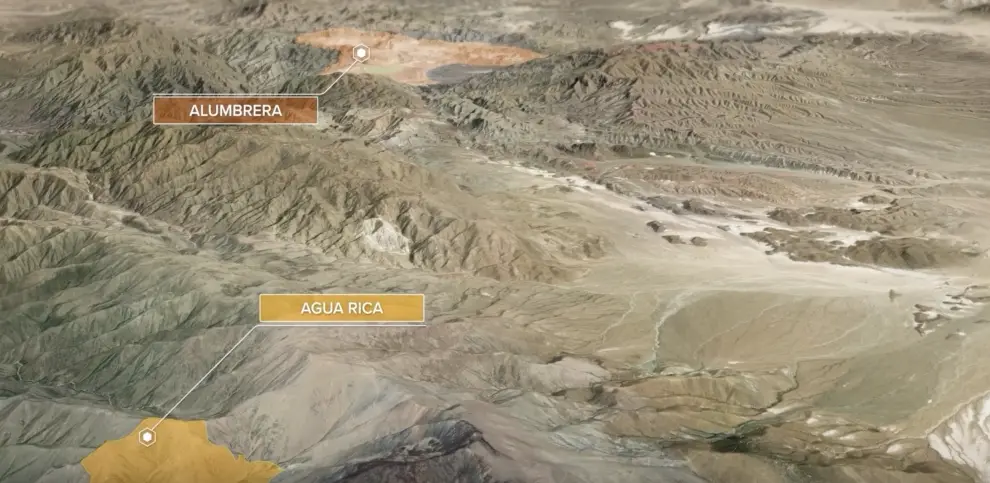
Glencore is also involved in the MARA project (Minera Agua Rica Alumbrera), a joint venture with Pan American Silver and Newmont, in which it holds a significant stake of about 44%. The project combines the Agua Rica deposit with the infrastructure of the Alumbrera mine in Catamarca province and is scheduled to restart production in 2028, with expected annual output of 75,000 tons of copper, 317,000 ounces of gold and 1,000 tons of molybdenum. Glencore also supports local initiatives, such as the Fondo Impulso Emprendedor program in Calingasta, which finances community projects.
These developments position Argentina as a copper hub for Glencore, aligned with global demand trends. However, the projects face environmental and regulatory challenges, with local communities demanding higher sustainability standards.
Rio Tinto in Argentina
Rio Tinto, for its part, is focused on lithium, another pivotal mineral for the energy transition. Its main project is Rincón, in Salta province, a lithium brine deposit in the heart of the so-called “lithium triangle.”
The company has approved a $2.5 billion investment to expand capacity to 60,000 tons per year of lithium carbonate, using direct lithium extraction technologies designed to minimize environmental impact.
Rincón became the first mining project approved under the RIGI in May 2025 and recently received environmental approval for the extraction phase. Rio Tinto has reiterated its commitment to Argentina, highlighting in regional meetings that the project will generate jobs and technology transfers.
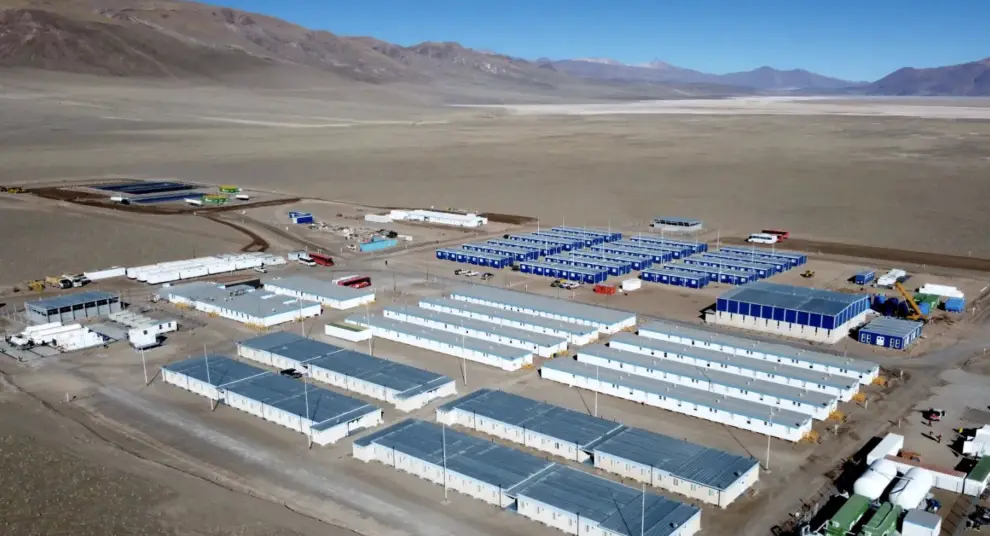
Against the backdrop of joint progress with BHP in other copper projects, Rio Tinto’s footprint in Argentina could be strengthened by a merger, potentially attracting additional investment to the country.
For Argentina, a successful merger could accelerate these projects, inject billions of dollars into the economy and position the country as a key supplier of minerals critical to global decarbonization.