
Mining

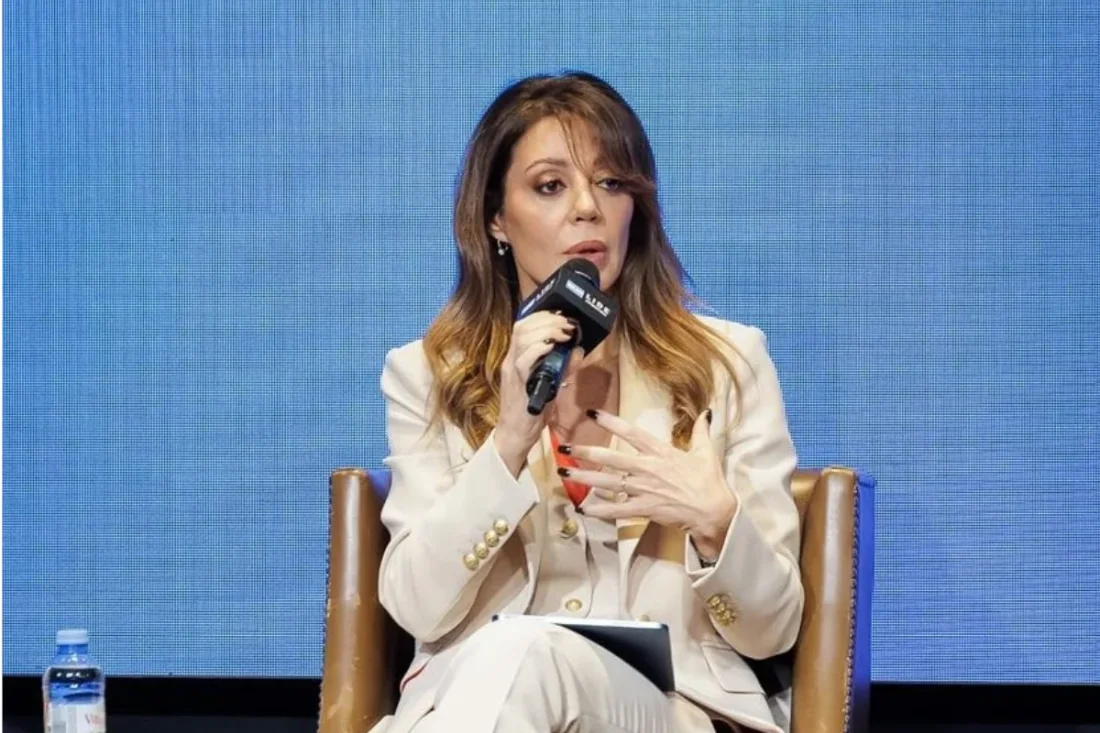
Argentine Senator Flavia Royón, who represents Salta province and chairs the Senate Committee on Mining, Energy and Fuels, described energy and mining as Argentina’s big export bets and warned that those sectors alone are not enough to sustain the country’s development. That, she argued, requires “a broad view of development,” coordinated value-chain policies and political agreements that outlast a single term of government.
Royón spoke at an event organized by the Group of Business Leaders (LIDE), where she reviewed the contribution of Vaca Muerta, one of the world’s largest shale plays, to the macroeconomy, the challenges of local-content requirements, the situation of the mining and energy provinces and the scope of Argentina’s Large Investment Incentive Regime (RIGI).
Her starting point was unconventional oil and gas. “Vaca Muerta today, with the surplus and the dollars it is bringing in, is becoming a structural solution to a structural problem Argentina had: a shortage of dollars,” she said.
For the senator, that dependence also serves as “a warning”: the country has to keep diversifying its export mix in case prices fall. “That is where mining emerges as a third dollar-generating turbine,” she said, and asked for an understanding of the sector’s timelines: “It is a slow-maturing sector, the projects are large-scale, so they take a long time to build.”
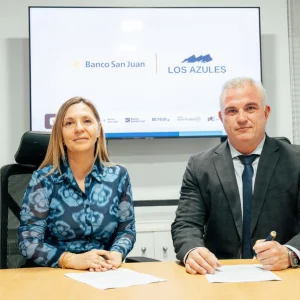
Copper projects, she noted, take three to four years to build. In San Juan province, McEwen Copper pushed back to mid-2027 the final investment decision (FID) on Los Azules, its copper project in the province.
“There is an over-expectation of demanding results right away,” she said, and expanded on the point: “On their own, these two sectors are not enough. Argentina needs all sectors: agriculture, industry, tourism, commerce.” Without “a public policy of building value chains coordinated with these sectors,” she stressed, the contribution of energy and mining will not be enough.
Local-Content “Rings” Need Clearer Governance, Royón Says
One focus of the debate was local content and the logic of “rings”: a first ring close to the project, a second tied to the province, a third to the region and, finally, the country as a whole.
Royón said these schemes “originate from a need for there to be real development, reflected in benefits for society or for the population near the project,” and that they serve as a tool for provincial governments and for companies that look after their corporate reputation and social license. She also pointed to their cost: “They can be an umbrella for a loss of competitiveness and also for forcing unclear practices.”
The senator proposed moving toward “a much clearer governance scheme,” with forward-looking training plans so that local residents are the first to access the benefits. As a precedent, she cited the Mesa del Litio, a lithium roundtable that promoted a regional approach among the lithium provinces and companies.
Royón also warned about the expectations raised around employment. She questioned project announcements that promise, for example, “2 million quality jobs,” and cautioned that if those promises are not kept, “the bill may come due.” She added that she is not sure such messages help the sector or politics.
Salta Needs Schools and Healthcare in the Puna Before Mining Revenue Arrives
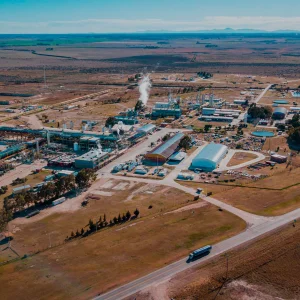
Royón explained that Salta is not facing the mass migration that Neuquén province, home to Vaca Muerta, is experiencing, but it is facing “a mining boom that demands a significant development and infrastructure policy”: more schools and more healthcare in the Puna, the high-altitude Andean plateau in the west of the province. These are public works the province has to build before royalties start to flow.
“You are financially mismatched. You will have the royalties in the future, when they start generating those dollars, which will be further down the road, and you have to start building the infrastructure today,” she said. She added the demographic factor: relocating families creates demand for everything from supermarkets to school places.
Royón Defended the RIGI and Called for Tax, Pension and Revenue-Sharing Reforms to Go With It
Asked whether the RIGI is enough to develop energy and mining, Royón replied: “Without the RIGI there would be no LNG, there would be no copper projects in Argentina, and I believe that got things moving.”
The legislator argued that the regime must be accompanied by tax, revenue-sharing and pension reform. Pension reform, she said, is the key to unlocking the debate over coparticipación, the system through which federal tax revenue is shared with the provinces, along with treatment that is “sustainable over time.”
She also urged against rushing targets. “We should not be overly ambitious, given that this will not be solved in 2 or 3 years,” she said, adding: “We need a roadmap for the next 10 years, but with a clear sense of direction.”
Along those lines, she listed the sector agenda ahead of Congress: the seeds law, the debate on the forests law, the regulatory framework for the carbon market, which the Senate approved on October 29 and which now goes to the Chamber of Deputies, and the debates on biofuels.
On the political sustainability of those changes, she was blunt: “Every tax reform has spending cuts as its flip side, and when we touch spending cuts, the political problems appear.”