Belgrano Cargas Privatization
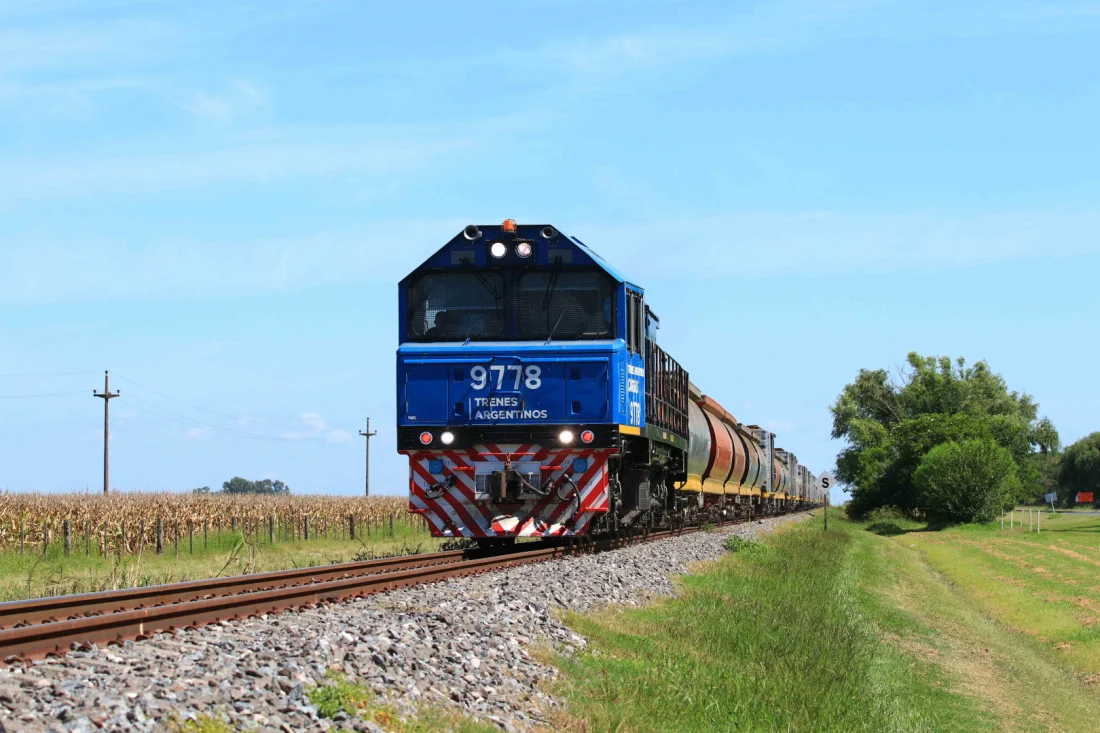
The groups studying the concession of the tracks of Belgrano Cargas y Logística, Argentina's state-owned freight rail company, have 40 more days to close their numbers and, above all, their partnerships. Resolution 1914/2026 of Argentina's Ministry of Economy added Amending Circular No. 3 to the tender.
The most visible change is the calendar. Bids for the Belgrano, San Martín and Urquiza lines will be received on the CONTRAT.AR platform until Dec. 21, and the Stage 1 opening will take place that same day at 10 a.m. The opening had been set for Nov. 11, the date in force when the Argentine government approved arbitration in Montevideo for concessionaires with foreign partners or creditors. Queries on the tender documents, which had closed on Oct. 28, reopen until 10 a.m. on Dec. 3. The resolution does not award any line; it moves the dates for queries, bids and opening, and changes the makeup of the Evaluation Committee.
The extension responds to specific requests. The circular transcribes five queries from interested parties seeking more time: four asked for 90 days and another for at least 30. One of them called the original deadlines "meager." The ministry granted 40 days, citing the goal of encouraging broad participation.
Two Members Can Share the Net Worth Required for Each Line
The substance lies in the financial requirements. Under the new wording of Article 10.3.2.4.1 of the general tender terms, a bidder made up of several companies can prove its financial capacity through up to two of its members, which take on the role of Financial Partner. The required net worth is calculated by weighting the balance sheets of both, in the proportion the bidder declares. The solvency and liquidity ratios, by contrast, must be met by each of them separately.
For bidders on more than one line, the circular sets a dual rule. They must meet the requirements for each line, with solvency and liquidity ratios equal to or greater than one, and prove the sum of the net worth required for all the lines they bid on. Experience works the other way around. The cumulative contract amount required is the highest among those each line demands, without adding the amounts together.
The requirement for the last three closed fiscal years remains in place, but a Financial Partner that does not have them can qualify with at least one, plus an interim-period financial statement that, under the circular, must be closed, at most, as of the month preceding the month in which bids are due. The rule opens the door to companies with a single closed fiscal year as financial backers.
The Technical Partner Will Have to Stay in the Concessionaire
Experience requirements also have new routes. The circular allows experience to be contributed by the bidder itself or its controlling and controlled companies, by one of its members, or by a Nominated Contractor that commits, through an irrevocable letter of intent, to sign the contract to carry out the mandatory and optional works if the bidder wins the award. That contractor, like the technical partner, is jointly and severally liable, without limit, for the concessionaire's obligations until 180 days after the mandatory works, or the optional works if any, enter into service, whichever occurs later.
When experience is contributed by the bidder or one of its members, the technical partner is required to stay on: it must retain 10% of the concessionaire's voting capital for that same period, and if it also acts as financial partner, its stake must be at least 35%. The 10% figure is also the threshold in the arbitration clause of the model contract: a shareholder holding at least 10% of voting capital that is incorporated or domiciled abroad, or controlled from abroad, is one of the cases that enable the Montevideo seat, provided the dispute exceeds $500,000 or cannot be quantified.

Each bidder can submit either an Offer A or an Offer B per line, but not both, and the only alternative allowed is the one stating the intention to apply for RIGI, Argentina's Large Investment Incentive Regime, if the bidder is pre-awarded. Bidders using it must post a second bid bond. The maximum toll, in dollars per gross ton-kilometer, may now be quoted with up to five decimal places, to match the floor and ceiling values in the line-specific tender terms.
Mining Watches How Each Consortium Takes Shape
When the ministry called a tender for 50-year concessions on the three lines, the business case rested largely on lithium from the Puna, the Andean high plateau, and copper from northwest Argentina and the Cuyo region. The Belgrano crosses Salta and the rest of the north; the San Martín reaches San Juan and Mendoza, where the province is moving ahead with its copper district. The Argentine Chamber of Mining Companies (CAEM) backed the concession process and offered sustained cargo volumes in exchange for stable rules.
With the circular, a consortium can split the net worth required for each line between two members, add a financial partner with a short accounting history and prove experience through a nominated contractor. For a cargo owner that wants a seat at the table without being a rail operator, these are three concrete paths. For the works, the scheme already included the trust fund of nearly $500 million that will pay for the works against progress certificates, which can be assigned to banks as collateral.