
Power

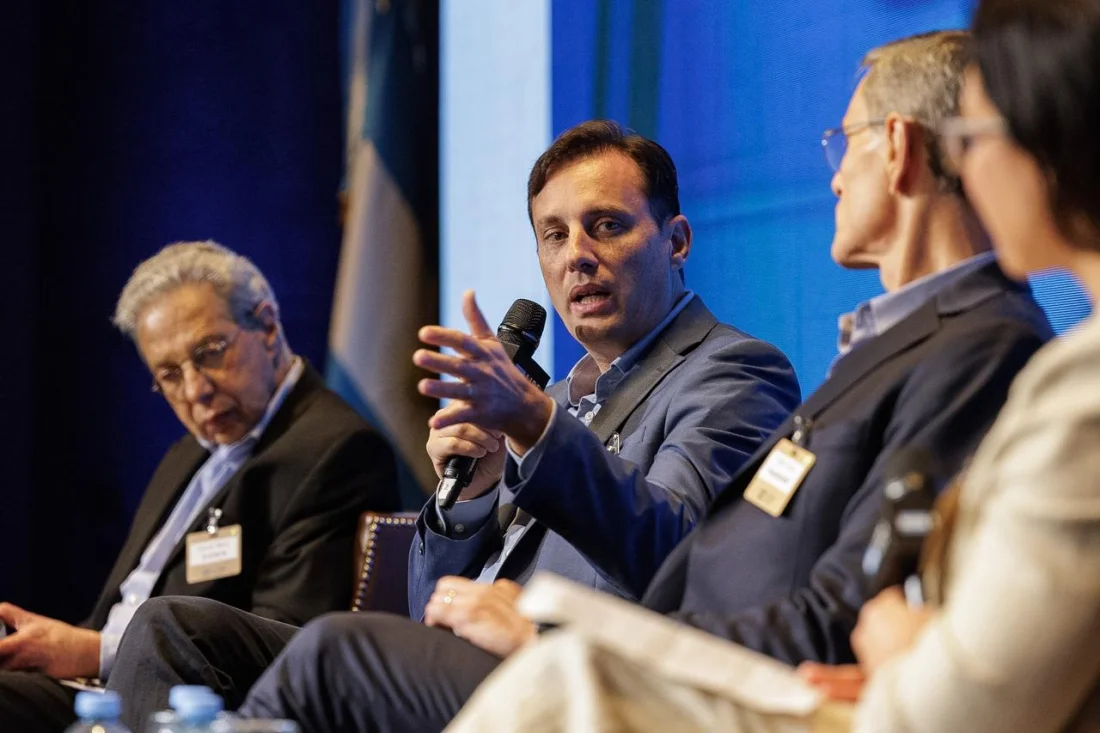
Fernando Bonnet, CEO of Central Puerto, one of Argentina’s largest power generators, said the opening of the electricity market has given generators back the ability to develop their own projects and contracts. He spoke on November 5 on a panel on the sector’s deregulation at LIDE Argentina’s Fórum Nacional de Energía, held at the Alvear Icon Hotel in Buenos Aires under the title “Argentina Global Energy 2026.”
There, he argued that the next step is to expand long-term contracting and bring distributors into that scheme. Bonnet shared the panel with Pablo Tarca, general manager of Transener, the high-voltage electricity transmission company, and Daniel Marx, chairman of power distributor Edenor. The panel was moderated by Nadia Sager, CEO and founder of GEINSA.
“The success of this transformation is giving private companies back the ability to think about their industries outside the regulator. That is key,” the executive said.
Generators Had to Rebuild Their Commercial Teams
Central Puerto’s CEO said that power generation, although a regulated activity, had been “extremely regulated.” New capacity came from initiatives centralized by the state, in which companies competed on price in tenders. “The market was fully controlled by the state,” he said.
He also noted that there were no long-term contracts between private parties for either power or fuels, and that transmission expansions were carried out only within the centralized scheme. Leaving that scheme forced companies to rebuild internal departments. “Our commercial teams were completely dismantled, our fuel teams completely dismantled. We had to create all of that,” he recalled.
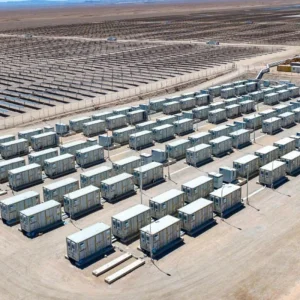
The opening came in stages. Resolution 21/2025 of Argentina’s Secretariat of Energy, published in the Official Gazette on January 28, 2025, re-enabled term-market contracts (Mercado a Término, MAT), suspended for new deals since 2013, for thermal, hydroelectric and nuclear projects entering commercial operation from January 1, 2025. It also allowed thermal generators to manage their own fuel, a task that until then had been centralized by CAMMESA (Compañía Administradora del Mercado Mayorista Eléctrico), Argentina’s wholesale electricity market administrator.
In October of that year, Resolution 400/2025 approved the rules for normalizing the Wholesale Electricity Market (MEM) and set, for existing generation, a cap of 20% of output for contracts with large users, with full freedom to contract only from January 1, 2030. Bonnet referred to that cap, noting that generators had been allowed to contract 20% of the energy from their thermal plants, whereas that option already existed for renewables.
“A year went by and we, the companies, were quickly able to contract that 20% with large users, which is a very important step,” he said. According to the executive, that allowed many industrial users to avoid a significant price jump in winter, although he acknowledged that there are still smaller users who need support.
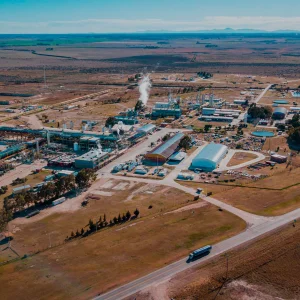
For Bonnet, After 60% in 2027 the Next Step Is Bringing Distributors Into Long-Term Contracts
Central Puerto’s CEO described reaching 60% contracting from April 2027 as “another challenge.” That step was set by Resolution 293/2026 of the Secretariat of Energy, published in the Official Gazette on October 21. For thermal and hydroelectric plants selling into the spot market that entered the system before January 1, 2025, the cap remains at 20% until March 31, 2027, rises to 60% from April 1, 2027, to 80% from April 1, 2028, and disappears on January 1, 2029, a year earlier than Resolution 400 had provided.
Asked about next steps, Bonnet said that “a lot of work is still needed on consumer education.” He added that consumer associations and business associations can explain the advantages of long-term contracting.
The other front, according to the executive, is for distributors to become an important player in long-term contracting. He cautioned that this requires work on regulation at both the national and provincial levels, together with the provinces. In his view, that change would also enable transmission expansions outside the centralized scheme. “That requires investments of a lot of money, which require long-term contracts,” he summed up.
Bonnet Sees Solar Farms Opening the Door to Smaller Players, Urges Care on Guarantees and Impact Studies
In his second intervention, Central Puerto’s CEO said work is under way to unify the different generation categories into a scheme without price differentials by source. The goal, he said, is “for prices to reflect efficiency, not the date a machine came online.”
Bonnet linked the emergence of smaller projects to technological progress. He compared a combined-cycle plant, which requires investments of more than $800 million and a high degree of technical sophistication, with a solar farm, whose civil works are “infinitely smaller.” “What new technologies do is also open the game to new and small players,” he said. He clarified that this is not possible in hydropower or combined cycles, given the financial and technological capacity they require.
He also raised two warnings. The first concerned the guarantees required in some tenders, which “are sometimes too low and can lead to having players that perhaps cannot complete them later.” The second concerned wind, solar and battery projects: if the land, the environmental impact study and the analysis of the site’s demographic and sociological impact are not well developed, they can cause problems in the future.
The company competes in that segment. In AlmaSADI, CAMMESA’s tender for battery energy storage systems (BESS), Central Puerto bid 1,220 MW across the projects it submitted under its own name and those of Puerto La Genoveva, its renewable energy vehicle.
Asked what should be visible in five or ten years for the regulatory change to be considered a success, Bonnet was direct: “I believe that what is fundamental for the sector, and I imagine for any of our subsectors, is the long term.” The first test of that bet comes on April 1, 2027, when existing thermal plants will be able to commit 60% of their output under contracts.