
Energy Storage

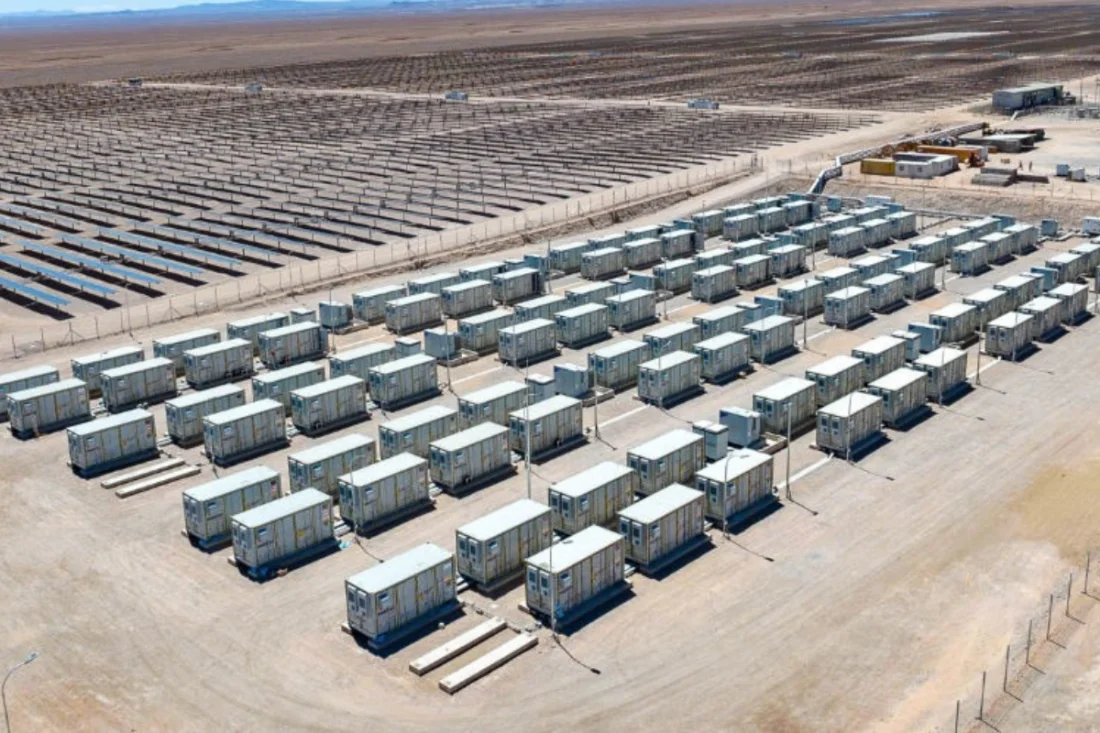
The expansion of renewable energy and the electrification of a growing range of activities are making energy storage increasingly important.
Batteries make it possible to store electricity and use it when it is needed, and they are part of installations that are becoming ever more relevant for homes, industry and power systems. That growth raises a requirement that should not be sidelined: developing safety criteria suited to the characteristics of these installations.
Argentina has general rules and sector-specific provisions that address different aspects of the problem. Law 19,587 on Occupational Health and Safety and its implementing Decree 351/79 cover fire protection in workplaces. Law 24,051 regulates hazardous waste management, while Resolution 16/2025 of the Secretariat of Industry and Trade sets quality and safety requirements for certain electrical equipment products sold in the country.
These provisions serve specific purposes. However, the safety of an energy storage system requires considering a chain of risks that runs from design and installation to fault detection, the response of emergency teams and the treatment of the resulting waste.
Verifying the safety of a single cell is not enough. When many cells make up a module, several modules form a unit and numerous units make up an installation, it is necessary to assess how a fault could spread and what effects it would have on the system as a whole.

There are international references in this area that can guide the development of technical criteria. The IEC 62619 standard sets safety requirements and tests for lithium batteries used in industrial applications, including stationary ones. IEC 63056 covers specific requirements for batteries intended for electrical energy storage systems.
For installations, NFPA 855 sets out practices for mitigating the risks associated with stationary energy storage systems, while the UL 9540A test method makes it possible to evaluate fire propagation from thermal runaway in battery systems, and the Dutch NTA 8133 standard sets test protocols to evaluate how effective portable fire extinguishers are against lithium-ion battery fires.
These references should not be transferred automatically into the Argentine framework without considering local conditions and the remit of each authority. They do, however, provide a technical basis for working toward regulation that integrates the different components of safety.
The first point is to assess how equipment behaves at different scales. Tests on an individual cell provide important information, but they do not necessarily make it possible to anticipate what will happen when a fault spreads to other cells or compromises an entire installation. Module- and system-scale tests make it possible to study that propagation, the release of heat and gases, and the effectiveness of protective measures.
The second is to ensure that technical information is available when it is needed. Identifying the battery chemistry and providing access to its characteristics is not a labeling detail: it can be decisive for emergency teams to assess the risk and decide how to intervene.
The conditions of the site where these systems are installed must also be taken into account. Ventilation, gas detection, spacing between units and barriers designed to limit the spread of a fire are aspects that should be evaluated during design, not once the installation is already operating.

Finally, each system should have emergency procedures suited to its characteristics. That means defining responsibilities, coordinating the response with emergency services and planning follow-up after an incident, including the management of contaminated water and damaged components.
Technical work carried out within the Professional Council of Chemical Engineering (Consejo Profesional de Ingeniería Química) points to the need to move toward a specific framework for energy storage, with protocols differentiated by the technology involved. It is an agenda that deserves to be addressed before the expansion of these installations makes more frequent the situations for which sufficiently integrated procedures do not always exist today.
The aim is not to slow down a necessary technology or to disregard the industry's progress, but to accompany them with rules that make it possible to reap their benefits without neglecting the risks. Safety should not depend on each manufacturer, operator or emergency team working out on its own how to act. It needs common criteria, accessible information and clearly defined responsibilities.
If energy storage is going to play an increasingly important role in our infrastructure, its safety must also be part of the planning: prevention is more effective when it is built in from the design stage than when it is attempted after an emergency.