
Oil & Gas
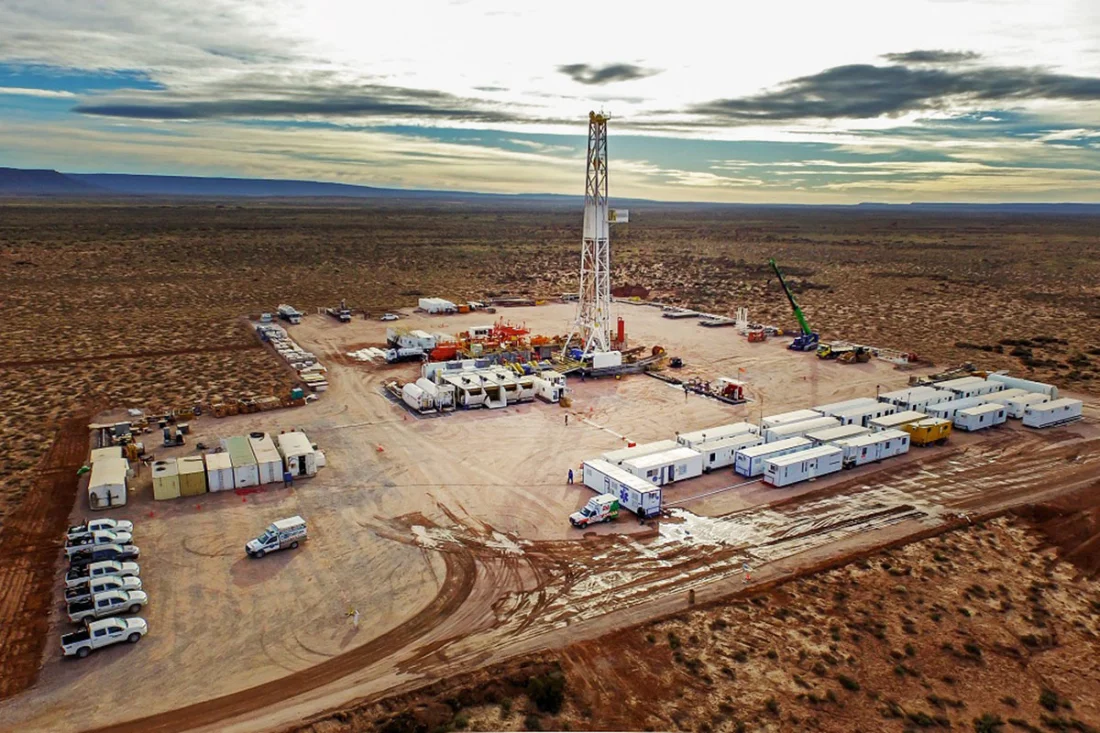
Two blocks operated by Pluspetrol and YPF delivered 40.6% of Vaca Muerta's year-on-year oil production growth in August, a Shale24 analysis of operator filings shows.
Argentina's Secretariat of Energy reported that the Vaca Muerta formation, one of the world's largest shale plays, produced 669,800 barrels per day (bbl/d) of oil in August, up 27.2% from the same month of 2025. The monthly Chapter IV sworn production returns that operators file with the Secretariat, with uploads through Sept. 25, put the figure at 670,181 bbl/d, against 526,935 bbl/d in August last year. Over twelve months, the formation added 143,246 bbl/d.
The figures reflect gross operated production: each block's total as declared by its operator, without deducting partners' shares.
With that contribution, Argentina reported 939,311 bbl/d of oil in August, 113,632 bbl/d more than a year earlier. The gap between the two growth figures is production from outside Vaca Muerta: the rest of the country's formations and basins fell from 298,744 bbl/d to 269,130 bbl/d, a decline of 29,614 bbl/d.
Vaca Muerta now accounts for 71.3% of Argentina's oil output. Almost all of it comes from Neuquen province, with 664,467 bbl/d; Rio Negro province contributed 5,105 bbl/d, more than double its August 2025 level.
Bajo del Choique–La Invernada, operated by Pluspetrol Cuenca Neuquina, the Neuquen Basin unit of Pluspetrol, an Argentine independent oil and gas producer, rose from 13,047 bbl/d to 46,594 bbl/d. The increase of 33,547 bbl/d represents 23.4% of the formation's year-on-year growth.
The block, in the western Neuquen Basin and acquired by Pluspetrol from ExxonMobil, is 90% owned by Pluspetrol Cuenca Neuquina and 10% by Gas y Petróleo del Neuquén (GyP), Neuquen province's state oil and gas company. In June, it was already one of three blocks that drove Neuquen's monthly production record.
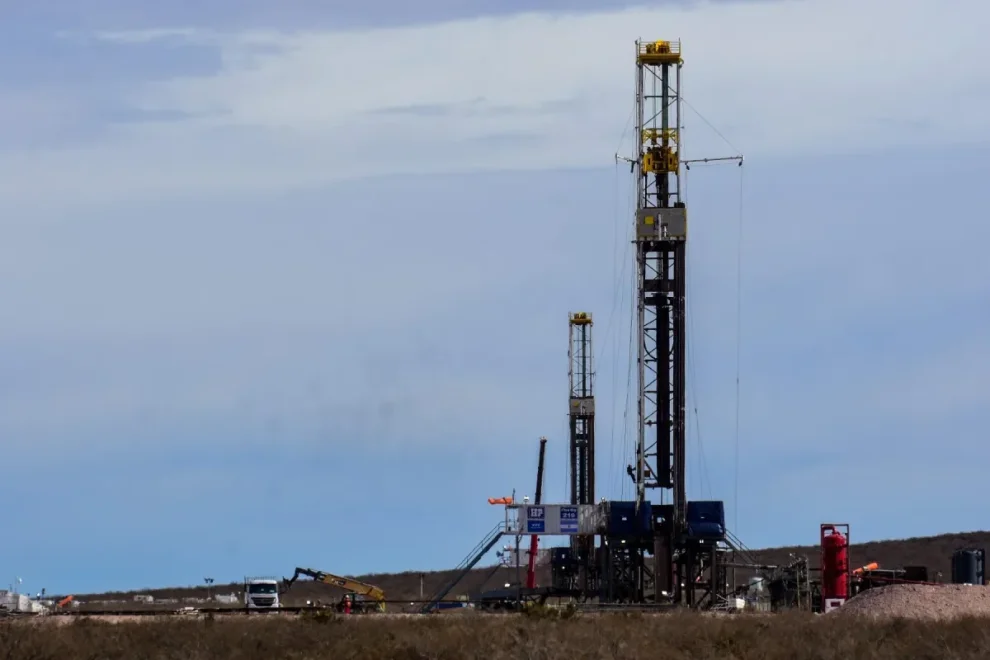
La Angostura Sur I, operated by YPF, Argentina's state-controlled oil and gas company, rose from 21,435 bbl/d to 46,038 bbl/d, adding 24,603 bbl/d, or 17.2% of the total. YPF has identified the area as its next core shale oil asset. Together, the two blocks added 58,150 bbl/d.
Two Different Ramp-Up Curves
The two blocks reached August with nearly identical volumes, but by different paths.
Bajo del Choique–La Invernada went through the first four months of 2026 without a change in scale: it reported 24,343 bbl/d in January and 24,608 bbl/d in April. The shift began in May, at 28,719 bbl/d, and accelerated in June, when the block jumped to 39,902 bbl/d. It reached 45,353 bbl/d in July and 46,594 bbl/d in August.
La Angostura Sur I followed a more stepped trajectory. It started the year at 34,806 bbl/d, dipped to 28,030 bbl/d in February and then posted four consecutive increases through June, when it reached 42,349 bbl/d. It slipped to 40,965 bbl/d in July and regained ground in August at 46,038 bbl/d.
So far this year, Vaca Muerta has risen from 599,759 bbl/d in January to 670,181 bbl/d in August, an increase of 70,422 bbl/d. The two blocks account for 33,483 bbl/d of that gain, or 47.5% of 2026 growth.
Ten Areas Account for 82% of Growth
The third-largest year-on-year contribution came from zero. Bajada de Añelo, operated by Shell Argentina, a subsidiary of Shell plc, and held in equal shares with YPF, reported no Vaca Muerta oil production in August 2025 and closed August this year at 10,013 bbl/d.
Behind it come five areas that each added roughly 7,000 to 8,000 bbl/d: YPF's La Amarga Chica, up 8,037 bbl/d to 80,949 bbl/d; El Trapial Este, operated by Chevron, the U.S. energy major, up 7,902 bbl/d to 24,240 bbl/d; Bajada del Palo Oeste, operated by Vista Energy, an independent Vaca Muerta-focused producer, up 7,780 bbl/d to 58,741 bbl/d; YPF's Loma Campana, up 7,374 bbl/d to 92,284 bbl/d; and Coiron Amargo Sur Este, operated by Pan American Energy (PAE), Argentina's largest private oil producer, which rose from 6,633 bbl/d to 13,787 bbl/d.
Mata Mora Norte, with 6,036 bbl/d more, and Shell's Cruz de Lorena, with 4,914 bbl/d more, complete the group. Mata Mora Norte changed operator: in August 2025 it was reported by Kilwer and in August 2026 by Phoenix Global Resources, so the comparison is made by area rather than by company.
The ten areas added 117,360 bbl/d, or 81.9% of the growth. In total, 38 areas in the formation grew, contributing 157,336 bbl/d. On the other side, 24 blocks produced less than a year earlier and together subtracted 14,090 bbl/d. The largest declines were at La Escalonada, which lost 2,977 bbl/d and changed operator from Total Austral, TotalEnergies' Argentine unit, to Vaca Muerta Inversiones; Shell's Coiron Amargo Sur Oeste, down 2,859 bbl/d; and YPF's Aguada del Chañar, down 1,983 bbl/d.
Monthly and Annual Views Tell Different Stories
The annual comparison distributes growth differently than the monthly one. In August, YPF accounted for three of every four barrels Vaca Muerta added versus July. Over twelve months, the areas it operates rose from 280,851 bbl/d to 334,244 bbl/d, adding 53,393 bbl/d, or 37.3% of the increase, while the formation's largest single contribution came from a Pluspetrol Cuenca Neuquina block.
The difference comes down to the timing of each ramp-up. Between May and July, Bajo del Choique–La Invernada added 20,745 bbl/d, 62% of its entire year-on-year growth, and advanced only slightly in August. La Angostura Sur I, by contrast, posted its second-largest monthly gain of the year in August, behind April's 7,045 bbl/d.
As a result, the relationship between the two blocks leading the annual comparison reversed in the latest month. La Angostura Sur I added 5,073 bbl/d versus July; Bajo del Choique–La Invernada added 1,241 bbl/d.
Tags: Chevron · Gas y Petróleo del Neuquén · Pan American Energy · Pluspetrol · Shell · Vaca Muerta · Vista Energy · YPF
<figure class="image"><img loading="lazy" class="cst_img" src="https://statics.shale24.com/2026/09/crop/6ab9c65d21307__990x990.webp?v=1790560121" alt="La Angostura Sur I followed a more stepped trajectory: it started the year at 34,806 bbl/d, dipped to 28,030 bbl/d in February, rose four months in a row to 42,349 bbl/d in June, slipped to 40,965 bbl/d in July and regained ground in August at 46,038 bbl/d"><figcaption>La Angostura Sur I followed a more stepped trajectory: it started the year at 34,806 bbl/d, dipped to 28,030 bbl/d in February, rose four months in a row to 42,349 bbl/d in June, slipped to 40,965 bbl/d in July and regained ground in August at 46,038 bbl/d</figcaption></figure>