
Oil & Gas
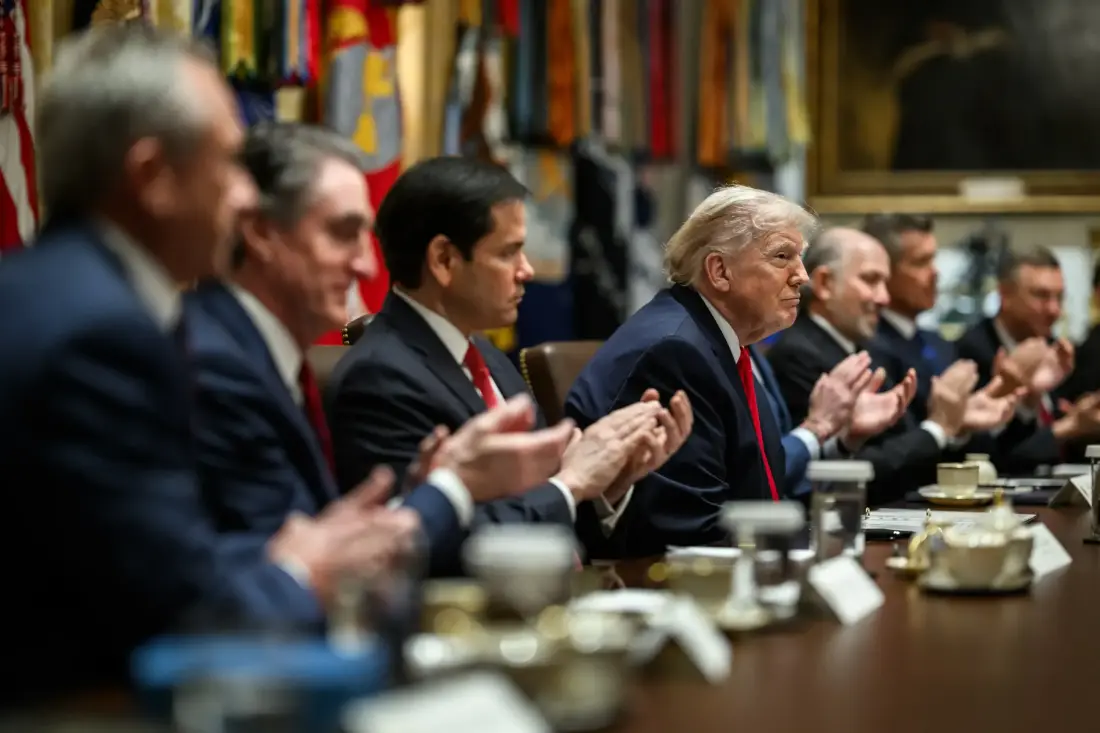
On Sunday, Donald Trump posted one of the most disruptive announcements since the start of the conflict on his Truth Social platform: "Effective immediately, the United States Navy…will begin the process of blockading any and all ships trying to enter, or leave, the Strait of Hormuz."
The order came hours after negotiations in Islamabad ended without agreement. The U.S. delegation — led by Vice President JD Vance, special envoy Steve Witkoff, and Jared Kushner — spent 21 hours across the table from the Iranian delegation headed by Parliament Speaker and chief negotiator Mohammad Bagher Ghalibaf.
The two most sensitive issues — Iran's nuclear program and control of the Strait — remained unresolved. Trump extended the order further: U.S. forces would also "seek and interdict every vessel in international waters that has paid a toll to Iran."
The Strait Has Been Effectively Closed Since February 28
The Strait of Hormuz has been effectively closed since February 28, 2026, when the United States and Israel launched coordinated strikes against nuclear and missile facilities in Isfahan and Natanz. In retaliation, Iran's Islamic Revolutionary Guard Corps seeded the waterway with naval mines — and, according to intelligence reports cited by international media, lost track of part of that minefield.
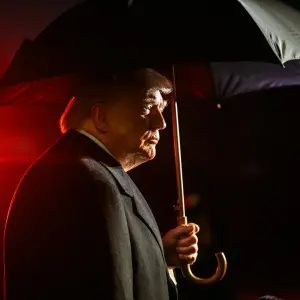
Since then, traffic through the Strait has fallen to less than 5% of pre-war levels. Qatar declared force majeure on its LNG contracts. Around 230 tankers have been anchored inside the Persian Gulf unable to depart. Brent crude, which opened the conflict at approximately $73 per barrel, climbed to $144.42 per barrel — an all-time record for Dated Brent, the physical oil price benchmark, the highest since S&P Global's Platts first began publishing the measure in 1987 — before retreating to $95 when Trump announced a ceasefire on April 7. The weekend's events have effectively ended that ceasefire.

Tolls and Extortion
The immediate trigger for Trump's order was Iran's decision to charge transit fees of up to $2 million per vessel. Only China, India, and their allies were granted free passage; everyone else paid or stayed out. Trump characterized the arrangement as "world extortion."
Iran's response was direct. Lawmaker Mahmoud Nabavian, part of the Islamabad delegation, said the Strait would not open and that the world would experience "a new form of management." Deputy Parliament Speaker Ali Nikzad argued that after 40 days of war the tactical advantage belongs to Iran, not the United States.
What the Market Faces Next
The market's direction is set: Brent will rise. Goldman Sachs had projected an average of $110 per barrel for April; if Strait flows remain near 5% for 10 weeks, the bank estimated crude could surpass its 2008 record. Brent was trading around $95 before Sunday's announcement and surged more than 8% on Monday to above $103.
The impact extends beyond crude. The 20% of global LNG that normally transits the Strait from Qatar — which supplies roughly a third of global LNG trade — remains trapped in the Persian Gulf. The Title Transfer Facility (TTF), Europe's natural gas benchmark, has nearly doubled from its level at the start of the year. Asia absorbs 75% of the oil and 59% of the LNG that transited the Strait before the war; no region feels the disruption more acutely.
For Argentina, the scenario cuts both ways. Higher crude prices benefit upstream revenues across Vaca Muerta, where lifting costs remain competitive on a global scale — and Argentine oil and gas can reach export markets via Atlantic routes that bypass both the Strait of Hormuz and the Suez Canal. But the ENARSA winter LNG import tender — whose award date was postponed to April 14 to allow the spot market more time — now opens against the most expensive and uncertain LNG spot market since the conflict began.
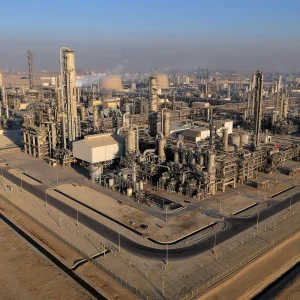
ADNOC, Abu Dhabi's state oil company — which operates through its international investment arm XRG as a partner with YPF, Argentina's state-controlled oil and gas company, and ENI, the Italian energy company, in the Argentina LNG project — is under direct pressure on its domestic infrastructure. The Habshan gas processing complex in Abu Dhabi suffered two interruptions in 15 days after debris from intercepted missiles struck the facility. The closed Strait cuts off its export route. A U.S. naval blockade complicates it further still.