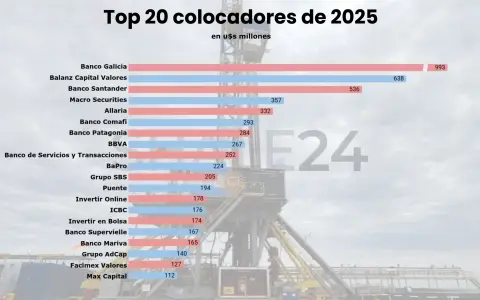
Financial bookrunner ranking: Energy drove the debt market in 2025 and early 2026
Argentina’s negotiable obligations market tops $20B in 2025, projects another solid year in 2026 as energy accounts for nearly half of corporate financing
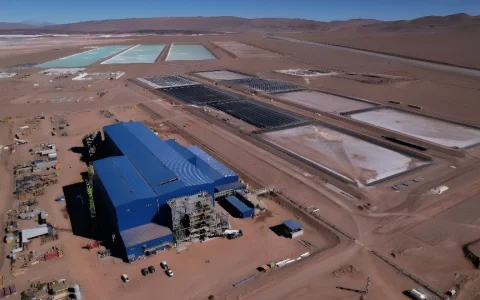
International independent private company focused on the exploration and production of hydrocarbons and, more recently, on strategic mining (lithium) through Lítica Resources.
Argentina’s negotiable obligations market tops $20B in 2025, projects another solid year in 2026 as energy accounts for nearly half of corporate financing
Argentina is emerging as a regional shale powerhouse, but with weak Brent prices and higher costs, the market in 2026 will demand greater, almost surgical efficiency. The energy map is being rewritten, and the question is whether profitability will hold in the next chapter.
The swap with Pluspetrol could act as a catalyst to unlock the project, where key players have already begun positioning themselves. By consolidating control over high-density gas areas, YPF is building the stable, large-scale supply base needed to make a megaproject like Argentina LNG financially viable.
YPF and Pluspetrol sealed a cashless asset swap that will allow the state-controlled oil company to consolidate full control of three key areas in Vaca Muerta, while the private firm repositions itself in high-potential blocks through Vaca Muerta Inversiones.
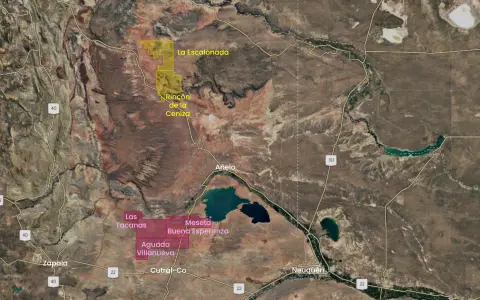
Both companies signed an asset swap agreement. YPF acquires Pluspetrol’s stake in the Meseta Buena Esperanza, Aguada Villanueva and Las Tacanas blocks, three areas considered strategic for the development of the Argentina LNG project. Pluspetrol, in turn, acquires an interest in the La Escalonada and Rincón de Ceniza blocks.
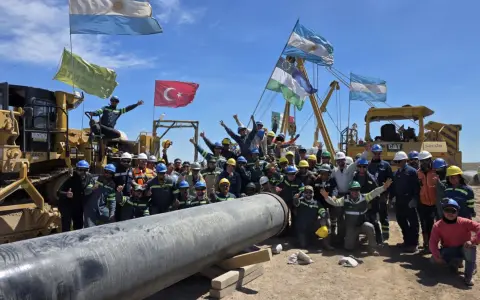
Preparatory work is underway for the directional drilling on the north bank, while on the south bank a welded and hydrostatically tested pipe section is ready for insertion, with additional works still pending at the site.
With a focus on shale development and the LNG project, the proceeds will be used to support the company’s aggressive investment plan in Argentina and to refinance existing liabilities. The bond, with an implied 11-year maturity and principal repayments in three annual installments starting in year nine, saw solid demand that allowed it to be priced in the middle of the initial book range of $300 million to $500 million.
With 1,791 stages, December reflected a slight slowdown, coming in below the annual monthly average of 1,982 stages and well off the record set in May at 2,588. YPF continued to dominate activity with 778 stages, accounting for 43% of the monthly total.
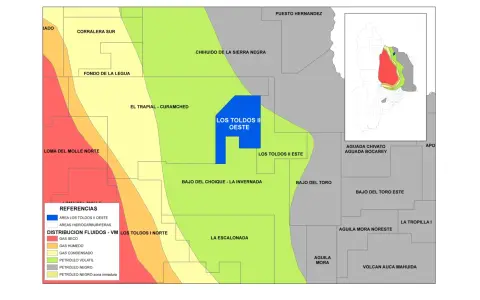
The company had agreed to purchase 90% of the Los Toldos II Oeste block from Pluspetrol. The remaining 10% will remain under the control of Gas y Petróleo del Neuquén, the provincial company participating as a partner.
Argentine gas exports to Brazil are already operational, albeit at modest initial volumes, with significant growth projected through 2030. Routes and methods for scaling up are under consideration.
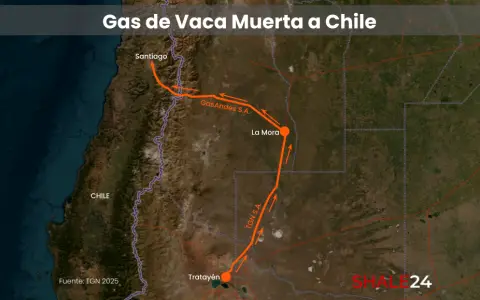
According to the results of the bid opening for the tender launched by Transportadora de Gas del Norte S.A. at the request of Chilean power generator Colbún, Pluspetrol appears to have submitted the leading offer to secure gas shipments to Chile through 2078.
Oldelval expects early start-up by the end of 2026. In its first phase, the pipeline will transport 220,000 barrels per day, expandable to 300,000 and eventually 500,000.
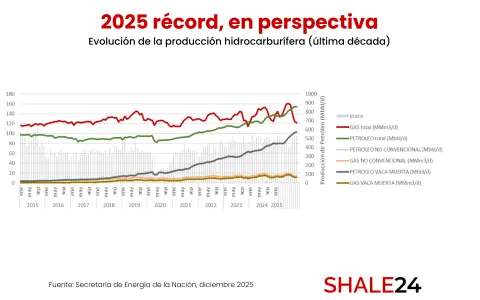
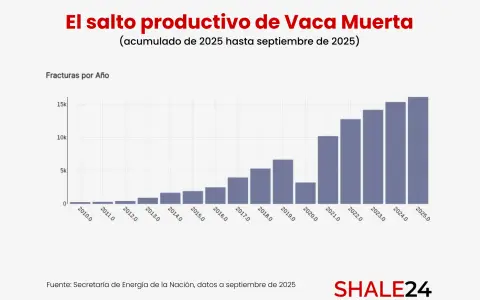
Vaca Muerta is now the world’s second-most productive shale formation, trailing only the Permian Basin in the United States. Here are the numbers, drivers and projections behind a level of growth Argentina has never seen before.
Pluspetrol moves forward with its expansion roadmap, targeting production of about 100,000 barrels per day by 2027. The company aims to accelerate output.
A specialized report highlights the sector's potential and emphasizes that its activity depends not on temporary incentives, but on operational maturation. It also notes the impact on import reduction and the development of related sectors.