
Interview with Shale24
Mining and Vaca Muerta, the world-class shale formation in Argentina's Neuquén Basin, are expanding industries drawing investor attention from around the world. Germany does not want to be left out: it is bringing technology, experience, and a clear agenda.
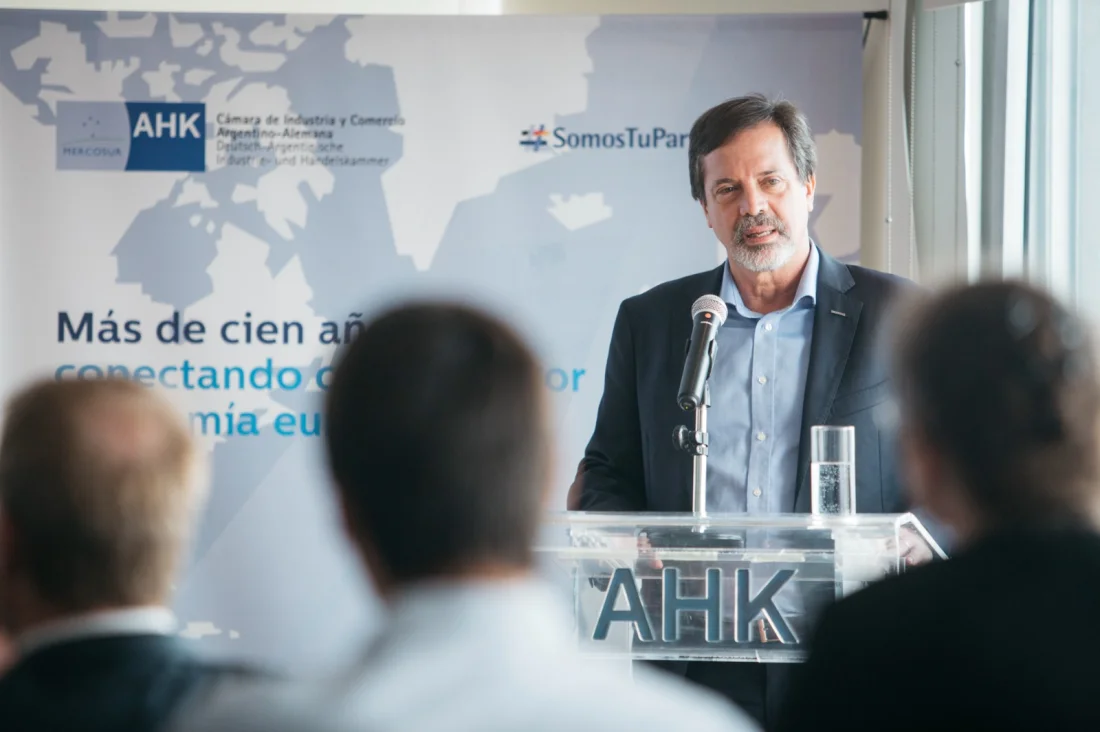
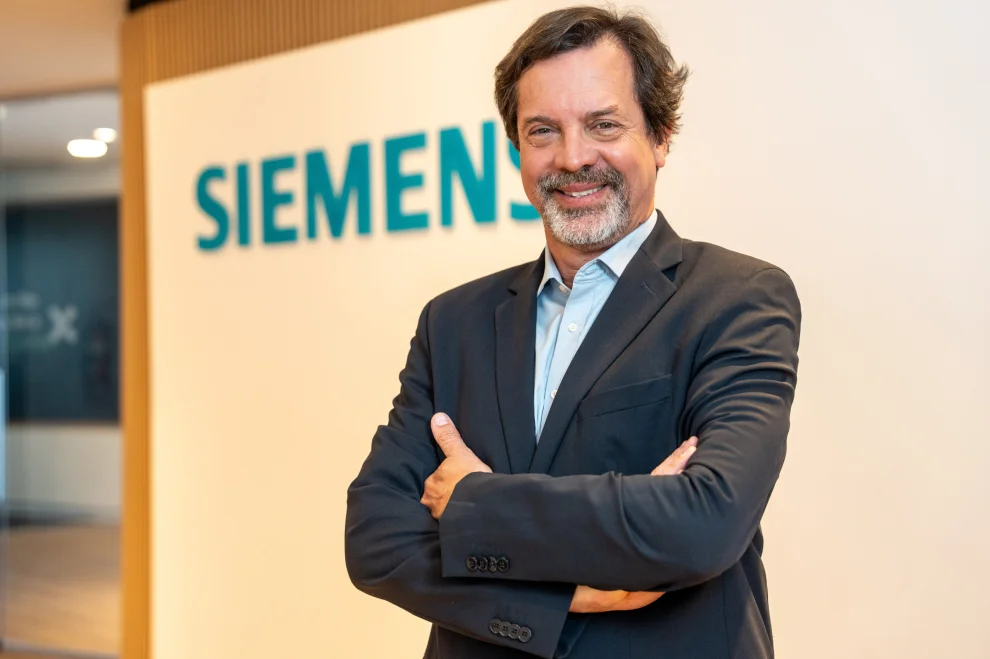
So says Eduardo Gorchs, CEO of Siemens Argentina — the local arm of the German industrial conglomerate — and recently appointed president of the Argentine-German Chamber of Industry and Commerce (AHK Argentina), the bilateral chamber that represents Germany's business ecosystem in the country. Gorchs combines the perspective of the corporate executive with that of a bilateral-ecosystem representative.
In conversation with Shale24, Gorchs reviewed the atmosphere at the Argentina Mining Expo in San Juan — Argentina's annual mining-industry trade event, held in the country's lithium-and-copper-rich Andean province — Germany's interest in critical minerals and hydrocarbons, and why training in skilled trades may be both the binding constraint and the largest opportunity for Argentina's industrial expansion.
Q: AHK had its own stand at the San Juan Mining Expo. What was being said in the corridors about the direction of mining in Argentina?
A: For the large and medium-sized projects, there is a lot of expectation and a very positive climate. Of course everyone would like to be already in the moment when the wheels are turning, but right now what is being shown is the commitment to getting things moving.
Q: What is the goal of AHK Argentina?
A: The chamber has more than 300 members, and around 40% are German-capital companies. We are cross-cutting, building networks that stimulate trade and bilateral relations, generating opportunities for Argentine companies to go to Germany and for German companies to come to Argentina. We are clear that we are a chamber for all industrial, commercial, and infrastructure activities — though there is a particular focus on energy, mining, and education, which all relate closely to industry. Germany is very interested in the critical minerals for the energy transition that Argentina has.
Q: Is the interest oriented toward lithium and copper businesses?
A: Yes, lithium and copper, but not only that, because German technology can contribute a lot to sustainability for industry. Germany has the technology for the energy transition and there is genuine interest in critical minerals. There is a virtuous back-and-forth of services and technology that can help any industry, but the mining industry in particular, to operate more competitively, more efficiently, and more sustainably — and at the same time, for Europe in general and Germany in particular, secure access to critical minerals.
Q: On hydrocarbons and Vaca Muerta: what interests German investors? What expectations are there around LNG and oil, given that Argentine shale is reportedly low-carbon?
A: The German chamber was in Neuquén, and we will also go to Bahía Blanca — Buenos Aires province's main industrial port and the hub of Argentina's petrochemical and NGL export complex — because we have a programme called AHK On Tour. We travel with specific themes, and for the oil and gas industry we have the Extractive Industries Committee, which covers both hydrocarbons and mining. More than 40 companies of all types share services and technology there. It is the space within the chamber for bringing together the needs of these industries.
Q: You are also the CEO of Siemens in the country. How does Siemens collaborate with mining and Vaca Muerta?
A: We make technology to electrify, automate, and digitalise, accompanying our customers so they can be more competitive. Getting more quickly to the first molecule or the first ounce of mineral lets them be more efficient and more sustainable, with safety for people and lower water and energy consumption over the long term. That is what we do in general. In particular, we currently have an oil and gas partner where we will apply technology so they can shorten the time between deciding to open a well and producing the first barrel, compressing engineering, construction, and commissioning timelines.
Q: How do you see the electrical infrastructure segment, with industries that will need supply — mining, Vaca Muerta, and renewables?
A: A lot of investment in electrical infrastructure is needed. Honestly, investment in infrastructure in general and in electricity in particular. Siemens is active across energy management, and we can help our customers achieve reliable supply and consume less. And being electrified opens up the possibility of choosing where that energy comes from, making renewables a real option.
The Other Strategic Resource: Human Capital
Beyond technology and investment, Gorchs identifies a challenge he considers cross-cutting to mining and hydrocarbons: the training of qualified personnel. In that vein, the AHK Argentina president said the chamber promotes the Dual Training model — Germany's apprenticeship-based vocational education system, in which students split time between classroom instruction and on-the-job training at sponsoring companies — inside Argentine firms, in dialogue with provincial governments and educational institutions.
"A theme that is cross-cutting to both industries is education and the training of qualified personnel at all levels, from basic trades up to professional roles. Both Germany as a country and the chamber, as a vehicle of the German economy, strongly promote Dual Training for learning on the job. We are discussing it with the provinces: when we do AHK On Tour we engage with the full local industrial ecosystem, including government and educational institutions," he said.
"In dual training, Germany has substantial experience, and it is something the chamber has promoted for years so that companies can have trades-trained personnel. And when mining takes off in any of these provinces, a large number of skilled people will be needed across different trades and specialised services. We see a strong point of collaboration there with the local ecosystems," he concluded.