
Oil & Gas
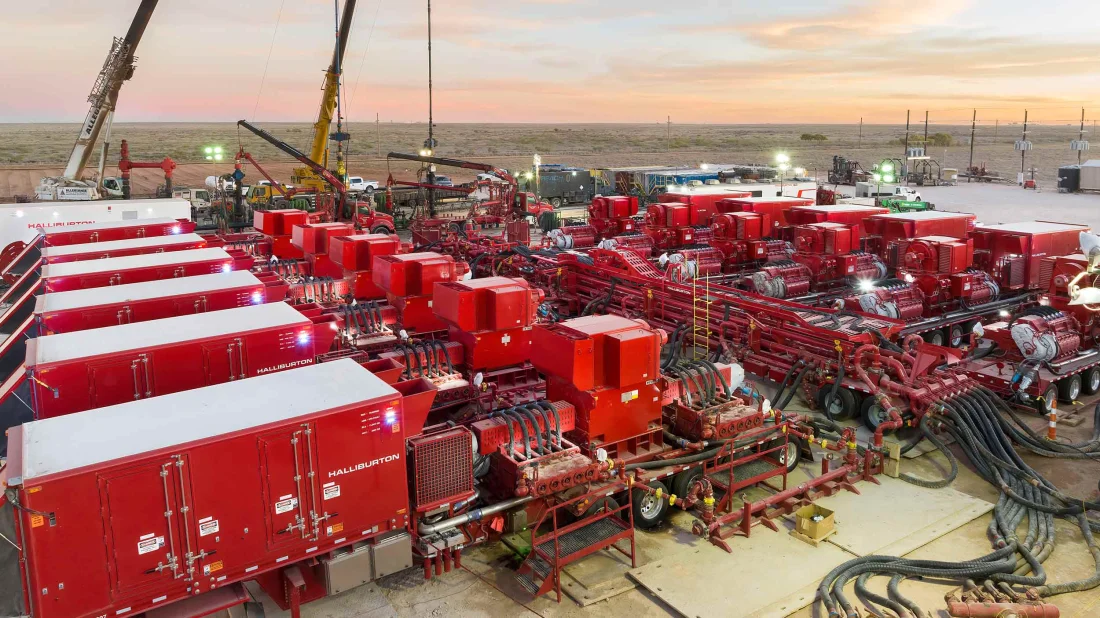
Halliburton has detailed how it will execute the exclusive unconventional completions contract that YPF, Argentina's state-controlled oil and gas company, awarded it in Vaca Muerta — and confirmed the frac fleets are not new builds but physical relocations of premium equipment out of a tightening U.S. market.
The detail, disclosed during Halliburton's first-quarter 2026 earnings call on April 21, signals that Vaca Muerta, the world-class shale formation in Argentina's Neuquén Basin, has become the first international play to clear the company's internal payback threshold for deploying its Zeus electric fracturing platform. That same hurdle has kept the technology out of every other unconventional basin outside North America.
How profitable that footprint becomes for Halliburton is harder to read from the call. gsized the operational deployment and the timeline but declined to commit to a margin profile when pressed by Citigroup analyst Scott Gruber. The contract's economics, beyond what the Q1 commentary disclosed, depend on factors the data cannot yet resolve: pricing inside the contract, recovery uplift from electric fracturing in Vaca Muerta's specific lithology, and whether the YPF program triggers follow-on demand from other operators in the basin.
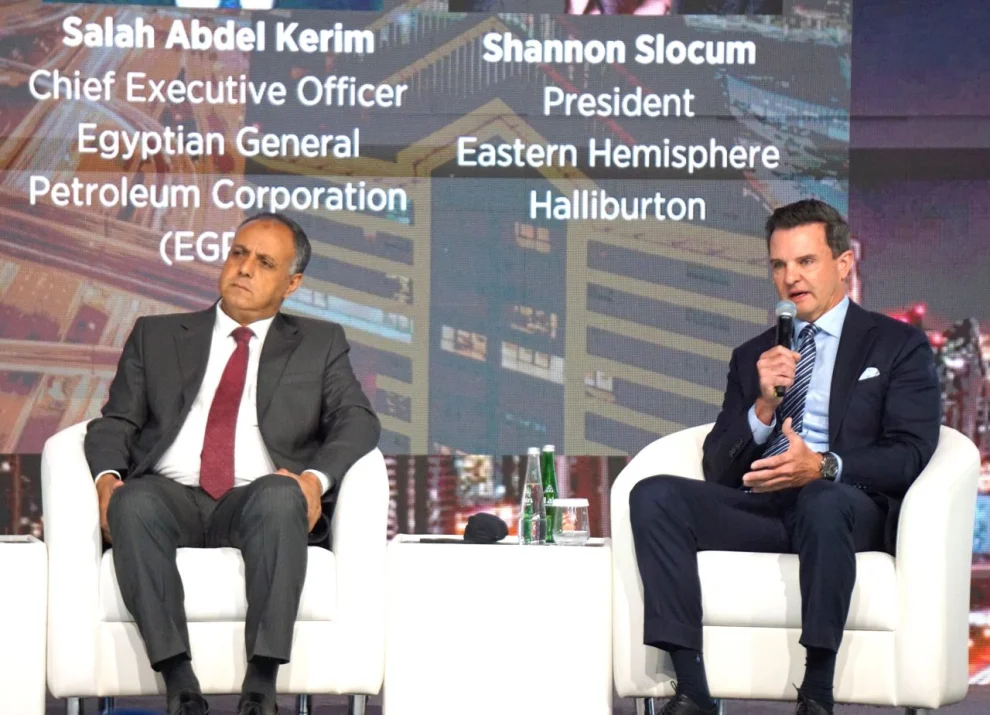
"It is a huge win for Halliburton Company. We had a good footprint before the award; we have an even better footprint now," Slocum told investors on the call, in response to Gruber's question. The contract runs five years, covers four frac fleets, and includes Zeus electric fracturing services and Octiv AutoFrac, the company's automated frac workflow.
The dollar value was not disclosed publicly, though CEO Jeff Miller characterized it on the same call as a multi-year, multi-billion-dollar deployment — the first time Halliburton has placed frac spreads of this scale outside North America.
Physical Relocation From a Tightening U.S. Market
"We are moving that equipment out of North America where we believe we have good pricing and a sustainable program," Slocum said. The precision matters. The U.S. frac services market entered 2026 with new-generation fleets near capacity.
ProPetro Holding Corp., one of the major Texas pumping contractors, said in its first-quarter investor commentary that strong demand for natural-gas-fueled new-generation fleets had left it without availability in its Tier IV DGB dual-fuel and FORCE electric units. The company added that frac equipment capacity had been tight even before the Middle East conflict triggered the spring 2026 oil price rally, which has since amplified those constraints.
Halliburton, the global market leader and owner of the Zeus platform, has not publicly described itself as capacity-bound in the same terms as its mid-sized peers. But CEO Jeff Miller told investors on the same call that smaller competitors are now the early movers, and that early movement is what removes capacity from the market and tightens conditions for everyone else.
The practical consequence for Halliburton is internal reallocation: the fleets bound for Vaca Muerta are equipment the company already had running in the U.S. on sustainable pricing and dedicated-customer terms.
Why the Equipment Moves Now
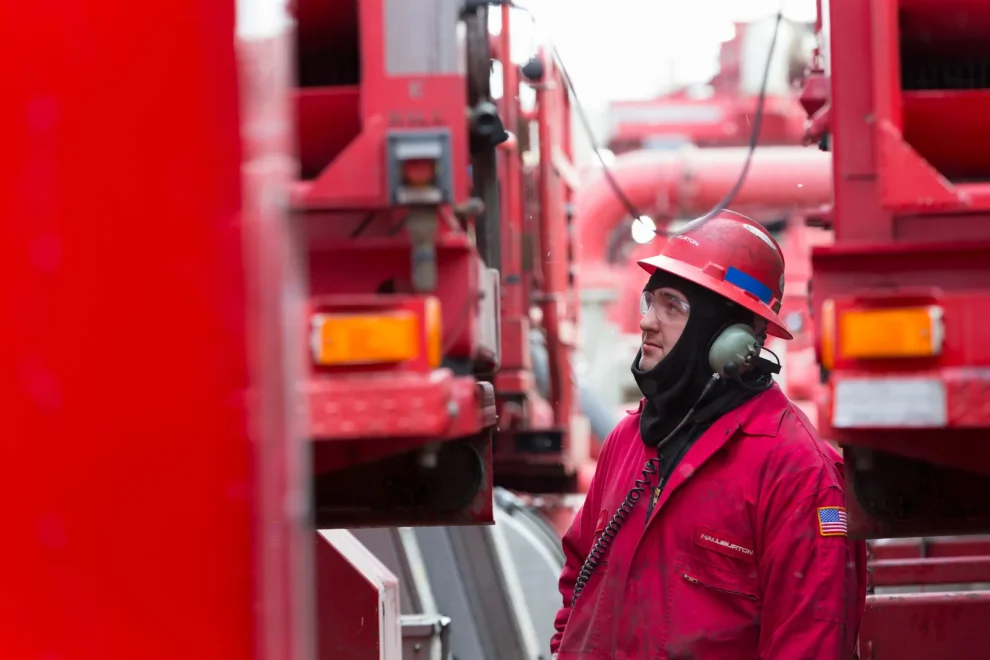
The decision to relocate the fleets to Vaca Muerta rests on a specific operating cadence in the basin.
In January 2026, operators completed 2,401 frac stages in the formation, according to data tracked by NCS Multistage, the well completion technology firm. That sustained pace, with no equivalent in any shale basin outside the United States, is what justifies for Halliburton the first international deployment of Zeus in the platform's history.
The corporate footprint was already being built up. Halliburton joined the Vaca Muerta Institute (IVM), the basin's main industry-and-academia training and innovation body, as an institutional member in February 2026 — a move read at the time as a long-term commitment to the formation. The exclusive YPF contract, announced April 13, closed the sequence: institutional integration first, commercial contract second, technology deployment now.
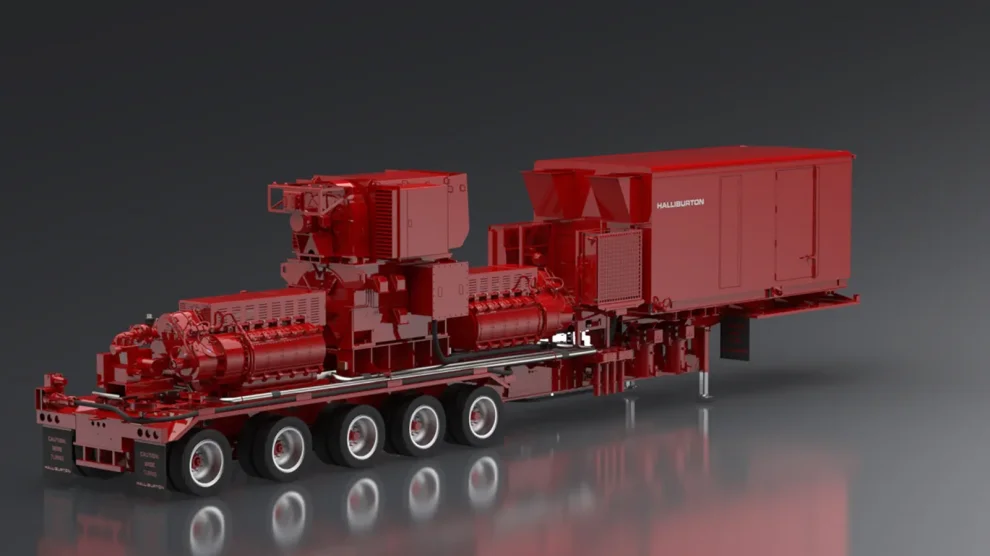
Zeus also marks a shift in the technology profile of fracturing in Vaca Muerta. Until April, the basin was running on dual-fuel natural-gas-powered fleets — the route Calfrac formalized in February with its turbine units — and on conventional diesel.
Zeus brings high-intensity electric fracturing with pumping managed by Octiv AutoFrac. The operational difference is the consistency of the pressure ramp stage by stage, a critical variable for the recovery curve on long laterals.
The Margin Question Slocum Declined to Answer
Scott Gruber pressed the question most investors were thinking about on the call: the YPF contract sounded meaningful to Halliburton's in-country business, he said, and he asked how much it would grow that business, when the growth would arrive, and how to think about the contract's margin profile relative to the 15% mark. The 15% Gruber referenced is the Q1 operating margin of Halliburton's Completion and Production division, on revenue of $3 billion for that unit.
Slocum's response did not address the margin question directly. She gave operational sizing, an improved footprint, and the timing of fleet arrivals through year-end and into 2027, but stopped short of committing to a margin number for the YPF contract. What she did confirm was the regional context.
Latin America posted $1.1 billion in first-quarter revenue, a 22% year-on-year expansion, with Argentina explicitly identified as one of the growth drivers alongside Ecuador, the Caribbean, Brazil, and Mexico, according to the consolidated results reported by CFO Eric Carré.
Halliburton's Internal Rule for International Zeus Deployments
The call also produced a corporate statement of broader significance than the Vaca Muerta contract itself. Slocum, again responding to a Gruber question, laid out the criterion Halliburton uses to decide where in the world to deploy its most advanced fracturing technology.
"We have taken the same approach to Zeus internationally that we did in the U.S. — we deploy Zeus to contracts that have the duration to return the cost of capital and the capital during the term of the first contract. We do not see those conditions in a lot of other markets today," Slocum said.
Translated, the rule is a payback metric for the first contract. The basin must offer enough scale, a long enough contract horizon, and a recovery-improvement program to justify the cost of moving a Zeus fleet out of North America. Vaca Muerta meets all three conditions, according to the COO's own description: Zeus is a unique solution, she said, and the time to go to work in Argentina is now because there is scale and a focus on improving recovery.
Implicit in the rule is what it excludes. The unconventional plays of China, Algeria, and the Middle East — basins the major service companies have studied with strategic interest for years — do not currently clear the payback filter Halliburton applies internally for Zeus. Others, Slocum said, are at different points of maturity, and early-stage markets do not yet demand that level of capacity.
The distinction places Vaca Muerta in a category of its own. The Argentine formation is, by the public criteria of the world's largest oilfield services provider, the only shale basin outside the United States where the investment threshold for high-intensity electric fracturing has currently been cleared. It is not a relative advantage; it is the threshold met. Slocum closed the section with a line that summarizes the position: "It is long-term work and we are really pleased with that win."