
LNG MARKETS
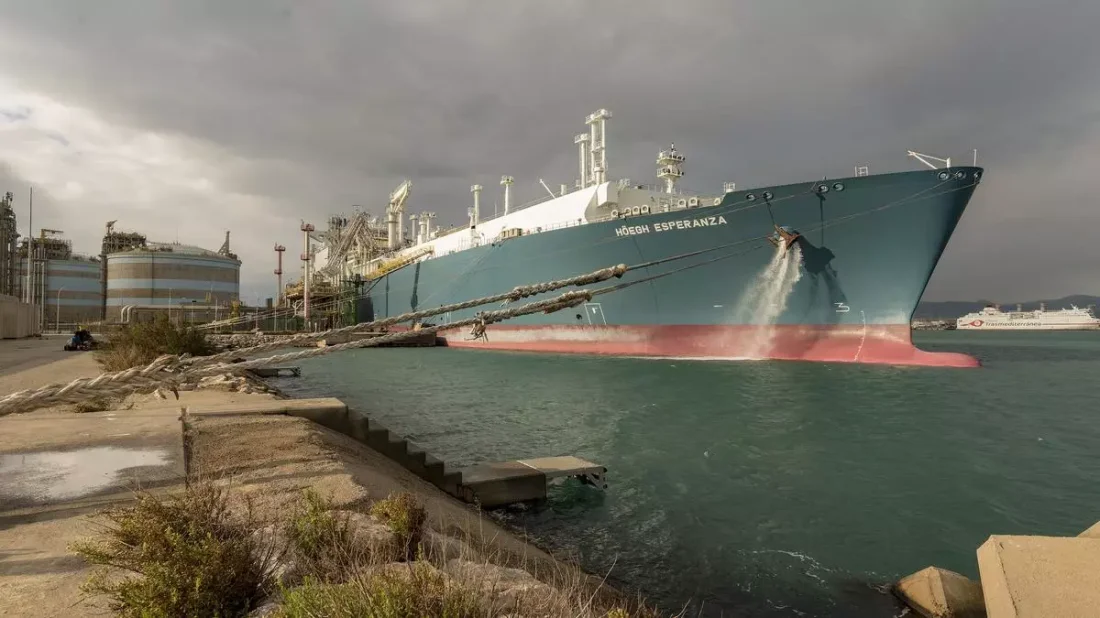
Eighteen days after exiting state liquidity support, SEFE Securing Energy for Europe has moved to raise fresh capital — a step that opens the European Commission-mandated privatization of the German utility that signed Argentina's first long-term global LNG supply contract.
SEFE — formerly Gazprom Germania before Berlin nationalized it in the wake of Russia's 2022 invasion of Ukraine — has proposed a capital increase of €1.5–2 billion ($1.76–2.35 billion) to Germany's Federal Ministry for Economic Affairs and Energy (BMWE), the first formal step in a privatization the European Commission required be completed before the end of 2028. The move reconfigures the ownership of the counterparty slated to take one-third of Southern Energy's Argentine LNG volumes from late 2027.
Whether the ultimate ownership structure materially changes SEFE's posture as an Argentine LNG offtaker — on pricing, destination flexibility, or appetite to scale the contract — will depend on which investor base emerges and on the composition of the private capital that eventually dilutes the German state. None of those decisions crystallize in 2026 or 2027; all activate from 2028 onward, once the dilution is in train.
The exit route Brussels imposed in 2022
The calendar was not SEFE's choice. The European Commission set it in December 2022, when it approved the €6.3 billion nationalization of the former Gazprom Germania. In exchange for clearing the rescue, Brussels required the German state to reduce its stake to a blocking minority — 25% plus one share — before the end of 2028. The same condition applies to Uniper, where Berlin holds 99.12%.
The first phase was financial, and it is already done. On April 2, 2026, SEFE voluntarily cancelled the final €2.5 billion tranche of its KfW liquidity backstop and replaced it with a $2.36 billion revolving credit facility signed with 27 international banks, oversubscribed by a factor of 2.2. By that date the company had already returned more than €700 million in state aid. Eighteen days later, the next step: fresh equity from private shareholders.

SEFE is already Río Negro's LNG customer
On March 4, 2026, SEFE and the Southern Energy consortium signed a sale and purchase agreement (SPA) for 2 million tonnes per annum (MTPA) over eight years, on a free on board (FOB) basis, with shipments starting in late 2027. That contract gave Argentina its first long-term global LNG export deal — and made SEFE the first global buyer of Argentine LNG.
The figures explain why the German shareholder reshuffle has direct consequences for Río Negro province. The 2 MTPA equates to one-third of Southern Energy's projected 6 MTPA capacity and more than 80% of the Hilli Episeyo FLNG's 2.45-MTPA output. The Hilli is scheduled to begin operations in late 2027 from the Golfo San Matías in Argentina's Río Negro province — a deepwater gulf suited to mooring floating LNG units. A second 3.5 MTPA unit, the MK II, adds capacity from late 2028.
Southern Energy is jointly held by Pan American Energy (PAE), Argentina's largest private oil producer (30%); YPF, Argentina's state-controlled oil and gas company (25%); Pampa Energía, a diversified Argentine energy company (20%); Harbour Energy, the U.K.-based E&P company (15%); and Golar LNG, the Norway-based LNG infrastructure company (10%). The consortium has committed more than $15 billion over the 20-year development.
A signed SPA does not itself require Southern Energy to act. But it leaves open three questions the producers will track. First, contract extensions: the other two-thirds of the Southern Energy portfolio lack a long-term anchor buyer, and a privatized SEFE — with institutional shareholders facing return horizons — may prove either more aggressive in expanding or more conservative in committing capital, depending on which investors enter.
Second, destination policy: the contract is FOB, so cargo-routing risk sits with SEFE, and future management will decide whether to re-export cargoes, redirect them to Asia or maintain industrial use in Germany. Third, price renegotiation at the next indexation cycle.
Long-term LNG SPAs typically include change-of-control clauses requiring seller consent for material shifts in buyer ownership, with triggers commonly set between 30% and 50% of equity. Since the dilution of the German state has been baked into the Commission's 2022 decision, that clause is likely to have been calibrated to the regulatory calendar in the March SPA; otherwise Southern Energy would hold renegotiation rights that could undercut the equity story SEFE presents to future shareholders.
The Iran war as political fuel for the timeline
Egbert Laege, SEFE's chief executive, told the Financial Times that the war with Iran added urgency to the process. With the Strait of Hormuz closed, damage to Ras Laffan that Qatar estimates at $20 billion a year during a five-year repair cycle, and Middle East LNG exports contracted, Europe needs contracts with suppliers outside that corridor — and Argentine LNG can reach European terminals on Atlantic routes that bypass both the Strait of Hormuz and the Suez Canal.
SEFE has that portfolio. Alongside Argentine gas, it holds offtake deals with ADNOC, Abu Dhabi's state oil company (1 MTPA over 15 years from 2028); Oman LNG (0.4 MTPA between 2026 and 2029); Venture Global, the U.S. LNG developer; Equinor, the Norwegian energy major (10 billion cubic meters annually from 2024 to 2034); and SOCAR, Azerbaijan's state oil company. But the only South American volume operable at relevant scale before 2030 comes from Vaca Muerta. In a sale prospectus, that detail carries weight.
If BMWE approves the capital increase, execution takes nine to 12 months. Only then does the next phase begin: dilution via secondary sale, initial public offering, or a combination. Laege acknowledged to the FT that an IPO may prove difficult for SEFE and noted the ultimate decision rests with the market and the government. The industry assumes a hybrid path: capitalization now, a partial strategic sale during 2027 and a residual IPO in 2028 if market conditions allow.