Exports

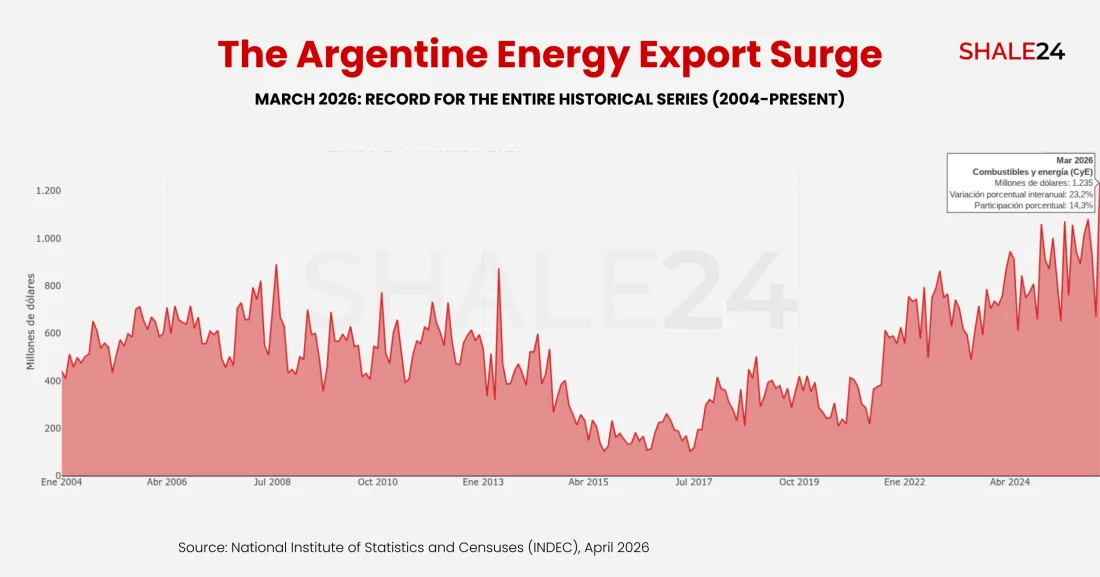
Argentina's energy trade balance posted a record $1.09 billion surplus in March, as fuel and energy exports climbed 23.2% year-on-year to $1.24 billion, the largest monthly total since records began.
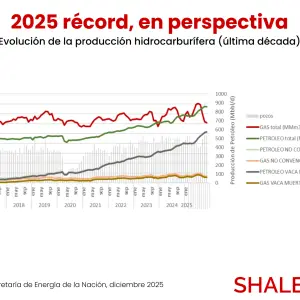
The result marks a further step away from the energy deficit years (2011–2022), when Argentina spent billions annually on LNG and fuel imports despite holding world-class hydrocarbon reserves. The reversal has been driven by the decade-long development of Vaca Muerta, the country's main shale play in the Neuquén Basin, and by expanded pipeline capacity routing Neuquén Basin output to Atlantic export terminals.
Physical export volumes rose 29.1% year-on-year in March. Crude oil and refined fuels led the expansion.
Import compression adds to the margin
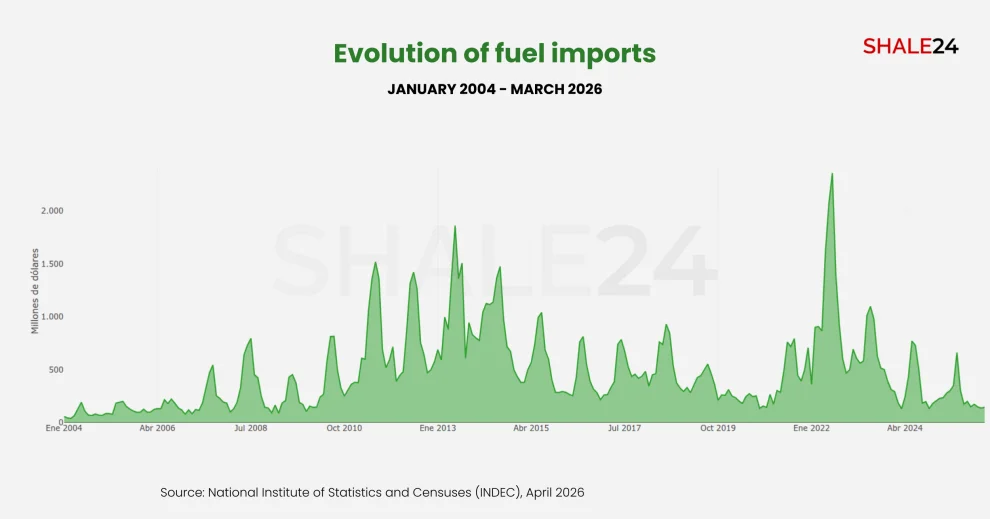
Imports of fuels and lubricants fell 38.5% year-on-year in March to $145 million. Physical import volumes dropped 10.2%, meaning lower international prices and lower physical requirements both cut into the energy bill.
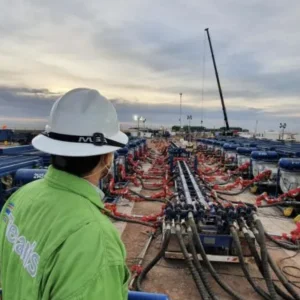
The combination — domestic supply increasingly meeting demand while record export volumes clear the surplus — reflects the operational maturity Argentina's energy sector has reached after more than a decade of Vaca Muerta investment.
A first quarter on the same trajectory
Widened to the full first quarter of 2026, the trade surplus totaled $2.41 billion, also a first-quarter record. Energy exports reached $2.84 billion (+1.9% year-on-year), while imports were contained at $432 million, a 35.7% contraction from the same period of 2025.