
LNG Markets
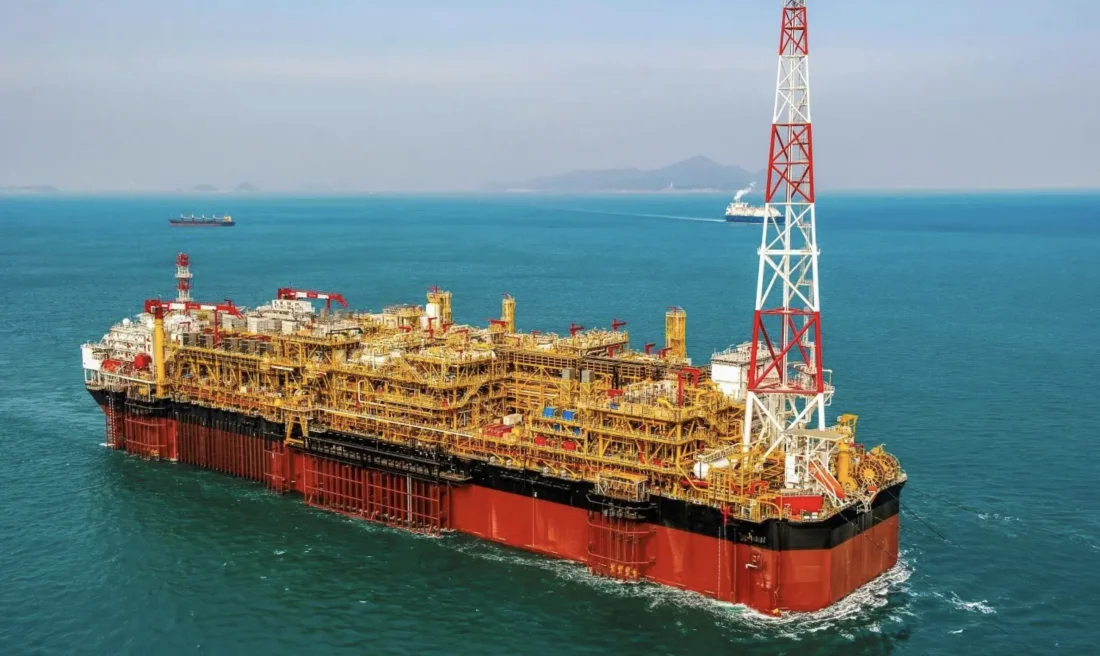
CoreMarine, a Norwegian offshore engineering firm, and Jumbo Offshore, a Dutch specialist in heavy maritime transport, have been awarded the contract to transport, install, and connect the soft yoke (SSY) single-point mooring systems for Southern Energy's two floating LNG units (FLNG) in Argentina's Golfo San Matías — a deepwater gulf in Río Negro province suited to mooring floating LNG units.
The contract marks the first application of SSY technology in Argentine waters and a key step toward the 5.95 million tonnes per annum (MTPA) of Argentine LNG capacity scheduled to reach Atlantic markets in 2027 and 2028.
The contract was awarded by Southern Energy S.A. (SESA) — the consortium comprising Pan American Energy (PAE), Argentina's largest private oil producer; YPF, Argentina's state-controlled oil and gas company; Pampa Energía, a diversified Argentine energy company; Harbour Energy, the U.K.-based E&P company; and Golar LNG, the Norway-based LNG infrastructure company. The two FLNG vessels are the Hilli Episeyo, scheduled for installation in 2027, and the MKII FLNG, to follow in 2028.
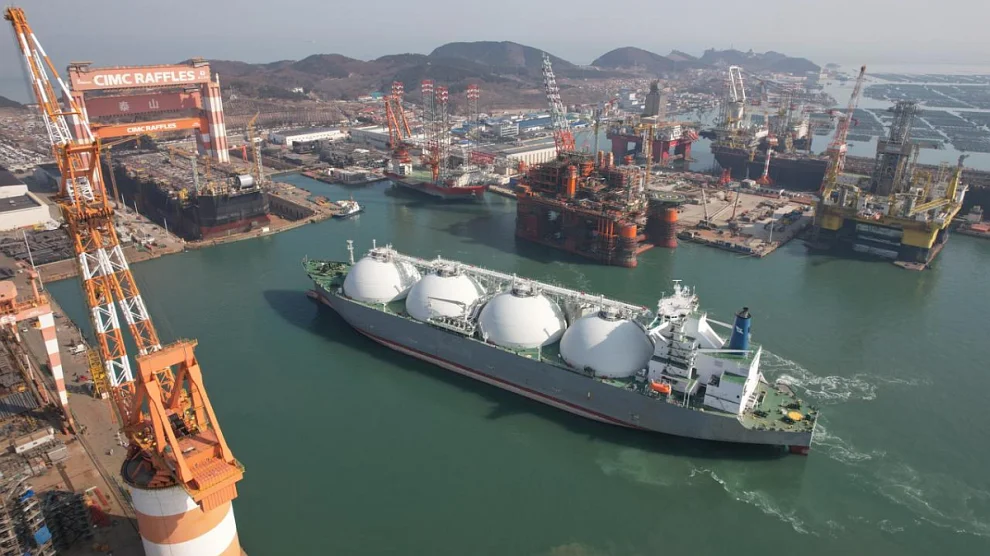
What the Soft Yoke System Does — and Why It Matters Financially
An FLNG vessel cannot remain fixed. It must rotate with wind, current, and wave action to avoid working against the sea's forces. The SSY system resolves this by anchoring the unit to a single mooring point while allowing it to weathervane freely — with no fixed shore infrastructure, no jetty, and no costly coastal construction required. The direct operational result is lower vessel downtime and greater resilience under adverse conditions. The less obvious financial consequence is a lower technical risk profile for the lenders modeling the project's cash flow.

The SSY systems for the Golfo San Matías will be supplied by NOV, the U.S.-based oilfield equipment manufacturer — the first application of this technology in Argentine waters.
The offshore campaign to install the systems is among the most technically complex in the region: heavy-lift operations, riser installation, piling, spool connections, saturation diving, and simultaneous operations (SIMOPS) with multiple vessels working in parallel — involving dive support vessels (DSVs), dynamic-positioning tugs, and specialized support vessels — all delivered through an integrated contract model that consolidates engineering, project management, transport, and offshore installation under a single chain of responsibility.
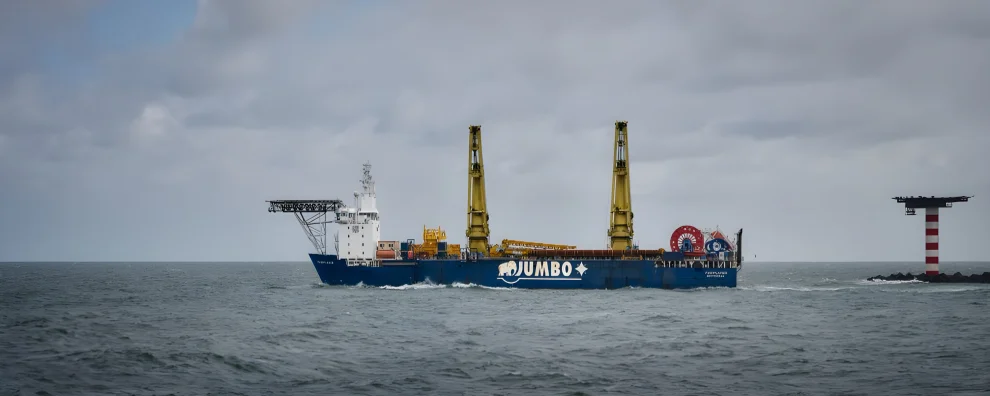
CoreMarine and Jumbo Offshore: Who They Are and What Brings Them Here
For CoreMarine, this is its first FLNG project and the largest single contract in Latin America in the firm's history. As lead contractor, CoreMarine will subcontract Jumbo Offshore for the transport and heavy-lift installation of the SSY systems, including piling activities, then carry out the diving and construction phases — spool installation, ballasting, riser hookup, pre-commissioning, and final positioning and hookup of both FLNG units. Project management and engineering began in January 2026, three months before the contract was formally executed.
Ben Fitzgerald, CEO of CoreMarine, said: "Projects like this are at the top end of offshore construction complexity. Moving, positioning, and permanently installing floating assets of this scale demands absolute precision, proven experience, and flawless execution offshore. This is where CoreMarine and Jumbo Offshore will make a real difference. Our objective is not just to deliver two FLNG installations, but to leave behind strong local capability, confidence, and a proven model for future offshore developments in the region."
Jumbo Offshore is not new to this type of work. The Dutch company is a global leader in soft yoke mooring installations, with a track record in Brazil and Cameroon. The Cameroon reference is directly relevant: it was there that the Hilli Episeyo began its operational life as a floating LNG unit. Jumbo installed the mooring system that held it in place then. It will do the same in the Golfo San Matías.

The Market Timing
The conflict in the Strait of Hormuz, active since February 2026, has disrupted global LNG flows and accelerated Europe's search for Atlantic-sourced supply. Argentine LNG — once loaded from the Golfo San Matías — can access Atlantic trade routes that bypass the Strait of Hormuz and the Suez Canal entirely, a structural advantage that becomes commercially material precisely when Middle East supply routes are under pressure.
Southern Energy's project was not born of this environment: its final investment decisions (FIDs) were taken in May and August 2025, when the Strait was still open. Current conditions have elevated the market value of its 5.95 MTPA to a level that would have been difficult to achieve at any other recent point in the sector's history.
The mooring contract award is not the last step before operations. It is the first in which the engineering leaves the drawing board and becomes physical execution at sea.