
Midstream

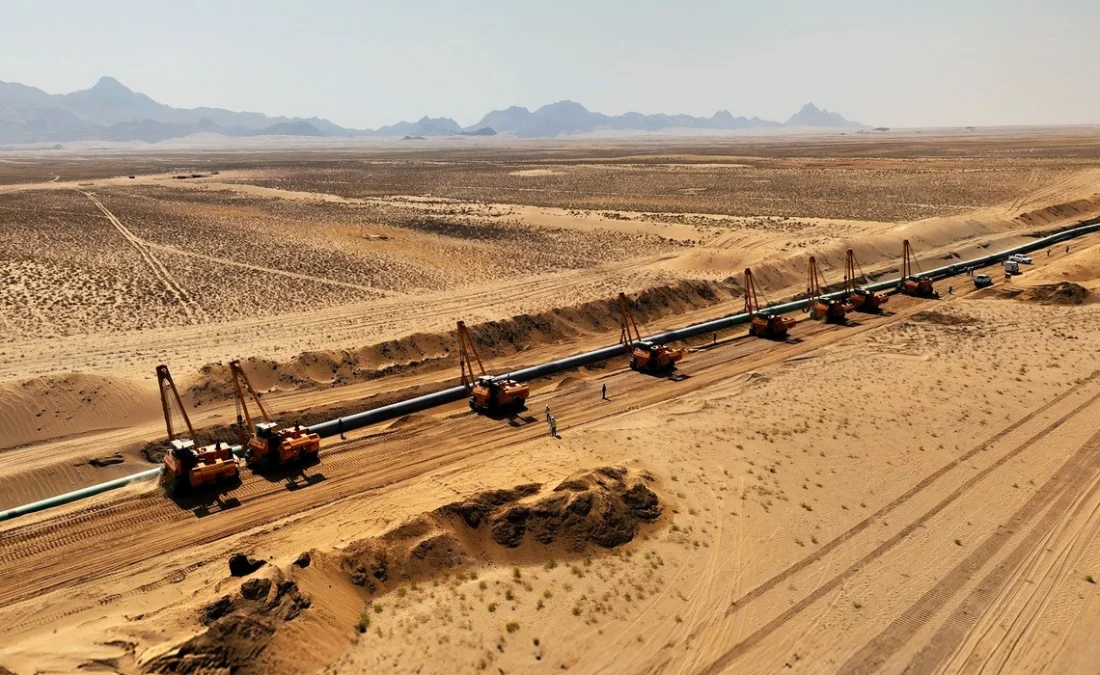
San Matías Pipeline, the midstream vehicle formed by Pan American Energy (PAE), Argentina's largest private oil producer; YPF, Argentina's state-controlled oil and gas company; Pampa Energía, a diversified Argentine energy company; Harbour Energy, the U.K.-based E&P company; and Golar LNG, the Norway-based LNG infrastructure company, to build infrastructure for Argentina's first liquefied natural gas (LNG) export project, has awarded the pipeline construction contract to a joint venture (JV) between Italy's Sicim and Argentine contractor Víctor Contreras.
The intermediate compressor station went to Oilfield Production Services (OPS), a Neuquén-based company. The decision, announced by the consortium, was unanimous; contracts have been signed.
Total pipeline investment is $1.3 billion under the regime filed by San Matías Pipeline with Argentina's Large Investment Incentive Regime (RIGI). The project is part of the fiscal and regulatory framework ratified by the agreement signed in April between Río Negro province and the Southern Energy S.A. (SESA) upstream/LNG vehicle and the San Matías Pipeline midstream vehicle, which sets a total investment of more than $15 billion over two decades for Argentina's first LNG export operation.
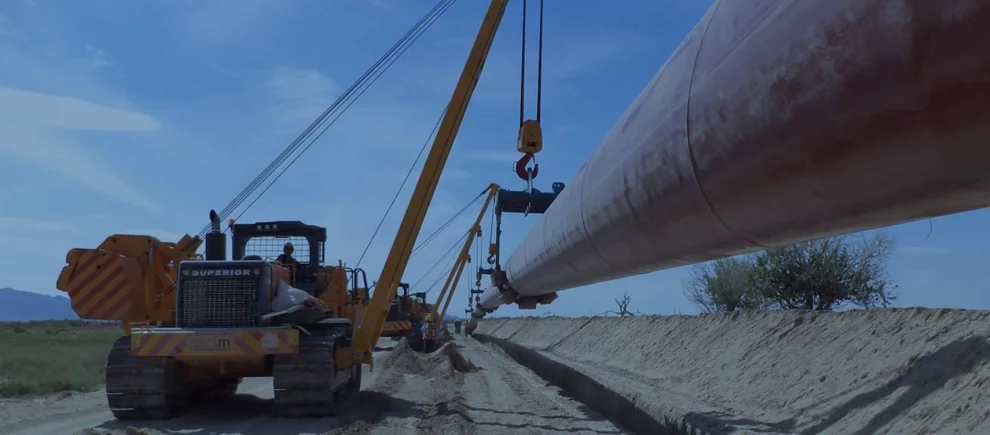
The pipeline will run 471 kilometers with a 36-inch diameter. The route will connect Tratayén, in the Neuquén Basin, with the Río Negro coast near San Antonio Oeste, where the floating liquefaction units will be moored.
Transport capacity has been set at 27 million cubic meters per day (MMm³/d), enough to supply the two floating liquefaction vessels planned. The intermediate compressor station will be installed at kilometer 80 of the route, near Allen, a pipeline hub in Río Negro province, with 46,000 HP of installed power.
The Winning Contractors
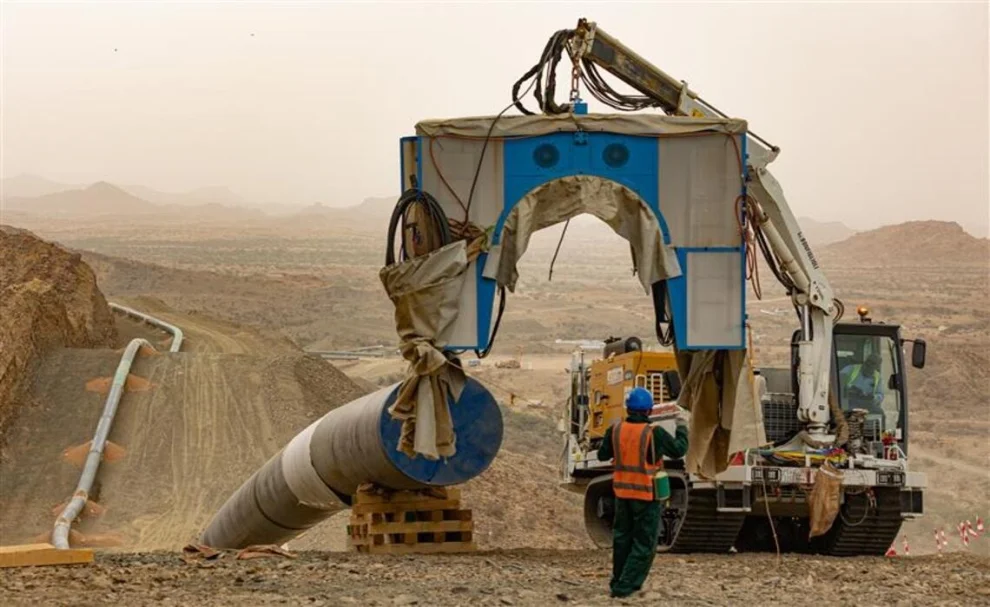
Sicim S.p.A. was founded in 1962 in Busseto, northern Italy, by the Riccardi family. Its origins trace to Snam, the gas pipeline company set up by Agip, the former parent absorbed by ENI, the Italian energy company, in 2013. Over 63 years of operations, Sicim has laid more than 20,000 kilometers of pipelines and worked with over 100,000 tonnes of steel systems and structures, according to the company. It employs more than 10,600 people and operates in 26 countries. In South America it works in Colombia, Guyana, Peru, and Chile. The Tratayén–Golfo San Matías pipeline will mark its debut in the Argentine market.
Víctor Contreras is an Argentine construction company specializing in large-diameter pipelines for the oil and gas industry. It emerged in the 1970s as a spin-off of Contreras Hermanos, a long-established Patagonian family construction firm. Over its history it has laid more than 6,000 kilometers of pipelines, according to its website. Within the JV, Sicim holds 51% and Víctor Contreras 49%.
San Matías Pipeline reported that the JV's bid was the most competitive of the five proposals submitted for the line. The consortium cited three factors in the decision: price, financial flexibility — the JV did not request advance payments — and a stronger contractual performance guarantee and reinsurance package. The partners also pointed to the JV's commitment to the planned fit-for-purpose design. On tightly priced projects like this one, financial and technical variables weigh as heavily as price.
OPS is a Neuquén-based company with sustained expansion in the basin. The consortium said its award rested on performance guarantees and payment terms judged the strongest in the bidding round. The OPS contract complements the prior agreement between San Matías Pipeline and Baker Hughes, the U.S. oilfield services company, which is supplying three NovaLT16 turbomachinery units for the same compressor station.
The OPS civil works and the Baker Hughes turbines together make up the kilometer-80 compression system, which maintains pressure and continuous gas flow across the 471-kilometer line, particularly on the final stretch leading into Golfo San Matías, the deepwater gulf in Argentina's Río Negro province suited to mooring floating LNG units.
The split award for the line and the compressor reflects a standard EPC structure for large-diameter gas transport projects. The pipeline civil works are repetitive and scalable, with automated welding of 36-inch pipe across 471 kilometers, while the compressor is a localized installation requiring distinct turbomachinery technology. Splitting the tender forces specialization by package and reduces the premium on vertical integration.
The Bidders and the Schedule
For the pipeline contract, the winning JV competed against a Techint Engineering & Construction (Techint E&C)–SACDE consortium, both engineering and construction subsidiaries of the Techint Group, with SACDE tied to Pampa Energía; a consortium of U.S. contractor Pumpco, a MasTec subsidiary, with Italy's Bonatti and Contreras Hermanos; and individual bids from OPS itself and local contractor BTU.
For the compressor station, OPS, SACDE, Pecom, BTU, and Contreras Hermanos competed. Marcelo Mindlin, chairman of Pampa Energía, recused himself from the award committee throughout the process due to SACDE's presence as a bidder, the consortium said.
The pipeline must be operational before the Southern Hemisphere winter of 2028 (June–September). The date is aligned with the arrival at Golfo San Matías of the second floating liquefaction unit, the MKII, which will join the Hilli Episeyo vessel scheduled for September 2027.
With both units operating, the project's combined capacity will reach 6 million tonnes per annum (MTPA) of LNG, following the August 2025 Final Investment Decision (FID) for the MKII, which complemented the May 2025 FID for the Hilli Episeyo.
In February, the consortium signed a non-binding heads of agreement (HOA) in Berlin with Germany's state-owned SEFE Securing Energy for Europe — reportedly worth more than $7 billion — to supply 2 MTPA over eight years from late 2027, a volume that covers approximately 80% of the Hilli Episeyo's capacity. The Tratayén–Golfo San Matías pipeline is one of seven strategic projects reshaping Argentina's export matrix, consolidating the country as a new Atlantic LNG supplier with access to export routes that bypass strategic maritime chokepoints including the Strait of Hormuz and the Suez Canal.