
u$s 2 billion expected
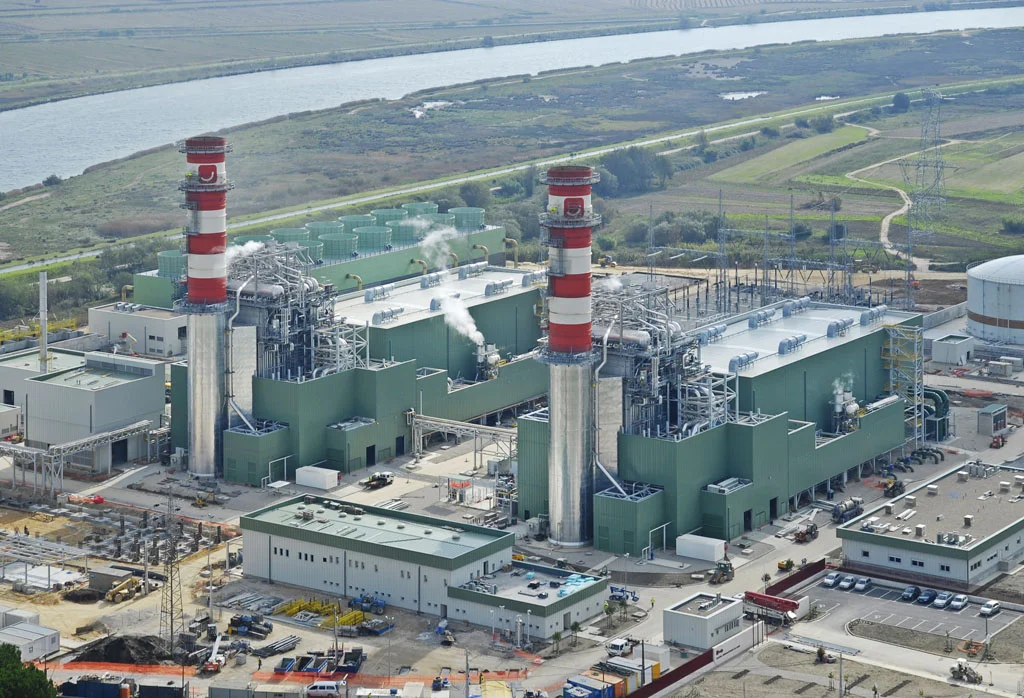
The Argentine government on Tuesday added two of the country's most important thermal generation assets to its privatization package, confirming a move the market had been pricing in but that had not been formally announced.
Economy Minister Luis Caputo included the Manuel Belgrano and José de San Martín combined-cycle plants in the list of assets the Treasury intends to convert into $2 billion in revenue by the end of 2026. The announcement closes a longer cycle than its headline suggests: both plants are the flagship units of the FONINVEMEM program, the 2004 mechanism that turned state electricity debt into base-load capacity.
Belgrano (TMB), in Campana, Buenos Aires province, and San Martín (TSM), in Timbúes, Santa Fe province, together supply roughly 1,650 net megawatts of combined-cycle capacity, feeding the two highest-demand corridors of the Argentine Interconnection System (SADI): metropolitan Buenos Aires North and the Litoral region. Both are currently majority-controlled by Energía Argentina S.A. (ENARSA), the state-owned energy company, with 65% of TMB and 68.3% of TSM.
The remaining capital sits with the private generators that contributed to the original fund: Central Puerto, one of Argentina's largest power generators; AES, the U.S. utility; Enel, the Italian power major; Pampa Energía, a diversified Argentine energy company; and Orazul Energy. What the announcement formalizes, in practical terms, is the closing chapter of the program: the state's exit from both operating companies, 22 years after FONINVEMEM was launched.
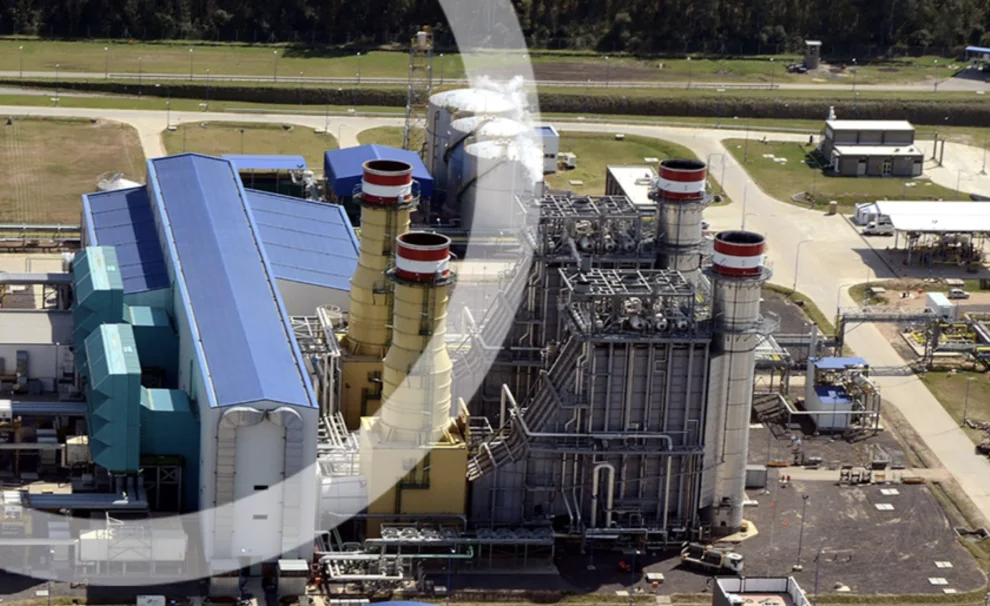
The Two Plants That Close the FONINVEMEM Cycle
The Fund for Necessary Investments to Increase Electricity Supply in the Wholesale Electricity Market, known by its Spanish acronym FONINVEMEM, was created by Resolution 712/2004 of the then-Secretariat of Energy. Its mechanism converted the debt that the Compañía Administradora del Mercado Mayorista Eléctrico (CAMMESA), Argentina's wholesale electricity market administrator, had accumulated with private generators during the post-convertibility tariff freeze into equity contributions to build base-load capacity.
The Banco de Inversión y Comercio Exterior (BICE) administered the trusts, and the contributing generators became minority shareholders in the operating companies.
Belgrano began operating in March 2008 with its first gas turbine and received combined-cycle commercial authorization from CAMMESA in January 2010. San Martín followed an analogous schedule: two gas turbines authorized in June and August 2008, with the steam unit added in February 2010.
Effective net capacity stands at roughly 823 MW at Campana and 825 MW at Timbúes, levels that place both plants among the most efficient thermal generators in the SADI. Taken together, their combined contribution is comparable to the output of all three of Argentina's nuclear plants combined.
The piece that needed to fall into place to unlock the sale was fiscal. Article 66 of Law 27,778, the 2026 Budget Law passed by the Argentine Senate on December 26, 2025, exempted from corporate income tax the transfer of shares from the "Central Térmica Manuel Belgrano" and "Central Térmica Timbúes" trusts to their operating companies.
The provision reframes the move as a corporate reorganization rather than a taxable sale. Market estimates put the assets returnable from each trust at roughly $300 million per plant, implying a fiscal saving of close to $200 million for the private participants.
The corporate movement has a single name attached across all three sides: Tristán Socas, who serves simultaneously as president of TMB, president of TSM, and head of ENARSA after the departures of Juan Carlos Doncel Jones and Rigoberto Mejía Aravena.
Decree 286/2025, which in April 2025 authorized the full privatization of ENARSA through the separation of its business units, links the FONINVEMEM closing to the state's exit from hydroelectric generation, transmission, and the importation of liquefied natural gas (LNG).
The Day That Sealed the State's Retreat
The Belgrano and San Martín announcement did not arrive alone. On the same morning of April 28, at 10 a.m., the financial bids for the Compañía Inversora en Transmisión Eléctrica (Citelec), the controlling vehicle of national grid operator Transener, were opened on the CONTRAT.AR procurement platform.
The three submissions totaled $887 million: the consortium of Genneia, Argentina's leading renewable generator, and Edison Transmisión presented the highest bid at $356 million; Central Puerto offered $301 million; and Edenor offered $230 million.
In parallel, the government approved the contract model for the concession of Agua y Saneamientos Argentinos S.A. (AySA), Argentina's national water utility, through Resolution 543/2026, and channeled proceeds from the Belgrano Cargas freight rail process into a public works trust through Decree 282/2026. Speaking at the Expo EFI investor conference in Buenos Aires, Caputo referenced the four moves together: read in sequence, they mark the deepest withdrawal of the Argentine state from the electricity system since the privatizations of the 1990s.
The sectoral question the Belgrano and San Martín sale opens is who buys. The current shareholders (Central Puerto, AES, Enel, Pampa Energía, and Orazul Energy) already know the plants intimately, having collected FONINVEMEM remuneration cash flows and operating other SADI units.
But Article 31 of Law 24,065, Argentina's electricity framework law, restricts vertical concentration across generation, transmission, and distribution, and obliges any bidder combining cross-segment roles to seek case-by-case exceptions. Central Puerto, which submitted a $301 million bid for Citelec earlier on the same Tuesday, would face a double regulatory exposure if it also pursued TMB.