
Conflict
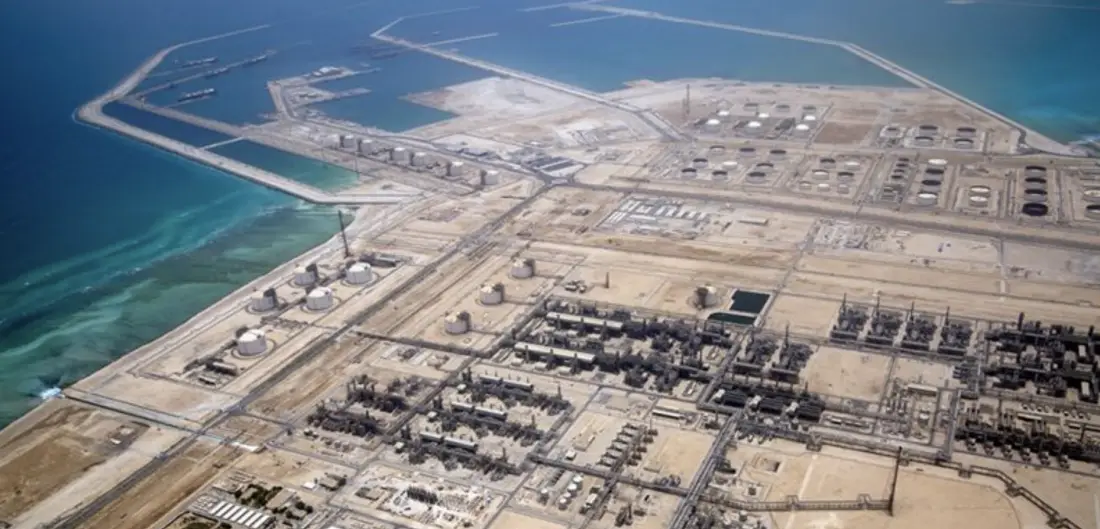
The global LNG market took only hours to rewrite its parameters.
When QatarEnergy declared force majeure on Monday, March 2 — suspending deliveries from Ras Laffan, the world’s largest liquefaction complex — the European TTF benchmark doubled within 48 hours, rising from €30–34 per megawatt-hour in February to more than €60. Goldman Sachs estimated that if the disruption lasts a month, the continental benchmark could climb as much as 130% from pre-conflict levels.
It is the biggest LNG supply shock since the Russian invasion of Ukraine. In that scenario, Argentina has the right answer — but it still does not have the ship.
Qatar sidelined
QatarEnergy’s withdrawal is not a minor episode. The country accounts for roughly 20% of global LNG supply and, unlike Saudi Arabia in the oil market, has no alternative route to bypass the Strait of Hormuz to move its production.
When Iran moved across that corridor — through which about one-fifth of the world’s liquefied gas transits — and drones struck the plants at Ras Laffan and Mesaieed, the disruption stopped being only a price event and became a physical supply shock.
Satellite data cited by market analysts showed more than 200 vessels waiting to enter the strait on Monday morning. The force majeure declared by QatarEnergy was the first in the company’s history.
Against that backdrop, U.S. LNG exporters capitalized immediately. Shares of Cheniere Energy and Venture Global LNG rose between 5.6% and 20% in two trading sessions.
Energy Flux analyst Seb Kennedy estimated that U.S. producers could accumulate as much as $4 billion in windfall profits if the disruption lasts a month under the base scenario, and up to $20 billion if Qatar remains out of the market until the Northern Hemisphere summer. The gap between those figures is the difference between a scare and a reconfiguration of the global energy market.
What Argentina has — and what it still doesn’t
The conflict arrived at an unusually precise moment for Argentina. On Tuesday, March 4 — while the TTF was climbing to three-year highs — the Southern Energy consortium signed its first long-term LNG export contract in Berlin: 2 million tons per year for eight years with SEFE, Germany’s state-owned energy company
The consortium includes Pan American Energy, YPF, Pampa Energía, Harbour Energy and Golar LNG. The projected value of the agreement exceeds $7 billion, calculated on pre-conflict prices. With the TTF now at double those levels, that number already looks conservative.
The problem — and the opportunity — is that the first deliveries are scheduled for late 2027, when the Hilli Episeyo, the project’s first floating liquefaction unit (FLNG), arrives at the Golfo San Matías in Argentina’s Río Negro province. Until then, the Neuquén Basin has the gas but not the liquefaction and export infrastructure.
In that context, Daniel Dreizzen, director of Aleph Energy, was precise in comments to Shale24: every $10 increase in Brent crude equals about $1.3 billion in additional Argentine exports on an annual basis. With Brent crude oil rising from $61 in January to $82 this week, the projected impact approaches $2.7 billion in extra export revenue for the year.
But the benefit is strictly price-driven, not volume-driven. The same already-committed barrel exported is worth more; there is no additional barrel in play.
The ceiling the rally cannot move
Horacio Marín, president and CEO of YPF, was explicit in comments to Shale24: until 2027, Argentina has no physical capacity to significantly increase hydrocarbon exports. The bottleneck is the evacuation system.
The Vaca Muerta Oil Sur pipeline (VMOS) will reach 180,000 barrels per day when it enters operation in July 2026, and will only reach 550,000 barrels per day in 2027. Until then, the Vaca Muerta shale formation produces more than can be transported to export markets. A window of high prices benefits barrels already committed for export, but does not enable a step change in scale.
Meanwhile, Mauricio Roitman, from energy trader Energeia and former chairman of the board of ENARGAS, told Shale24 that to scale LNG exports to between 12 million and 18 million tons per year Argentina will also need, in addition to the Southern Energy and Argentina LNG projects, 10- to 15-year offtake contracts with tier-one buyers in Europe or Asia.
International financing — through multilateral banks or non-recourse structures — will be the master key. And that is where the other side of the shock appears.
The financing paradox
However, the same conflict pushing oil prices higher has the opposite effect in capital markets. Geopolitical uncertainty drives flows toward safe-haven assets and away from emerging markets.
Argentina’s country risk, which had fallen to 484 basis points at the end of January, climbed to 587 points in the days following the start of the conflict. Energy companies seeking to finance pipelines, processing plants or LNG projects now pay a higher risk premium for every dollar they borrow.
The paradox is precise, as Dreizzen noted to Shale24: the same conflict that improves the price of the barrel exported today makes credit more expensive to build the infrastructure needed to export more barrels tomorrow.
Argentina’s shale industry is watching the energy rally from a position of relative volumetric immobility — a paradox the industry has been warning about for months and that the conflict is now bringing back to the forefront.
The variable that defines everything
At the same time, the outcome depends on the duration of the conflict. A limited episode would imply temporary volatility: Brent would retreat once global oversupply fundamentals — estimated between 2 million and 3 million barrels per day — regain weight, and Argentina’s country risk would likely ease.
A prolonged escalation, by contrast, would have different implications: sustained energy prices, domestic inflationary pressure, higher risk premiums and more cautious capital flows.
For Argentina’s LNG projects, however, a sustained high-price scenario has a different reading. Dreizzen noted to Shale24 that, over the long term, rising global gas prices could reinforce the economic viability of the liquefaction projects the country is planning to turn Vaca Muerta into a relevant player in the global LNG market.
The contract with Germany — signed the same day the TTF reached three-year highs — confirms it better than any projection. What the United States is harvesting today in windfall profits, Argentina is observing from the threshold.
The Hilli Episeyo arrives in 2027.