
Prospective analysis
The administration of President Javier Milei is drafting a bill it will send to Congress in the coming days, branded the Super RIGI: a tax and customs regime more aggressive than Argentina's existing Large Investment Incentive Regime (RIGI), targeting sectors the government says "do not exist in Argentina today."
No formal text of the bill exists yet. What is known so far comes from three sources: a post by Milei on X from the presidential plane on Thursday, May 7; the press conference Economy Minister Luis Caputo held at Casa Rosada, the seat of Argentina's executive branch, on Friday, May 8, alongside Cabinet Chief Manuel Adorni; and side comments from Foreign Minister Pablo Quirno.
The tax core Caputo described would cut corporate income tax for adhering firms from 25% to 15%, with accelerated amortization of 60% in the first year and 20% in each of the two following years. The minimum investment threshold has not yet been set; Caputo said the figure would be finalized over the weekend.
Whether the bill clears Congress, where its final parameters land, and how the new regime articulates with the existing RIGI will depend on factors the current outline cannot resolve, including the minimum investment floor, the governance structure of the new regime, and whether the 22 projects currently pending approval under the existing RIGI will be allowed to opt into the expanded framework. The pipeline of investment commitments already attached to the existing RIGI, plus the Chevron commitment Milei secured on his U.S. trip, gives the government immediate validation; what the legislative cycle delivers remains to be seen.
The Announcement from Tango 01
Milei posted on X on Thursday, May 7, on his return flight from the 29th Milken Institute Global Conference in Los Angeles, that he was "launching a MEGA BOMB from the presidential plane" because Argentina cannot afford a B-2 Spirit. He confirmed the government would send Congress a Super RIGI bill "with greater advantages than the original RIGI" that would apply to sectors "that have never existed in Argentina," adding that the new regime would enable new companies to meet "the productive needs of the dynamic sectors of the economy" while multiplying jobs.
Caputo and Quirno were on board the flight. The foreign minister supplemented the announcement with a brief post. Hours earlier, Caputo had reported via the same channel on Milei's meeting in Los Angeles with Chevron Chief Financial Officer Eimear Bonner and Laura Lane, writing that the U.S. major had committed to submitting a new RIGI project worth more than $10 billion within days. The president's U.S. agenda also included contacts with Bitso, Brightstar, Nvidia, Visa, and Robert Citrone, an investor at Discovery Capital close to U.S. Treasury Secretary Scott Bessent.
Caputo's Detail at Casa Rosada
At Friday's press conference led by Adorni, the economy minister detailed the tax and customs block the bill would carry:
- Corporate income tax: 15% for adhering firms, versus 25% under the existing RIGI.
- Accelerated amortization: 60% in year one, 20% in year two, 20% in year three.
- Import tariffs: broader exemption. Under the current RIGI, the waiver applies to capital goods. The Super RIGI would extend it to inputs. Caputo said the current exemptions apply mainly to capital goods, while some capital goods carry different tariff classifications, leaving a "gray area" that requires further discussion.
- Export tariffs: 0% from the start of operations. Under the existing RIGI, the exemption begins at year three (or year two for strategic long-term export projects, known by the Spanish acronym PEELP).
- Adhering provinces: gross receipts tax capped at 0.5%.
- Municipal levies: prohibited on sales. Caputo characterized such charges as effectively a tax rather than compensation for a service.
On investment volume per project, Caputo said the new RIGI could prompt a company to commit $20 billion to $30 billion to Argentina, adding that the country expects to receive $140 billion in cumulative investment requests under the current regime in the coming weeks. The minister cited Daniel González, secretary coordinator for energy and mining at the Economy Ministry, as co-author of the design.
Adorni and the Existing RIGI's Track Record
The cabinet chief framed the announcement against the original regime's progress, reporting that 13 projects worth $28 billion have been approved, with benefits flowing to the provinces of Mendoza, Río Negro, Salta, Catamarca, Santa Fe, and Buenos Aires.
The current RIGI has already been amended once. Decree 105/2026, published in February, extended the adhesion deadline by a year to July 8, 2027; added offshore hydrocarbon production at a $600 million floor; and broadened the definition of technology upgrades to cover biotechnology, nanotechnology, electric mobility, aerospace, software, robotics, artificial intelligence, and the nuclear industry at a $250 million floor. According to the RIGI Evaluation Committee that Caputo chairs, total investment submitted to the regime by late April reached $94.96 billion, with 22 projects pending approval for $67.76 billion.
The Eight Energy and Mining Sectors Caputo Named
The sectoral list came from the press conference. It is not written into any regulatory text. Caputo listed copper refining and rolling; lithium batteries; electric vehicles; solar panels; wind turbines; the uranium value chain; potash and phosphorus fertilizers; industrial fishing products; and data centers. Eight of those touch directly on the perimeter of energy and mining. A sector-by-sector review follows.
1) Copper refining and rolling
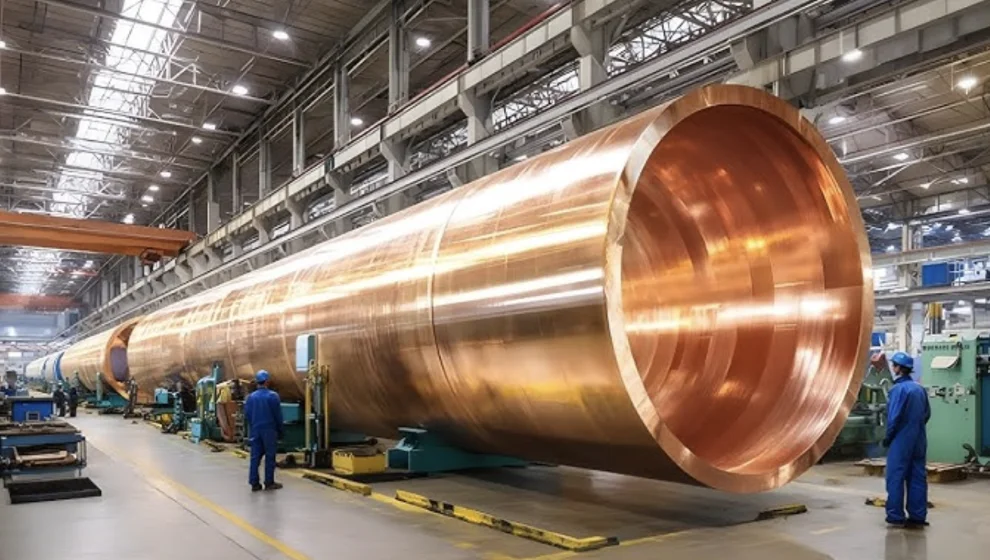
Argentina has no primary copper smelter or refinery. La Alumbrera (copper-gold concentrate) ceased operating years ago, and downstream capacity has never existed domestically. The current RIGI stock concentrates on upstream projects: Vicuña (a BHP–Lundin joint venture covering Filo del Sol and Josemaría), Los Azules (McEwen), MARA (Glencore with Newmont and Pan American Silver), El Pachón (Glencore), and Taca Taca (First Quantum). Foreign Minister Quirno confirmed in February that Glencore's projects would join the RIGI for $14 billion. Wood Mackenzie, the energy and metals research firm, estimated that replacing China's copper smelting and refining capacity, currently 97% of the global total, would require some $85 billion in investment worldwide. Typical primary smelter capex falls in the range of $3 billion to $5 billion.
2) Lithium batteries
The upstream is already inside the current RIGI: Rio Tinto Rincón ($2.72 billion), Galan in Hombre Muerto Oeste ($217 million), Posco Sal de Oro, Eramine Centenario-Ratones, and Lithium Argentina in Cauchari-Olaroz, among others. The downstream does not exist. There is no domestic production of cathode active material (CAM), cells, or battery packs. A gigafactory of 50 to 100 GWh requires capex in the range of $1 billion to $5 billion, plus 150 to 300 MW of firm power supply.
3) Electric vehicles
Argentina's eight assembly plants (Toyota, Volkswagen, Stellantis, Ford, General Motors, Renault, Nissan, and Iveco) all produce internal combustion vehicles. There is no installed EV capacity. Following Decree 105/2026, the current RIGI admits electric mobility as a technology upgrade with a $250 million floor. The Super RIGI would add a layer for greenfield plants. Caputo flagged the cross-sector synergy: EV plants consume both lithium batteries and rolled copper.
4) Solar panels
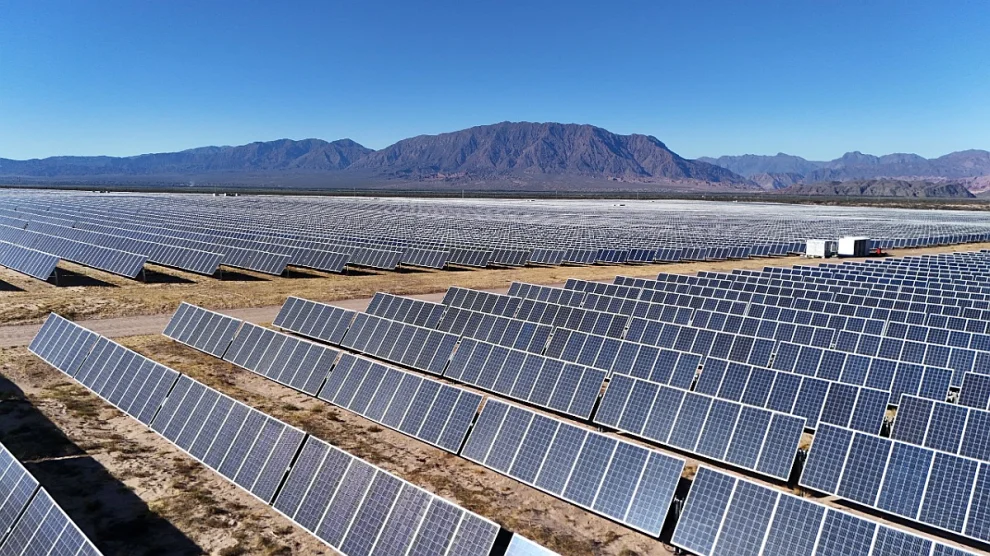
Argentina imports every panel installed in its solar farms. Assembly operations in Tierra del Fuego, where Newsan operates among others, work on imported cells. China holds more than 80% of global manufacturing capacity. A solar panel gigafactory requires capex in the range of $500 million to $1 billion depending on the depth of vertical integration (ingot, wafer, cell, module).
5) Wind turbines
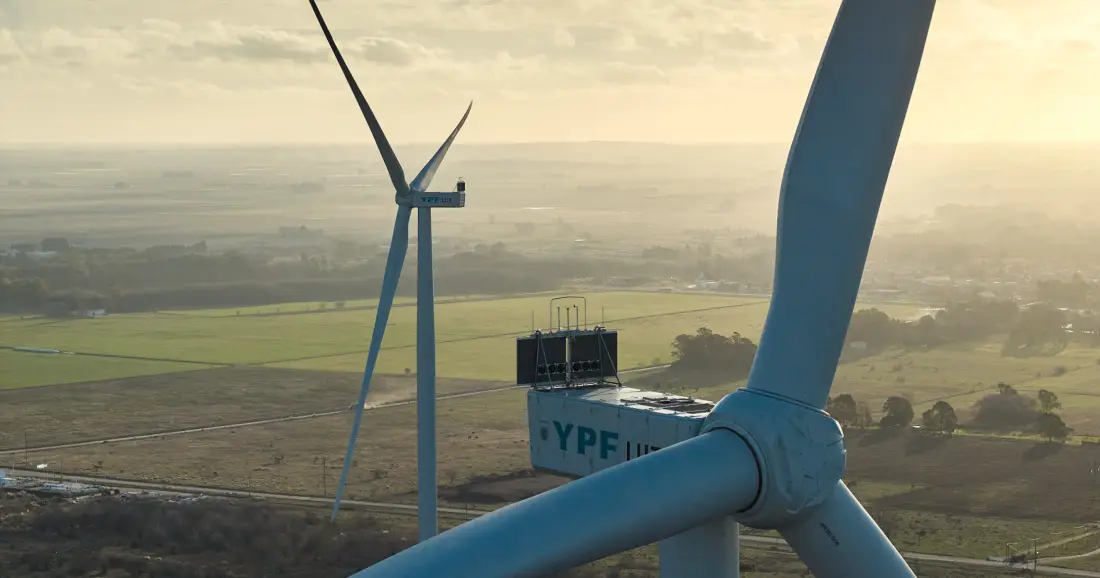
Newsan-IMPSA, in Loma Hermosa in Buenos Aires province, manufactures towers and turbines locally and is the only national producer. Major developers including Vestas, GE, and Siemens Gamesa import their equipment, with Bahía Blanca, Argentina's main industrial port, consolidated as the port of entry. An integrated tower, blade, and nacelle plant requires capex of more than $500 million.
6) Uranium value chain
Known resources are concentrated at Cerro Solo, in Chubut province (under CNEA, Argentina's National Atomic Energy Commission, with resources of around 9,500 tonnes of uranium), and Sierra Pintada, in Mendoza province (halted under Argentina's Glaciers Law, which restricts mining in glacial and periglacial zones). The downstream exists in part: INVAP, Argentina's state-owned nuclear technology company, manufactures reactors; CONUAR produces fuel elements; and Dioxitek processes concentrates. What is missing is active primary mining. Explorers including Jaguar Uranium hold valid permits. The government named uranium among the critical minerals in the Strategic Agreement signed with the United States in February.
7) Potash and phosphorus fertilizers
Potasio Río Colorado, straddling Mendoza and Neuquén provinces, was abandoned by Vale in 2013 and later acquired by Rio Tinto, the Anglo-Australian mining major. The project requires capex of around $4.5 billion to reactivate, with potential capacity of 2 million tonnes per year. The phosphorus chain has no domestic production: phosphate rock is fully imported. Profertil produces urea (a nitrogen fertilizer) in Bahía Blanca but falls outside the Super RIGI's sectoral cut.
8) Data centers
The sector has seen recent activity. Sur Energy and Crusoe Energy, the U.S. natural gas-powered data center developer, are advancing in Vaca Muerta with a gas-fired scheme, and at least four other firms have expressed concrete interest in Argentina, according to industry sources consulted by Shale24. Power demand from a large data center runs from 50 to 500 MW, a sensitive variable for a backbone grid that has not added new works since 2017. Federico Sturzenegger, Argentina's deregulation minister, had previously flagged artificial intelligence projects as candidates for the regime.
What Is Still Open
The bill has no formal text. Caputo said the minimum investment threshold would be finalized over the weekend, with the proposal heading to Congress "next week." The governance of the new regime is not yet known, nor is it clear whether the Evaluation Committee will be the same one that runs the current RIGI under Caputo's chairmanship.
Open questions on coordination with the existing RIGI include whether the 22 projects pending approval for $67.76 billion will be allowed to opt into the expanded regime, and under what conditions the provinces already signed on to the RIGI will accept the new 0.5% gross receipts cap as a precondition for firms in their territory to access the benefit.
RIGI · Vaca Muerta · Súper RIGI · Chevron · Rio Tinto · Glencore · BHP · Wood Mackenzie · Lithium · Copper · Uranium · Javier Milei · Luis Caputo · Mining · Decree 105/2026
<figure class="image"><img loading="lazy" class="cst_img" src="https://statics.shale24.com/2026/02/crop/69a246f6ed323__1100x578.webp" alt="Newsan-IMPSA, in Loma Hermosa, Buenos Aires province, manufactures towers and turbines locally and is Argentina's only national producer"><figcaption>Newsan-IMPSA, in Loma Hermosa, Buenos Aires province, manufactures towers and turbines locally and is Argentina's only national producer</figcaption></figure>