Financial bookrunner ranking: Energy drove the debt market in 2025 and early 2026
Argentina’s negotiable obligations market tops $20B in 2025, projects another solid year in 2026 as energy accounts for nearly half of corporate financing
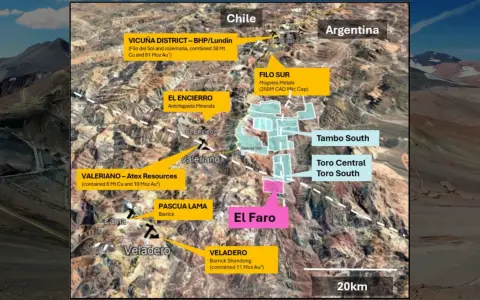
The project combining Josemaría and Filo del Sol has defined its logistics route through Chilean ports and structured an international credit line for the initial phase. The plan includes three development stages, a 70-year lifespan, and an average annual copper production of 400,000 tons, generating fiscal and employment impacts for both Argentina and Chile.
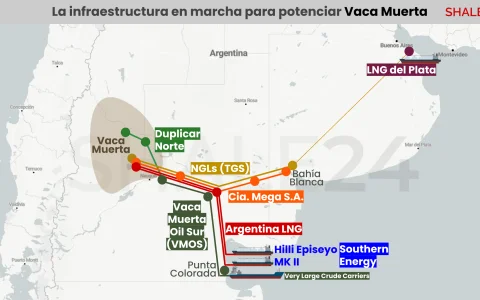
The Punta Colorada Terminal, the endpoint of the Vaca Muerta Oil Sur (VMOS) pipeline, is advancing with roof assembly on two of the six planned storage tanks. With total storage capacity of 720,000 cubic meters and an investment exceeding $3 billion, the project is designed to transport up to 550,000 barrels per day and establish a new crude export route from Río Negro province on Argentina’s Atlantic coast.
The swap with Pluspetrol could act as a catalyst to unlock the project, where key players have already begun positioning themselves. By consolidating control over high-density gas areas, YPF is building the stable, large-scale supply base needed to make a megaproject like Argentina LNG financially viable.
The company expects to complete its Basin Water Balance report by the end of the first quarter, after which it plans to move forward with the pre-feasibility study, targeted for completion before year-end.
By the end of the first quarter, the company expects to have its Basin Water Balance report completed, after which it will move forward with the prefeasibility study, scheduled for completion before the end of the year.
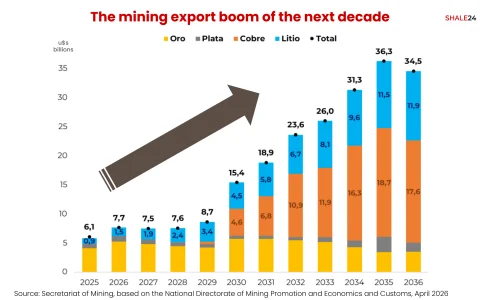
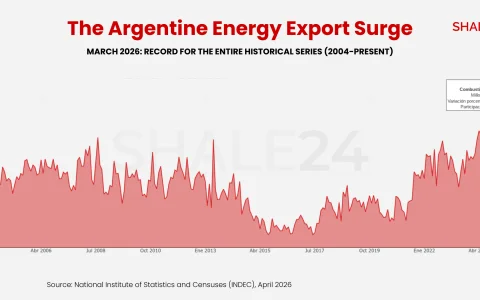
In 2025, Argentina recorded the largest energy trade surplus in its history. In the coming years, that record could be surpassed as projects approved and under review through the Incentive Regime for Large Investments (RIGI) move forward. Some analysts forecast an energy trade balance generating a combined $48 billion by 2030 and $67 billion by 2035.
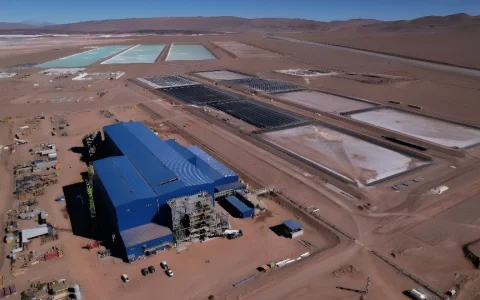
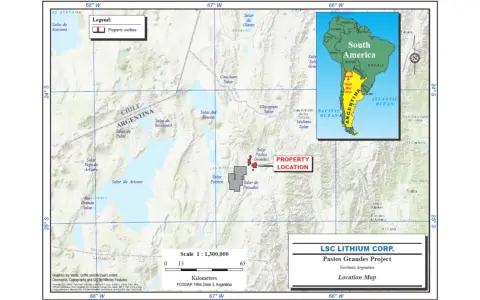
The company aims to achieve first production in the first half of 2026, positioning Galan as a low-cost, high-efficiency player in the heart of the Lithium Triangle.
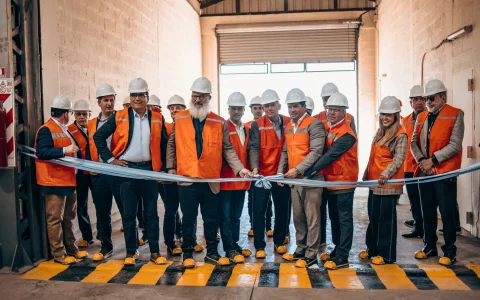
The loading and export of crude from Neuquén Basin operators to the United States was carried out more efficiently and quickly thanks to newly inaugurated infrastructure built in partnership with Oldelval.
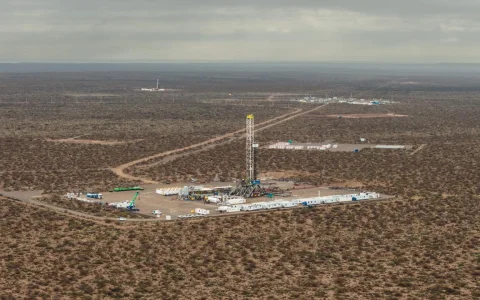
With unconventional oil growing at an annual rate of 31% and gas keeping pace in the flagship basin, Argentina is sending a clear signal to international markets: the country has a world-class shale play.
The agreement marks the formal start of a strategic relationship between the two companies, aimed at boosting DAPSA’s growth through the marketing of Chevron commodities in the region. The parties will also evaluate additional areas of business integration, including the expansion of DAPSA’s supply logistics.
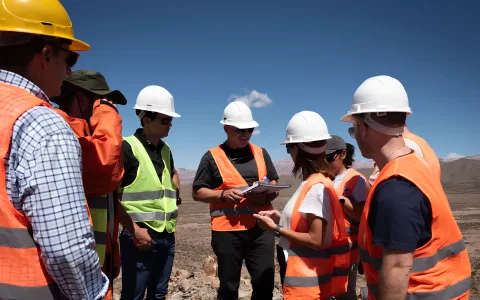
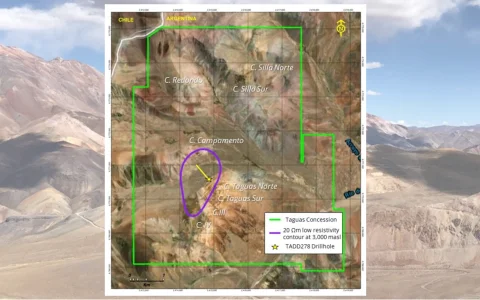
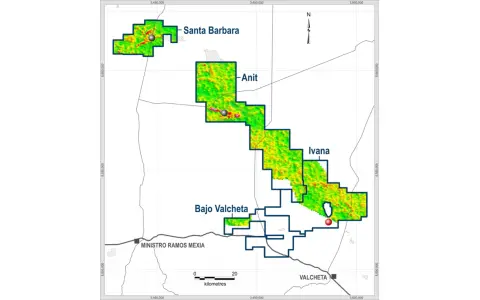
The company plans to carry out detailed mapping, sampling, trenching, and geophysical surveys in preparation for a drilling program scheduled for the second half of 2026.
The pipeline will be 209 km long, linking the northern area of the Neuquén Basin with the pumping station in Allen, Río Negro. The project will expand the transport system’s capacity from 20,400 to 55,400 cubic meters per day and will connect to the Vaca Muerta Oil Sur (VMOS) system.
Silver prices surged 150% in 2025 and continue their bullish rally. Argentina is home to one of the world’s largest undeveloped silver deposits — the Navidad project — with estimated reserves of more than 600 million ounces of silver. The project has remained dormant for years.
The companies will be required to carry out a comprehensive rebumping of the plants, involving refurbishment and technological upgrades estimated at $400 million, aimed at extending the useful life of the equipment, improving efficiency and raising operational safety standards.