
Argentina LNG Project
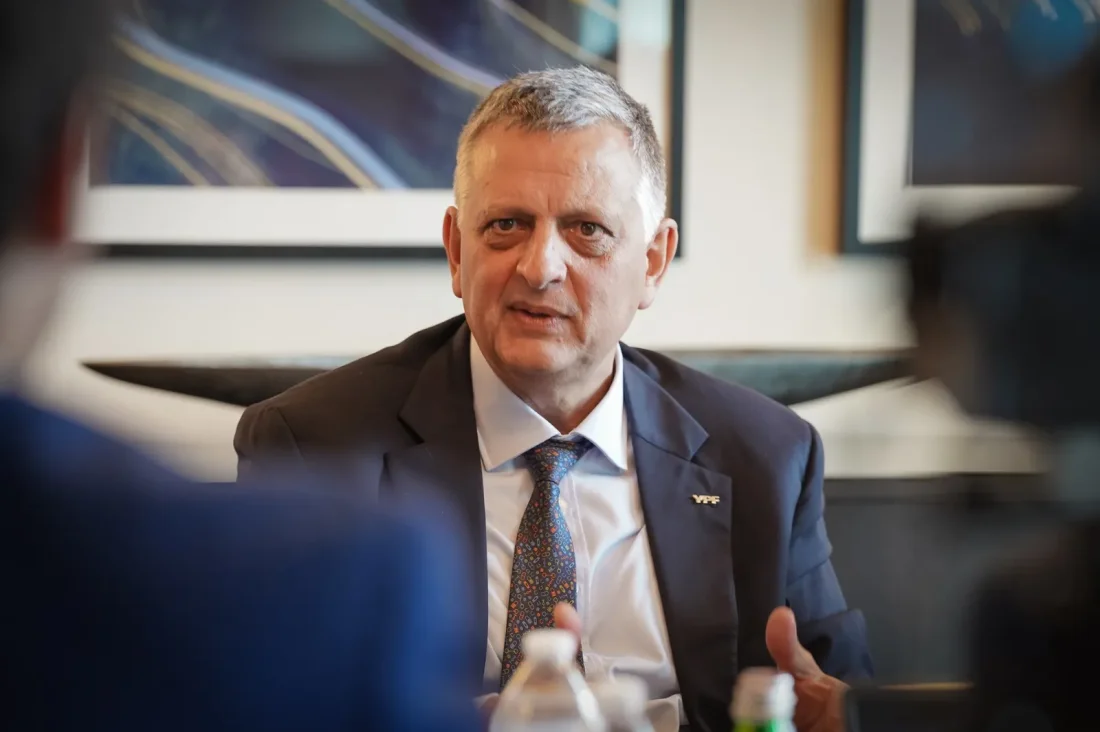
YPF, Argentina's state-controlled oil and gas company, CEO Horacio Marín took the stage at CERAWeek — the annual global energy conference organized by S&P Global, held this year in Houston — with an argument that inverted the standard risk calculus: the Middle East conflict is not a liability for the Argentina LNG project but its most powerful commercial accelerant.
Speaking to the press at the Marriott Marquis — blocks from the Hilton Americas, where roughly 10,000 executives were debating how to remap global energy supply — he argued that Argentina's Atlantic geography had moved from a background advantage to an active selling point: the country's export routes reach global markets without transiting the Strait of Hormuz or the Suez Canal, the two maritime chokepoints now at the center of the supply security debate.
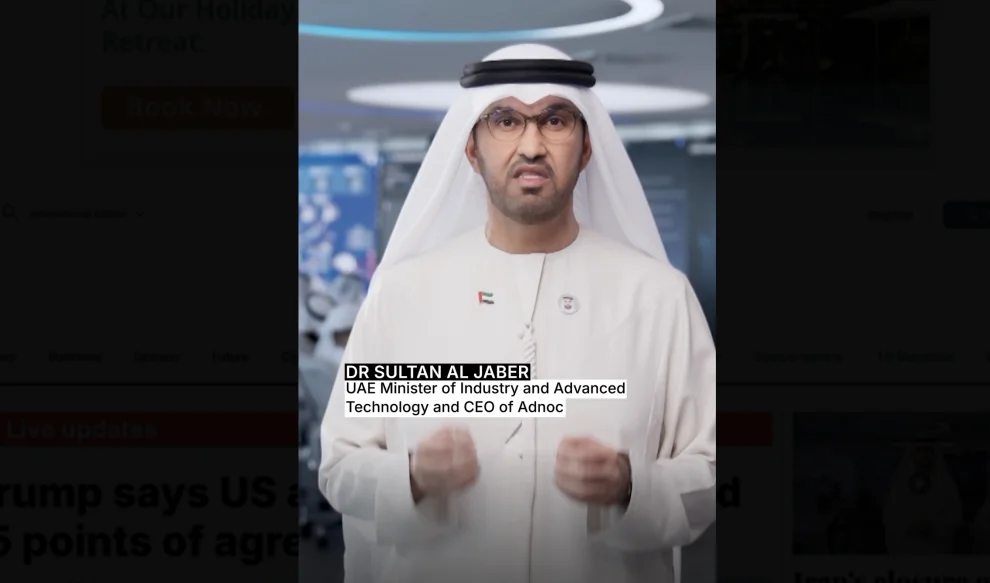
The setting reinforced the claim: one of his partners in the project was addressing the same conference by video from Abu Dhabi, describing the Hormuz closure in terms that matched Marín's thesis almost word for word.
"What the war is going to do is strongly accelerate the expansion of the project," Marín said. That partner — Sultan Al Jaber, CEO of ADNOC, Abu Dhabi's state oil company, and executive chairman of XRG, ADNOC's international investment arm — said: "Weaponizing the Strait of Hormuz is not an act of aggression against one nation. It is economic terrorism against every nation. And no country should be allowed to hold Hormuz hostage, not now, not ever."
The argument operates on two levels. The first is price: Brent crude has rallied approximately 80% since the start of the year, driven by Iran's blockade of the Strait of Hormuz, through which roughly one-fifth of global oil and gas supplies transit. The second is structural — and for YPF, more consequential. The conflict has put energy supply security at the center of the global agenda, which is precisely where Argentina's proposition lands hardest.
"Argentina is in a location close to two oceans, always far from complex international conflicts," Marín said. "That positions it as a safe supplier to such a degree that it strongly accelerates the development of the 12-MTPA project, as well as the expansion." He added: "It already happened with Russia and it happened again with the Middle East. Both wars have led buyers to build a diversified purchasing portfolio."
The Partner Who Absorbed the Strikes
Al Jaber's virtual presence at CERAWeek was itself a signal: ADNOC had sustained direct attacks on its own infrastructure in the weeks before the conference. From Abu Dhabi, he delivered what became the most-cited line of the event: "Weaponizing the Strait of Hormuz is not an act of aggression against one nation. It is economic terrorism against every nation. And no country should be allowed to hold Hormuz hostage, not now, not ever."
The significance of that statement for Argentina LNG is one that Argentine media coverage largely missed: the man who made it is a co-founder of the Patagonian project. His company absorbed the attacks. His public argument is identical to Marín's — the conflict does not weaken the project; it makes it more necessary.
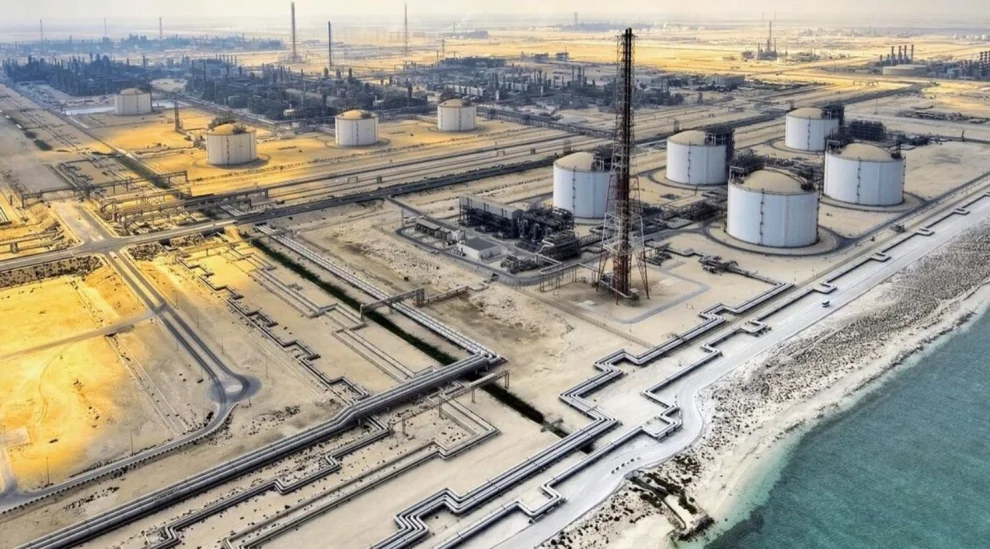
ENI, the Italian energy company and the third founding partner, completes the consortium's direct exposure to the disruption. QatarEnergy, Qatar's state energy company and the world's second-largest LNG exporter with a 19% share of global supply, this week invoked force majeure — a contractual mechanism allowing suspension of obligations under extraordinary circumstances — on its long-term contracts with Italy, Belgium, South Korea, and China, according to the company. Iranian strikes on Ras Laffan Industrial City, Qatar's main LNG and petrochemical export hub, knocked out 17% of its export capacity, with repairs estimated at three to five years. The commercial gap that Qatar's disruption leaves in European LNG markets is precisely the type of opening the Argentina LNG project is positioned to fill.
The Roadmap
Beyond the geopolitical framing, Marín laid out a concrete timeline. The Argentina LNG project — a phased liquefied natural gas (LNG) export initiative led by YPF in partnership with ENI and XRG, structured as a 12-MTPA initial phase with a subsequent expansion — carries a total investment of $30 billion across two tranches: $20 billion in midstream and downstream infrastructure eligible for project finance — non-recourse debt secured against the project's cash flows rather than against the sponsors' balance sheets — and $10 billion in upstream capital the partners will contribute directly. JP Morgan is acting as financial advisor; according to Marín, the banks have characterized the structure as the largest project finance transaction in Latin American history.
The target is to have financing closed by end of 2026 — "it could be late October, November, or December," Marín said. By end of April, the goal is to have the documentation package ready to advance. The final investment decision (FID) is scheduled for October, when the main tendered contracts should also be awarded.
The Fourth Partner and the Crude Picture
On a potential fourth partner, Marín was deliberate without closing the door. "The fourth partner is that one or none other," he said — signaling a specific candidate without disclosing the company's identity. Negotiations are ongoing, but the pace depends on the candidate's internal approval process. The consortium is not actively seeking a partner, he said; it is an opportunity that, if it materializes, would bring in a significant player. The three founding partners can move forward independently if negotiations do not progress.
On domestic fuel prices, Marín's stance was deliberately cautious. "When there is a jump this large from a war, you cannot raise prices 30% overnight because consumers can't absorb it," he said. "In the short term, I don't speculate. The permanent scenario is a different matter." No announcement or timeline followed.
On the crude side, YPF also brought production targets to Houston: the company plans to run 13 drilling rigs in the first half of the year and add four to five units by late 2026. That ramp would lift net crude output to 250,000 bbl/d by December — up from 200,000 bbl/d currently — with volumes destined primarily for export via the Vaca Muerta Oil Sur pipeline (VMOS), now approximately 50% complete.
The session closed with the kind of third-party validation that no company can engineer: Chevron, the U.S. energy major, CEO Mike Wirth opened CERAWeek with a public endorsement of the administration of President Javier Milei — who took office in December 2023 on a platform of radical economic deregulation — and its energy policy agenda. "Argentina is consolidating itself as an energy supplier country that it never was before," Marín said afterward. “It makes it more mainstream. Before, I knew what he thought. Now everyone hears it.”