
LNG MARKETS
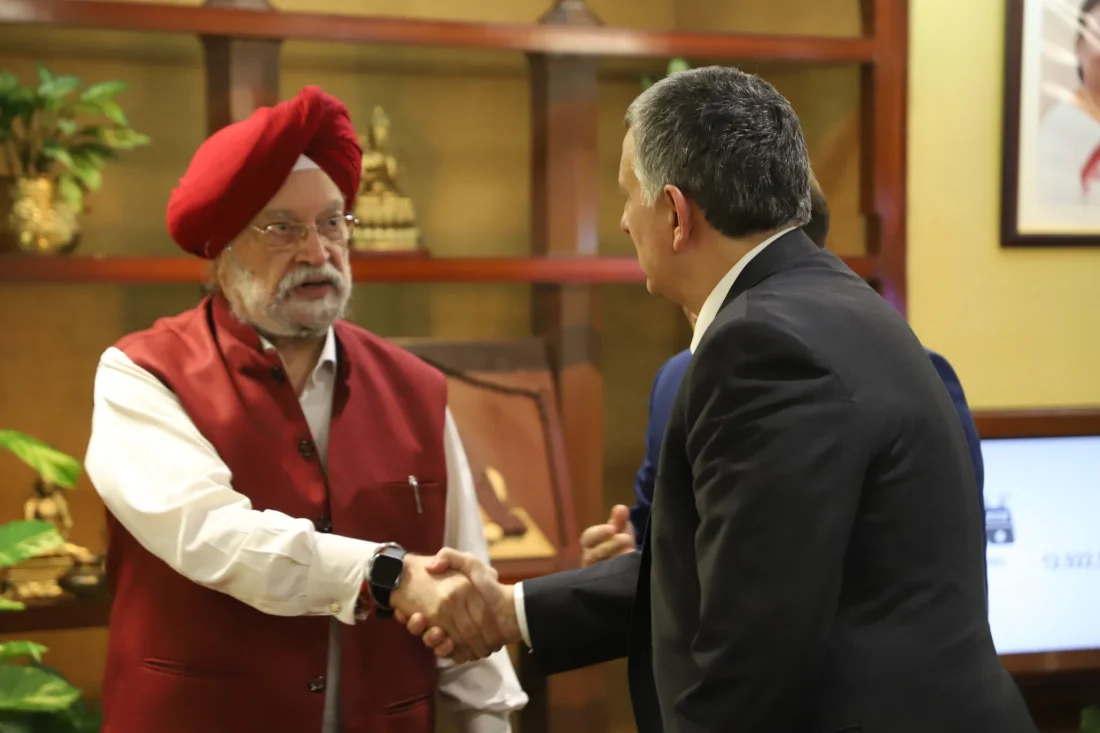
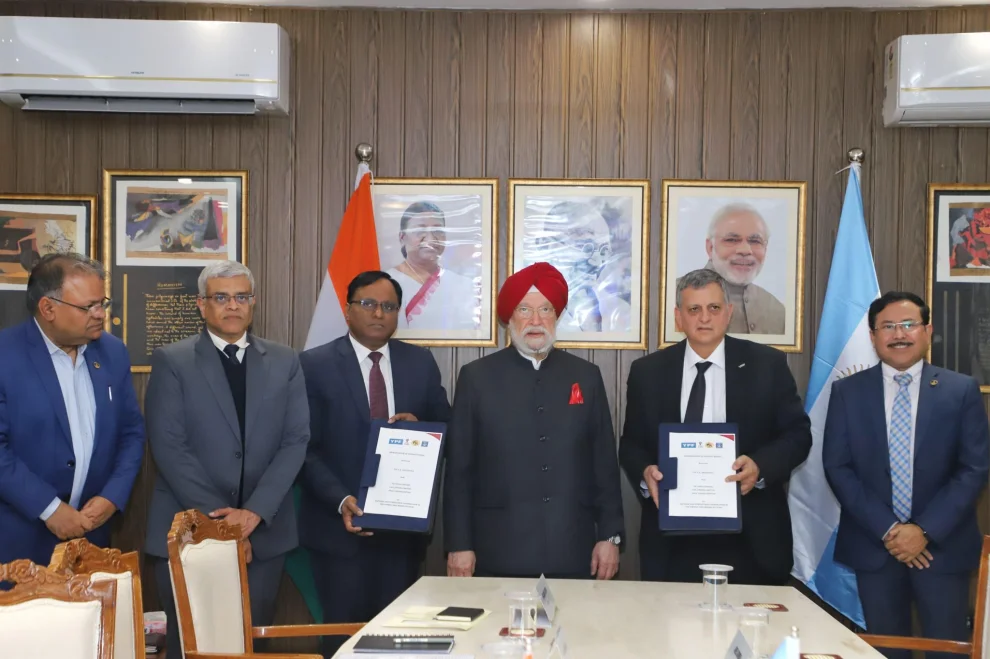
India is building the architecture for a structural gas relationship with Argentina — layering non-binding LNG memoranda on top of an LPG corridor that is already moving volumes. In January 2025, YPF, Argentina's state-controlled oil and gas company, signed a non-binding memorandum of understanding (MOU) in New Delhi with three Indian state-owned energy companies — Oil India Limited (OIL), Gas Authority of India Limited (GAIL), and ONGC Videsh Limited (OVL), the international subsidiary of Oil and Natural Gas Corporation (ONGC) — for the potential export of up to 10 million tonnes per annum (MTPA) of liquefied natural gas (LNG). It was the second MOU between the two countries in less than two years.
The scale of the ask is material. Ten MTPA is roughly a third of the first operational phase of Argentina LNG — the phased export initiative led by YPF in partnership with ENI, the Italian energy company, and XRG, ADNOC's international investment arm — that aims to reach a final investment decision (FID) in the second half of 2026.
JP Morgan is being engaged to structure project financing covering 70% to 80% of a total estimated investment of $20 billion. For YPF, a state-backed Asian buyer reduces the perceived risk for the project's financiers, alongside the volume itself.
Whether the MOU translates into a binding offtake contract or an upstream investment will depend on factors the memorandum does not yet resolve — among them the shape of Argentina LNG's financing package, the pace of regulatory approvals, and India's willingness to commit to long-term price formulas outside the spot market.
The language on upstream cooperation in the 2025 MOU is nearly identical to that of the February 2023 agreement signed on the sidelines of India Energy Week; neither has yet progressed to a binding investment commitment.

Two arms of the same strategy
The three signatories to the 2025 MOU play distinct roles in India's energy chain. GAIL operates more than 16,000 kilometers of gas pipelines and manages the country's LNG procurement contracts — the buyer arm.
OVL, operating in 17 countries, accounts for roughly 15% of Indian oil production and is the international arm of state-owned ONGC. OIL, India's third-largest oil producer with more than six decades of operations, rounds out the delegation as an upstream producer.
The combined signature signals that India is not simply seeking a spot LNG supplier: it is building the framework for a long-term relationship that pairs offtake with production participation. The logic mirrors OVL's playbook in Africa and Russia — enter the upstream of the supplying country to secure supply at source, rather than purchase it only when available.

The corridor that does not wait for contracts
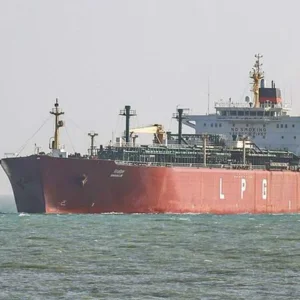
While the memoranda mature, bilateral trade has already accelerated through a parallel channel. In the first quarter of 2026, Argentina shipped approximately 50,000 metric tonnes of liquefied petroleum gas (LPG) to India — more than double the 22,000 tonnes dispatched during all of 2025.
The trigger was the Middle East crisis: with traditional supply routes under pressure, India intensified its search for alternative Atlantic sources. Argentine exports can access Atlantic routes that bypass the Strait of Hormuz and the Suez Canal — a decisive logistics advantage during the disruption. Bahía Blanca, Buenos Aires province — Argentina's main industrial port and hub of its petrochemical and NGL export complex — concentrates the outflows.
The infrastructure supporting the corridor is in active expansion. Compañía Mega, Argentina's largest NGL processor and exporter, commissioned a new natural gas liquids fractionation train in Bahía Blanca aimed at export markets. Transportadora de Gas del Sur (TGS), Argentina's main southern gas pipeline operator, is advancing its NGL project — a $3 billion integrated gas processing and pipeline system under Argentina's Large Investment Incentive Regime (RIGI), with FID expected in April 2026 — which will expand processing and fractionation capacity out of the Vaca Muerta formation, one of the world's largest shale plays, located in Argentina's Neuquén Basin.
The Argentina LNG fit
The January 2025 MOU slots into Argentina LNG's demand stack as a 10 MTPA Indian block. In that equation, India matters for two reasons. The first is volume: 10 MTPA represents a third of the capacity of the first operational phase. The second is structure: a state-backed buyer with Indian government support reduces the perceived risk for the project's financiers.
What is still missing
The path from a non-binding MOU to a binding long-term offtake — let alone to an upstream investment — is not short. The Argentina LNG offtake agreements with Shell (a project development agreement signed in December 2024) and with Germany have advanced further in form than the Indian memorandum. The agreement with OIL, GAIL, and OVL has not yet progressed to a project development agreement or to volume commitments with defined terms and prices.
The LPG corridor, by contrast, is already operating. Every cargo departing Bahía Blanca for Indian ports builds the commercial argument that the memoranda have not yet finalized.