
National Industry
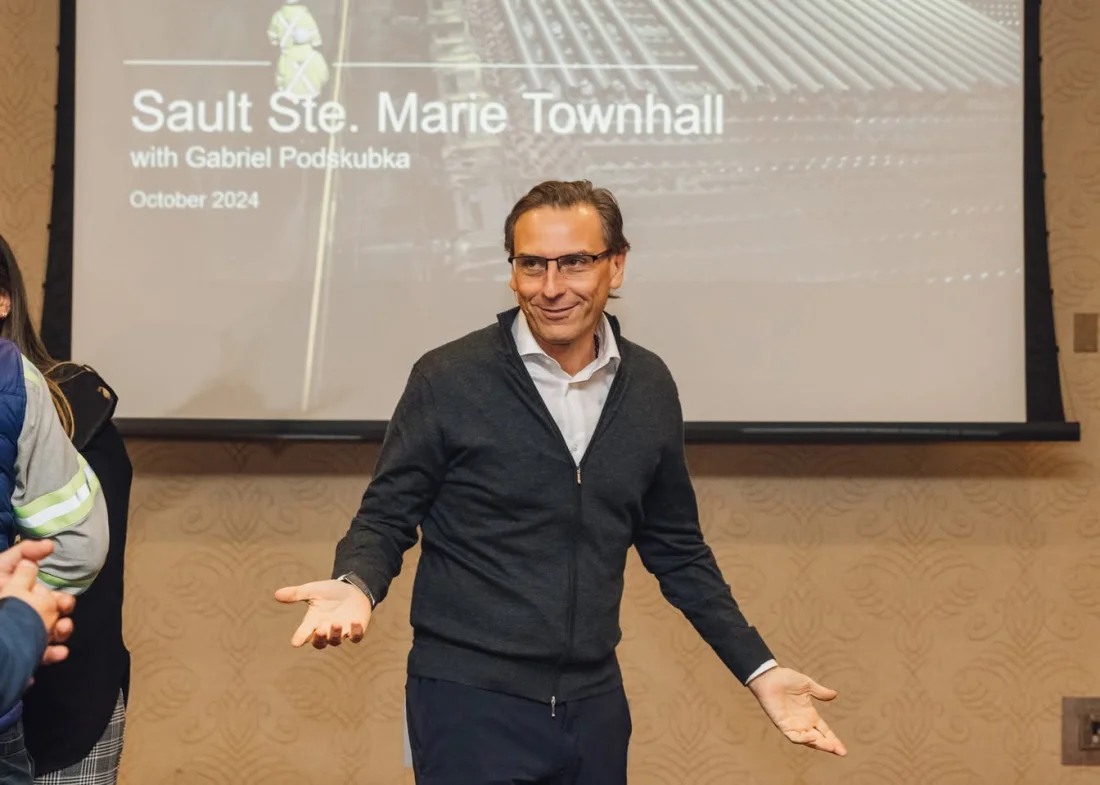
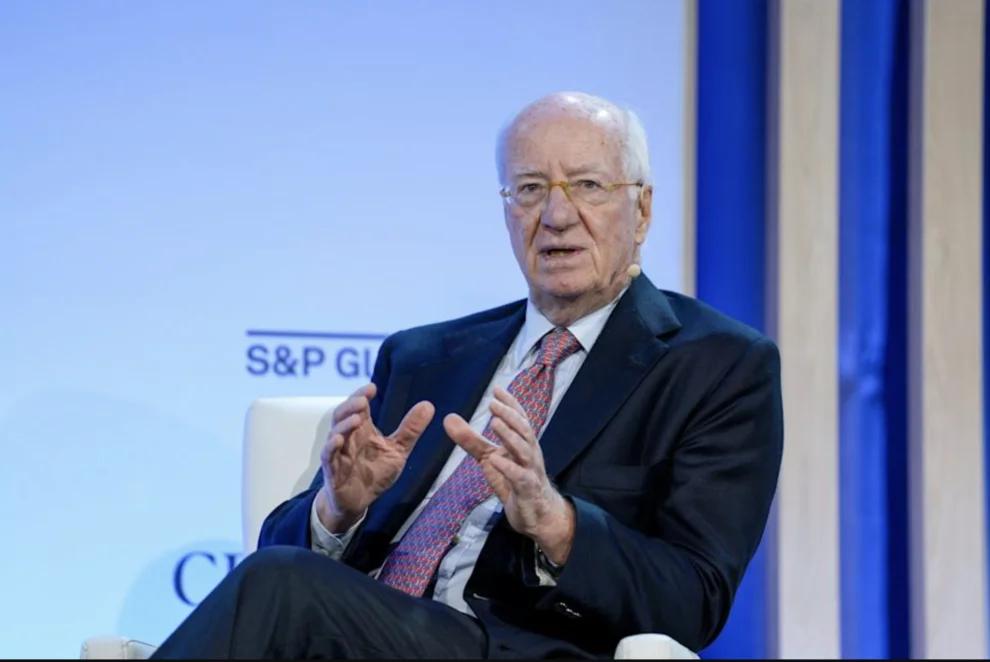
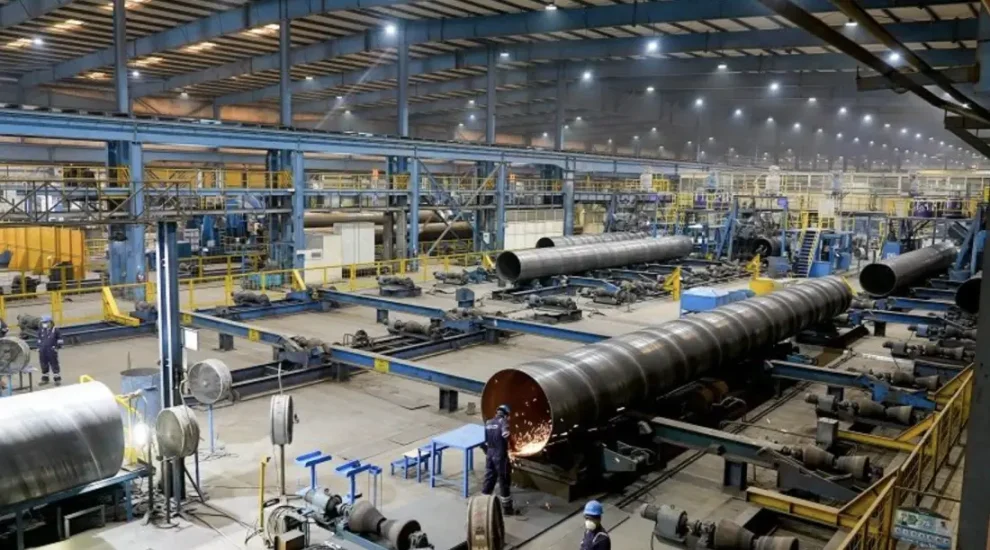
Tenaris S.A., the Luxembourg-based steel-pipe manufacturer that is the world's largest supplier of seamless tubes for the energy industry, has named Gabriel Podskubka as chief executive officer, ending Paolo Rocca's 24-year run as CEO. Rocca will continue as chairman of the board.
The company, dual-listed on the New York Stock Exchange, the Mexican Stock Exchange, and the Euronext segment of Borsa Italiana, announced the succession on May 6 from its Luxembourg headquarters, in parallel with its first-quarter results.
In its statement, the board framed Podskubka's appointment as "the culmination of a long-term leadership planning process" and thanked Rocca for building Tenaris into "the clear global leader" in seamless tubes for the energy industry. International press coverage described the outgoing CEO as an Argentine-Italian businessman stepping back from executive duties after 24 years.
The Argentine Who Entered Through Campana and Went Global
Podskubka is an industrial engineer who trained at the Instituto Tecnológico de Buenos Aires (ITBA), an Argentine engineering university, and earned an MBA at Harvard Business School. He joined the Techint Group, the Italian-Argentine industrial conglomerate that controls Tenaris, in 1995 at Siderca, the seamless-tube mill the group operates in Campana, Buenos Aires province.
After roles in marketing, commercial management, and industrial operations, he was appointed head of Tenaris's Eastern European operations in 2009, based in Romania. In 2013 he assumed the presidency of the Eastern Hemisphere operations (Asia-Pacific, the Middle East, Africa, and Europe), holding the role until 2023. That year he was promoted to global chief operating officer, with responsibility over sales and marketing, supply chain, production operations, and product and service development.
According to the company statement and corporate disclosures, Podskubka has lived and worked in five countries: Argentina, the United States, Italy, Romania, and the United Arab Emirates. The succession places him in the top executive role after a 31-year career inside the Tenaris industrial system, all within the same group.
Rocca: 24 Years at the Helm and Continuity as Chairman
The official statement notes that Rocca began leading Tenaris before it went public in 2002 and describes him as the architect of the company's sustained growth over the past 25 years. The board's structure separates the chairmanship and the CEO role for the first time in a company that throughout its public life had combined both in the same person: Rocca will preside over the board while Podskubka runs operations.
Rocca also retains the presidency of the Techint Group, the family holding company that controls Tenaris together with Ternium (flat steel), Tecpetrol (E&P hydrocarbons), Techint Engineering & Construction, Tenova, and Humanitas. His continued role atop the family conglomerate means that the group's strategic line, covering geographic exposure, capital allocation, and political relationships, remains anchored with him.
The transition comes at a sensitive moment for the group's Argentine operations. In January, Tenaris lost the welded-pipe tender for the export pipeline of Southern Energy, the Argentine LNG consortium led by Pan American Energy (PAE), Argentina's largest private oil producer; YPF, Argentina's state-controlled oil and gas company; Pampa Energía, a diversified Argentine energy company; Harbour Energy, the U.K.-based E&P company; and Golar LNG, the Norway-based LNG infrastructure company. The contract went to India's Welspun, an Indian steel-pipe manufacturer.
In a public letter that followed, Rocca characterized that award as covering "approximately 60% of the annual volume of the Argentine welded-pipe market" and detailed that Tenaris's initial offer was $2,090 per tonne, to which the company applied a 24% discount to match the competitor's bid.
Q1 Results and the Incoming CEO's Operating Environment
The succession was announced the same day Tenaris published results for the first quarter of 2026. Net sales reached $3.1 billion, up 4% quarter-on-quarter and 6% year-on-year. Operating income rose to $584 million and net income totaled $564 million, against $518 million in the first quarter of 2025. EBITDA stood at $735 million, with a 23.7% margin. Free cash flow for the quarter was $503 million, and the company closed March with a net cash position of $3.8 billion after $90 million in share buybacks.
In the tubes segment, which generates more than 94% of consolidated sales, Tenaris shipped 995,000 tonnes: 784,000 seamless and 211,000 welded. The South America region recorded $531 million in revenue, up 6% sequentially, driven by higher OCTG sales in Brazil and line pipe sales in Argentina, per the official report. The company also noted that the quarter's tax result benefited from exchange-rate movements and inflation adjustment, primarily in the Argentine operation.
The international scenario Podskubka inherits as CEO is marked by the war with Iran and the closure of the Strait of Hormuz, which the company identifies as a pressure point on second-quarter margins and, at the same time, as a tailwind for crude and LNG price recovery in the months ahead.
The company said in its Q1 statement that "for the second quarter, our sales will be affected by lower shipments in the Middle East" and that margins would be hit by "higher logistics costs in addition to lower absorption of fixed costs." For the second half, it expects "sales and margins to recover, assuming the strait of Hormuz is reopened in the short term." In the United States, the report indicates that OCTG prices have begun to respond to import tariffs and rising raw-material costs.
The friction at the start of the year with the Casa Rosada, Argentina's presidential office, over the loss of the Southern Energy contract had opened a debate about the relative competitiveness of Argentine pipe supply for Vaca Muerta projects and the connection to the Argentina LNG chain. The transition that the board now institutionalizes in Luxembourg, with a CEO trained at the Argentine plant and a chairman who retains the Techint Group presidency, places executive control with someone who knows the local operation from the inside, without moving strategic control from where it already sat.