
Mining investments
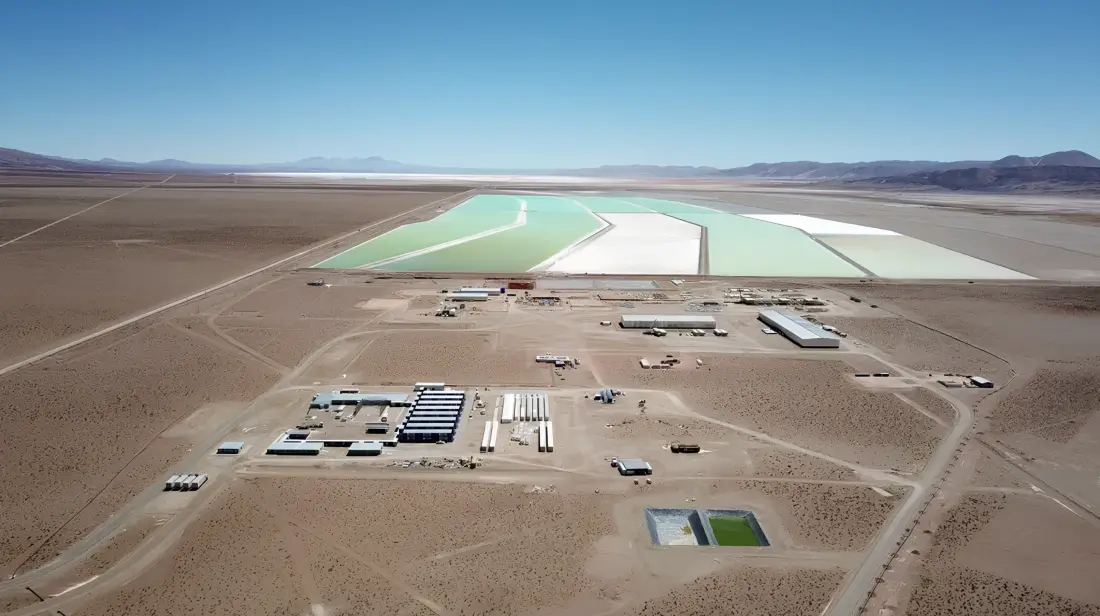
EXAR, Argentina’s leading producer of lithium carbonate, announced that it has formally applied to national authorities for benefits under the Large Investment Incentive Regime, known by its Spanish acronym RIGI, for its expansion project at Cauchari-Olaroz. The project would add 45,000 metric tons per year of lithium carbonate capacity, lifting total production capacity to 85,000 tons per year.
Simon Perez Alsina, EXAR's president, said the project “marks a crucial step for us in terms of growth and competitiveness in the global market, while also reinforcing our commitment to sustainable development and job creation in the province of Jujuy.” He added that EXAR currently generates more than 2,000 direct and indirect jobs and works with more than 820 domestic suppliers across its value chain.
“With this expansion, we will continue advancing our mission to support the global energy transition through the responsible and efficient production of lithium, a key resource for the future,” he said. “In addition, this project reaffirms our commitment to Argentina, where we will continue generating value and local development in the years ahead.”

Production leap with new technologies
The expansion project includes the implementation of Direct Lithium Extraction technology (DLE), which would enable more efficient resource recovery and allow for a greater reduction in water and energy consumption, in line with the company’s commitment to “prioritize sustainability, responsible production and the efficient use of natural resources.”
According to people familiar with the plans, the committed investment would total about $1.2 billion. In 2024, the company spent 91% of its outlays domestically, with most of that investment concentrated in Jujuy province. Since entering production in 2023, EXAR has shown rapid growth, producing 6,000 tons in its first year and becoming Argentina’s top lithium carbonate producer in 2024 after surpassing 25,000 tons. For 2025, the company expects output of between 30,000 and 35,000 tons, close to its current installed capacity of 40,000 tons.
The initial exploration and prospecting phase began in 2009, during which multiple prefeasibility, feasibility and environmental impact studies were carried out. After obtaining operating permits, construction of the plant began in 2018, a process that took five years and required an investment of $979 million. At peak activity, the project directly employed more than 3,300 people. It currently has more than 2,100 workers, over 60% of whom live in Jujuy, making it a key driver of regional development.
Argentina is currently the world’s second-largest producer of lithium carbonate from brines and holds the world’s second-largest lithium reserves, accounting for 20.4% of global resources. These reserves are mainly located in the provinces of Catamarca, Salta and Jujuy and total about 2.7 million tons.
EXAR is an Argentine company owned by Ganfeng Lithium, Lithium Argentina and the provincial state firm Jujuy Energia y Mineria Sociedad del Estado, known as JEMSE. It focuses on the development and production of lithium carbonate at the Cauchari-Olaroz salt flat in the high-altitude puna region of Jujuy.