
New architecture
YPF has disclosed a second corporate vehicle for Argentina LNG: MIDCO ARLNG I, which will hold the project's midstream assets and raise debt independently of upstream.
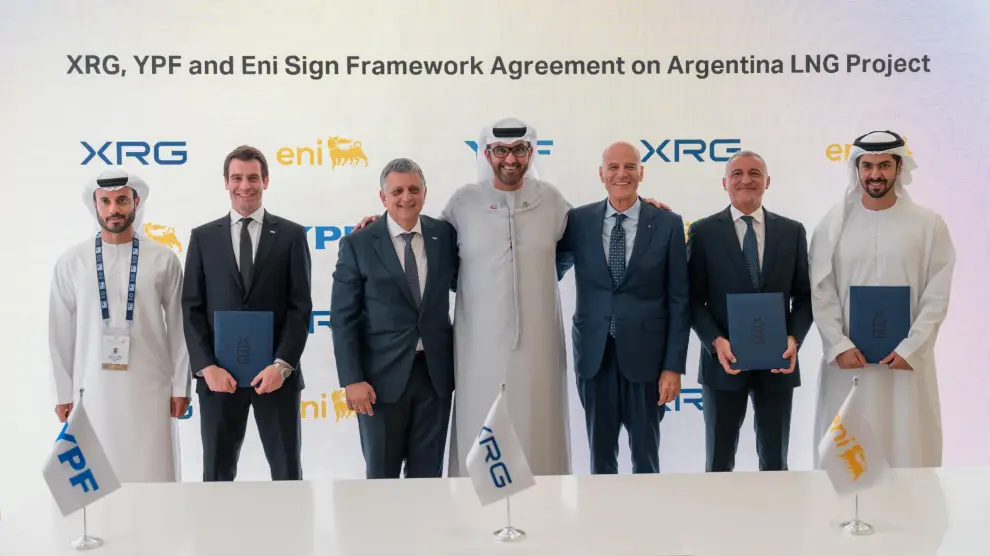
The name surfaced in the presentation that YPF, Argentina's state-controlled oil and gas company, delivered to the Energy and Fuels Committee of Argentina's Chamber of Deputies, and it had not appeared in the project's official communications, as Shale24 has learned. It sits alongside UPCO ARLNG I, the upstream vehicle disclosed in June by YPF president and CEO Horacio Marín, and the entity through which ENI, the Italian energy company, and XRG, ADNOC's international investment arm, took equity in the gas acreage.
The second company separates production from transport and processing. With that decision, the financing package each segment requires is also split in two. How large that package will be is not yet public, and the corporate structure does not close the funding gap on its own: it determines how the money will be sought.
Two Segments, Two Lender Groups
The architecture has a logic of its own for anyone reading the project from a credit desk.
A dedicated vehicle generally allows each segment to borrow against its own cash flows, with its own security package and its own lender group, an industry specialist consulted by Shale24 said. Banks that finance field development do not price the same risk as banks that finance a pipeline with contracted capacity.
Concentrating everything in a single company forces a single package. Splitting it in two opens two fronts that can advance at different speeds.
The Agreement That Was Outstanding
That framework is the one Maia Anouk Goldin, YPF's senior strategy manager, described last week at the committee session chaired by deputy Facundo Correa Llano. "We have already reached an agreement with our partners on the contractual engineering," the executive said, describing the arrangement as "a very complex model in contractual terms" because of the two project vehicles and the gas buyers sitting in the middle of the chain. She added: "We are moving forward strongly on securing this financing."
Supply, transport and offtake contracts define who is paid what, in what order and against which guarantees. A credit structure is built on top of that information. No funding architecture of this scale is assembled over an allocation of obligations still under negotiation among shareholders. With that agreement closed, financing becomes the project's principal workstream.
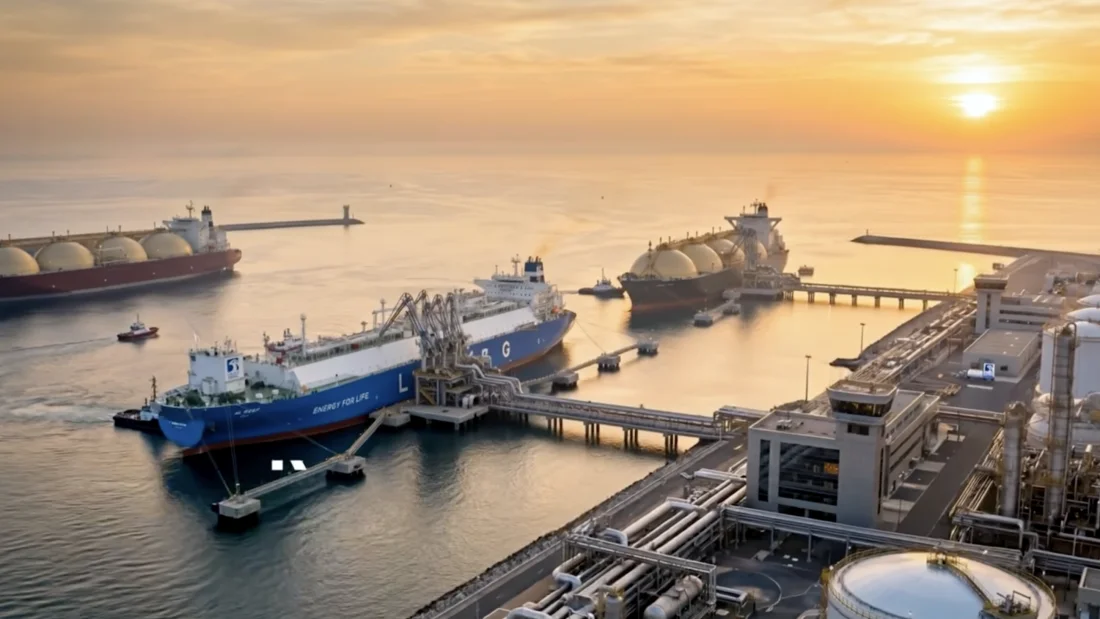
The founding partners split the equity: YPF with 36%, Italy's ENI with 32% and XRG, ADNOC's international investment arm, with the remaining 32%. The project contemplates an initial capacity of 12 million tonnes per annum (MTPA) across two floating liquefaction units (FLNG), with pipelines dedicated entirely to export and separate lines for natural gas liquids (NGLs) and condensates.
The Work MIDCO Takes to the Banks
What the midstream has to finance is already awarded.
The detail YPF presented lists pre-selected contractors across three fronts: the gas trunkline, the liquids line and an integrated gas treatment plant.
Civil works on the 48-inch trunkline, the largest-diameter pipeline in the country, went to the consortium formed by Pumpco, a U.S. pipeline construction contractor; Bonatti, the Italian energy infrastructure group; and Contreras Hermanos, an Argentine infrastructure contractor, for around $1.2 billion. Detailed engineering for the primary separation plant in Neuquén province was pre-awarded to the joint venture of SACDE, the engineering and construction company controlled by Marcelo Mindlin and the principal shareholders of Pampa Energía, and Tecnimont, the engineering and construction arm of Italy's Maire, for between $2.5 billion and $3 billion. All of it remains subject to the final investment decision (FID), committed for the current half.
That perimeter of work is what a midstream vehicle takes to the banks.
Why the Export Credit Agencies Are Moving in Parallel
It also explains why export credit agencies (ECAs) have been taking position alongside the contracting process. Italy's SACE and Germany's Euler Hermes, which administers the German federal government's export credit guarantee scheme, sealed a guarantee cooperation that follows the trail of each country's suppliers. The agencies back exports of goods and services from their own economies, and a substantial share of the midstream contracts went to Italian firms.
A Playbook Already in Use
The corporate structure does not resolve the financing by itself, but it defines how it is pursued.
At the other liquefaction project under way, Southern Energy, the consortium behind Argentina's first LNG export operation, the San Matías pipeline operator also functions as a dedicated company: San Matías Pipeline, a special-purpose vehicle whose shareholding mirrors that of the parent consortium. The group has stated a target of covering 60% to 70% of the works with project debt. It is the same playbook, applied at a smaller scale and on a shorter timetable.
With both vehicles defined, the shareholder agreement closed and the contractors chosen, what remains unknown is the size of the package MIDCO will have to go out and raise. The trunkline and the engineering for the Neuquén plant alone already approach $4 billion.