
The Alberta model that Torres is replicating

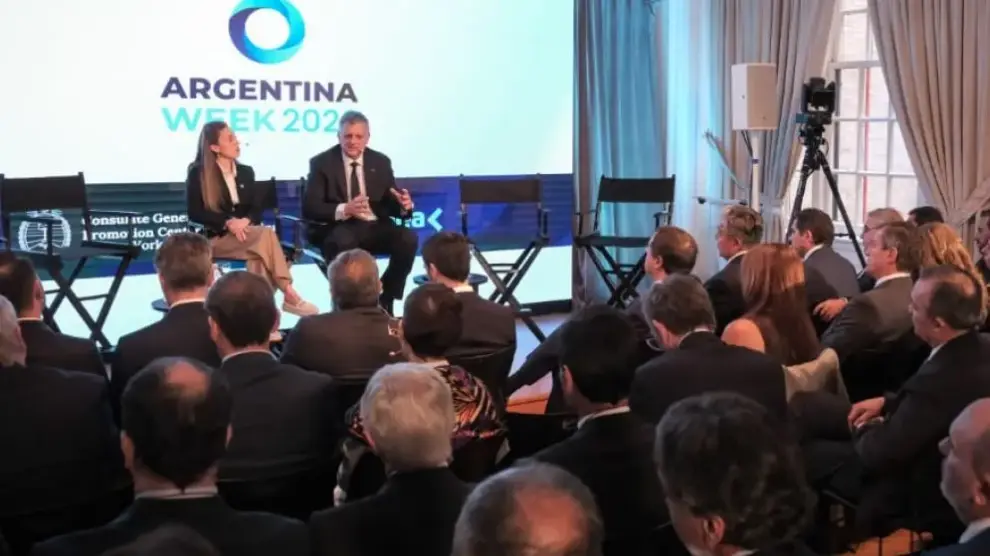
On March 12, at the close of Argentina Week organized by IDEA before more than 800 financial and energy leaders in New York, Horacio Marín reviewed YPF’s exploration map outside Vaca Muerta: two wells in the “Mendoza tongue,” a new well in Palermo Aike in Santa Cruz, and a statement that did not go unnoticed among attendees from Chubut. “We project exploring the potential of the D-129 in Chubut,” said the company’s chairman and CEO.
There was no timeline and no technical details. The statement came three weeks after YPF formalized the transfer of its last major asset in the San Jorge Gulf Basin, giving the comment added weight that made it difficult to ignore.
The conventional asset now has a new operator
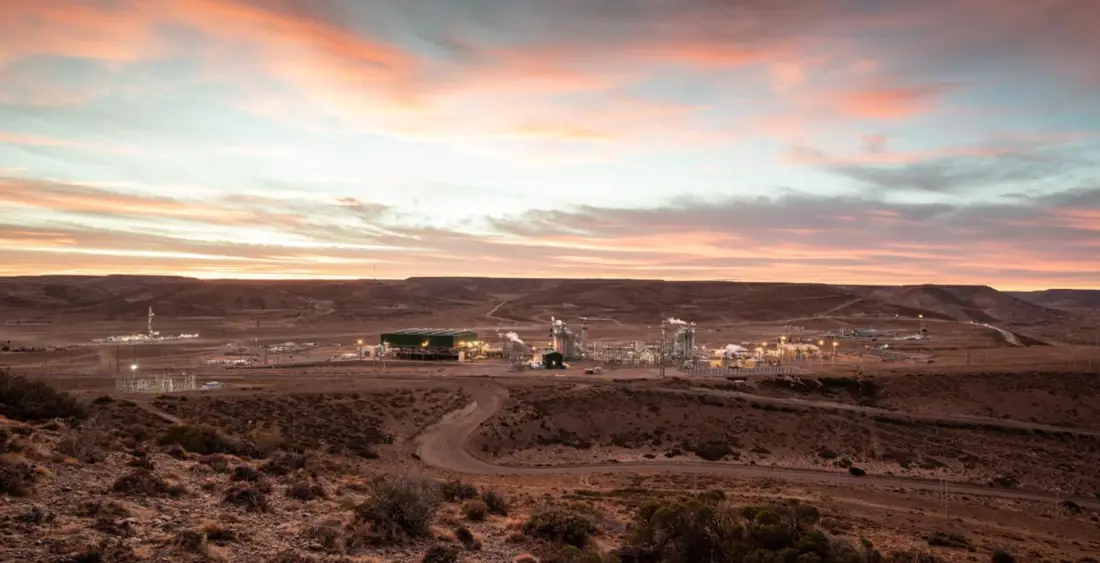
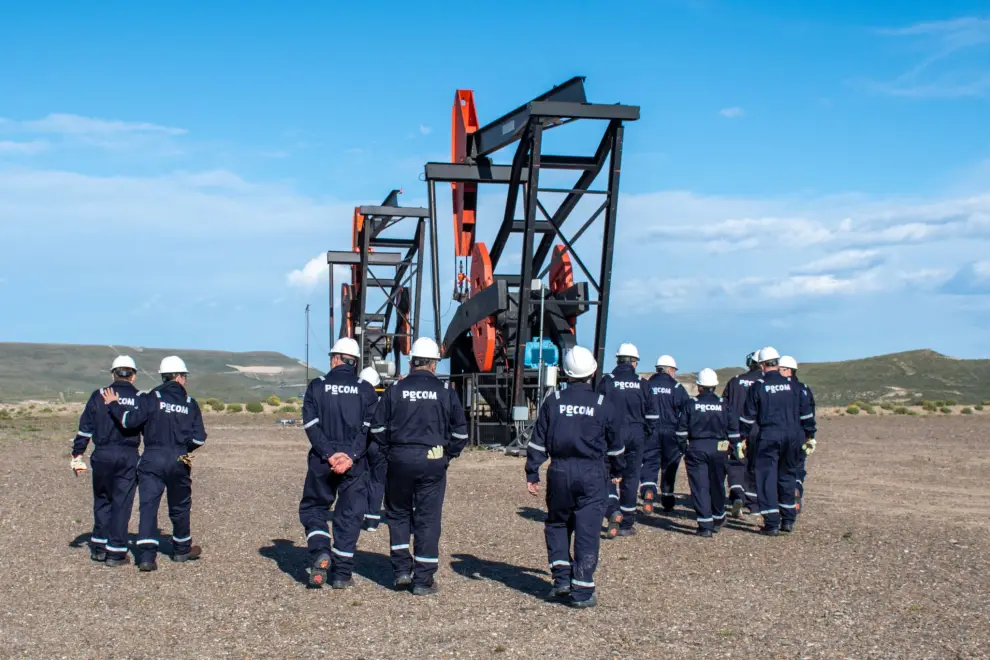
On Feb. 19, YPF’s board approved the transfer of 100% of the Manantiales Behr conventional production concession to PECOM Servicios Energía S.A.U. and its affiliate San Benito Upstream S.A.U., as part of the Andes Project for the divestment of conventional assets.
The deal also includes transportation concessions over three oil pipelines: El Trébol–Caleta Córdova, Km. 9–Caleta Córdova and Manantiales Behr–Cañadón Perdido. As of the third quarter of 2025, the block was producing about 25,000 barrels per day of oil and 0.4 million cubic meters of gas.
For the Pérez Companc-controlled company, the addition consolidates a platform of more than 35,000 barrels per day in Chubut, combining Manantiales Behr with the Campamento Central–Cañadón Perdido and El Trébol–Escalante clusters acquired in 2024. The return to upstream hydrocarbons—21 years after selling its local assets to Petrobras—takes on another dimension with this transaction: weeks after closing, the group injected $150 million in additional capital into PECOM, according to a filing with Argentina’s securities regulator.
The final transaction price was not confirmed by either party, though financial market sources place it at around $400 million. That figure matched PECOM’s original bid and was notably lower than the $575 million offered by Limay Energía, part of Rovella Capital Group, before it lost financing to close the deal.
The transfer still requires formal approval from the government of Chubut, which has authority over any concession transfer within its territory. Governor Ignacio Torres followed the process from the beginning and was part of the provincial delegation in New York, where he heard Marín’s announcement about the D-129 firsthand.
The rock YPF may have reserved
Within the industry, the key question is whether YPF included in the transfer agreement any reservation of rights over unconventional resources in the area. That information has not been made public. However, the regulatory mechanism that would allow such a reservation already has precedent in the province and follows the same logic.
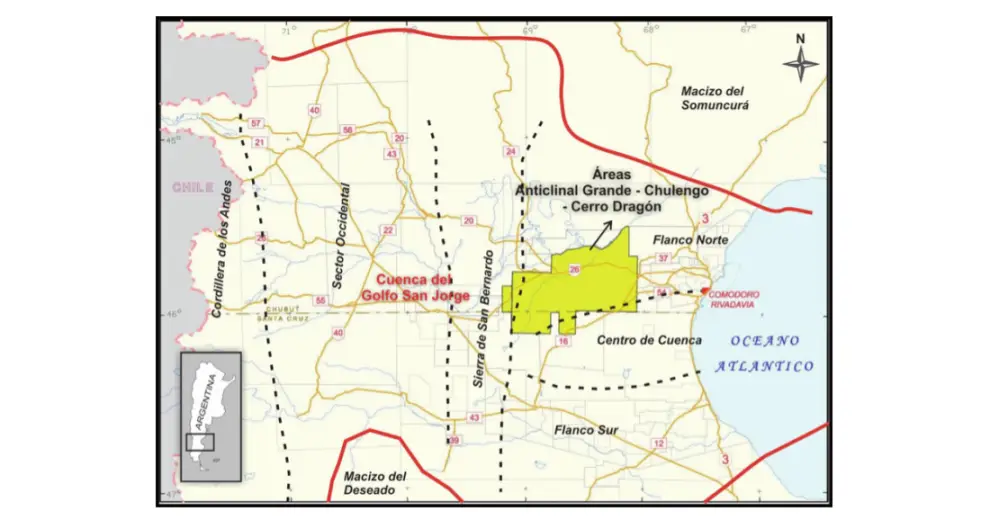
In April 2025, Torres authorized by decree the conversion of Cerro Dragón into a Non-Conventional Hydrocarbon Production Concession (CENCH), with a 35-year term extendable to 2070. The mechanism is based on Article 27 bis of Federal Hydrocarbons Law 17,319 and national decree 1057/24, which allow concession holders to request such a conversion when they demonstrate the presence of unconventional resources in their area.
The underlying concept of dual development is precisely that depth-based separation: one company operates the conventional resources in the upper layers while another develops shale in deeper formations. Under this logic, a joint venture between YPF and PECOM—or even YPF acting independently to request a CENCH over the D-129 within the Manantiales Behr area—would be technically feasible if the transfer contract allows it.
At Argentina Week, Chubut’s oil union leader and national lawmaker Jorge Ávila, who was part of the provincial delegation alongside Torres, had anticipated this interpretation months earlier at the Oil & Gas Expo in September: “If YPF did not sell the deeper areas and only sold the surface above, it means they also know that there could be something below.”
What PAE has already tested in the D-129
The technical case for that interest is grounded in results. In the second quarter of 2025, Pan American Energy drilled the first horizontal well in the D-129 formation within Cerro Dragón: 2,347 meters of vertical depth, a 1,500-meter horizontal section, and 25 hydraulic fracturing stages spaced every 60 meters. The results confirmed wet gas—more valuable than dry gas due to associated natural gas liquids—and favorable overpressure conditions for unconventional productivity.
Fausto Caretta, managing director of upstream at PAE, summed up the technical challenge at the Chubut Energía 2050 event: “12 or 13 years ago, this probably could not have been done. Today we can geonavigate wells at 3,500 meters, precisely identify the shale and characterize it much better.”
Marcos Bulgheroni went even further in New York. The PAE CEO—who also confirmed the first LNG supply contract with SEFE, which he described as Europe’s largest gas marketer—compared the potential of the D-129 to the Marcellus formation in Pennsylvania, widely regarded as the most productive unconventional gas play in the United States. The comparison was deliberate: it signals to international investors that the formation has the potential for real scale, not just technical feasibility.
At the time of writing, Brent crude was trading around $101 per barrel, supported by the closure of the Strait of Hormuz, and global pressure to diversify gas supply is making every basin capable of adding volume increasingly urgent.
The model Chubut is considering
The regulatory reference Torres is looking at is Alberta and British Columbia in Canada, where legislation allows subsurface rights to be allocated by geological formation or depth within the same block. In the Western Canada Basin, different operators develop reservoirs at varying depths simultaneously: one company produces shale while another develops the conventional resources above it. The model not only increases total output but also leverages existing surface infrastructure and distributes investment risk among players with different profiles.
In that context, adapting the model to Argentina would require either that the YPF–PECOM contract already includes such a separation or that Chubut establishes a specific framework. Torres hinted at that possibility when he expressed interest in bringing in U.S. companies to partner with local operators for unconventional development.
What comes next is a review of the contract. If YPF retained rights to the D-129, the province will have to decide whether to approve that structure alongside the transfer of the conventional assets to PECOM or impose additional investment commitments. Chubut authorized YPF’s exit from the conventional segment. The question that lingered in New York is whether it will also open the door for deeper drilling in the same block.