
Regulatory and cooperation framework
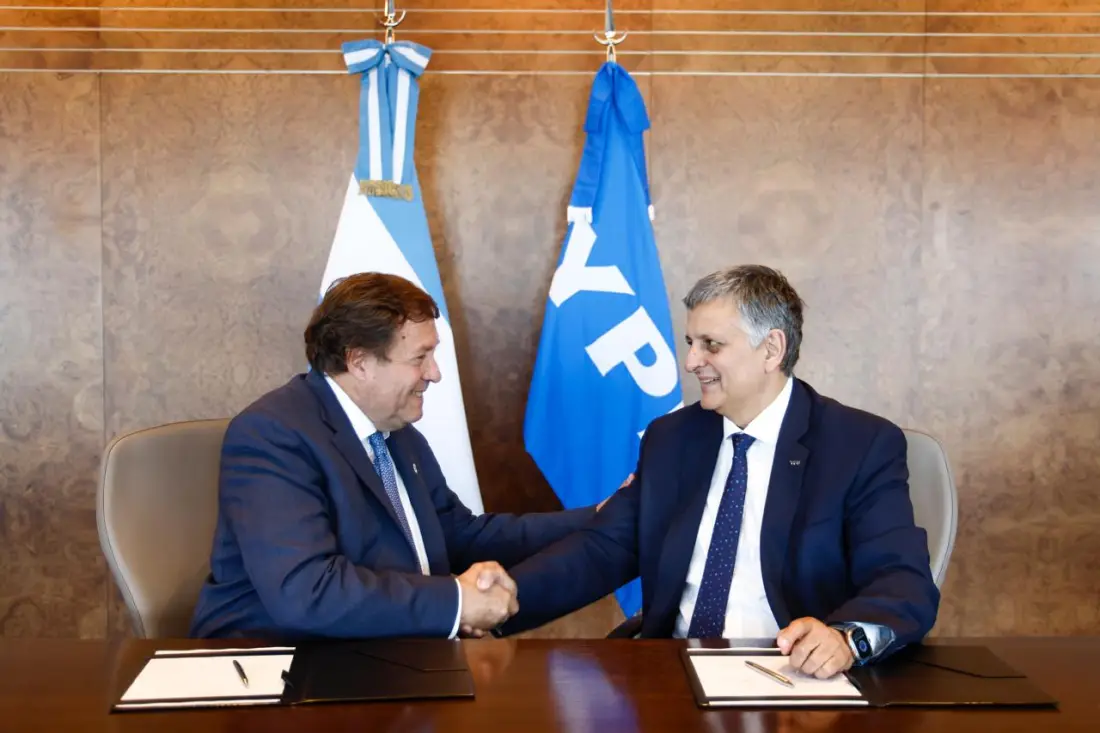
The government of Argentina’s Río Negro province and state-controlled energy company YPF signed a memorandum of understanding establishing a regulatory framework and institutional cooperation crucial to developing the Argentina LNG project.
The initiative aims to position Argentina as a significant exporter of liquefied natural gas (LNG) on the global market by leveraging the vast shale gas resources of Vaca Muerta and turning Río Negro — with a focus on the San Matías Gulf along the Atlantic coast — into an international energy hub.
The signing took place in Buenos Aires and was led by Gov. Alberto Weretilneck and YPF President and CEO Horacio Marín. The agreement complements the national Large Investment Incentive Regime, known by its Spanish acronym RIGI, and provides predictability for investors through stability in tax, regulatory and non-tax matters.
Key points of the agreement: What does it include?
The memorandum sets out clear conditions and long-term commitments for executing the project within provincial territory. The main elements include:
- Thirty-year fiscal and regulatory stability: It guarantees a predictable framework for provincial taxes, fees and regulations, complementing the national RIGI to attract large-scale investment and reduce investor risk.
- Clear rules on non-tax matters: These include guidelines on environmental standards, land use, operating permits, and logistics and port infrastructure. The framework is designed to facilitate construction along the Atlantic coast in the San Matías Gulf, with onshore facilities and potential offshore floating LNG units (FLNG).
- Value chain integration: The agreement allows for coordination across upstream activities (production in Vaca Muerta), midstream operations (pipeline transportation) and downstream processes (processing, liquefaction and LNG exports), organizing the project’s end-to-end development.
- Technical and professional training program: Jointly promoted by YPF, its partner companies, the YPF Foundation and provincial educational institutions. The program focuses on training local workers in fields such as engineering, plant operations, logistics and industrial safety, expanding job opportunities for young people and workers in the project’s area of influence.
- Production and export targets: The project aims to reach LNG export capacity of up to 12 million metric tons per year by 2030, with potential to scale up in later phases. The plan is expected to generate high-quality jobs, foreign currency inflows and a structural shift in Río Negro’s productive base.
- Institutional cooperation commitments: The agreement establishes collaboration mechanisms among the province, YPF and Argentina LNG SAU to coordinate infrastructure deployment, permitting and construction, positioning the San Matías Gulf as the core of the industrial and logistics complex.
Focus on local development and expected benefits
The training program seeks to maximize positive impacts on local communities by promoting skilled employment and regional development. “Río Negro is a leading player in Argentina’s energy transition, but projects like this are also the foundation for a profound change in the province’s productive matrix,” Gov. Weretilneck said.
Marín added: “This joint framework represents a key step toward advancing a strategic project that will position Argentina as a reliable energy supplier to the world, generate high-quality jobs and promote long-term investment.”
Argentina LNG will channel gas from Vaca Muerta to international markets through dedicated infrastructure, including liquefaction plants, pipelines and export terminals. The provincial agreement effectively acts as a “local RIGI,” accelerating the path toward a final investment decision, expected in the first half of 2026.