
Energy infrastructure

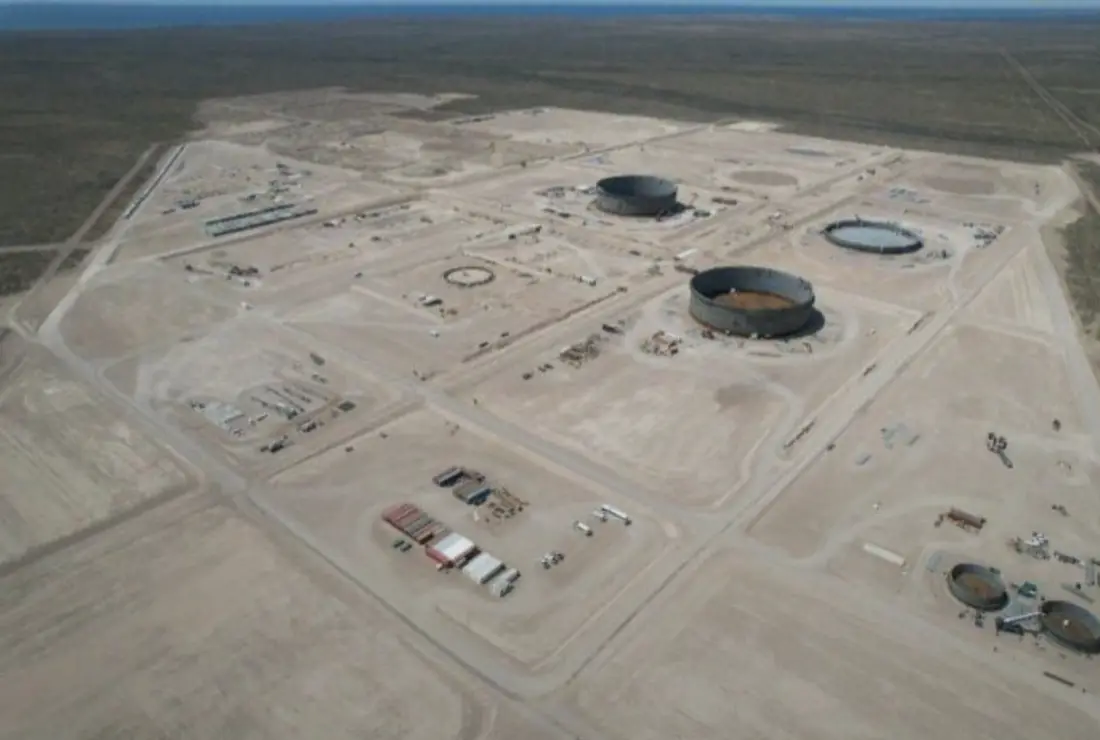
The Punta Colorada Export Terminal, the Atlantic endpoint of the Vaca Muerta Oil Sur (VMOS) pipeline, is reporting concrete progress in the construction of its crude oil storage tank farm.
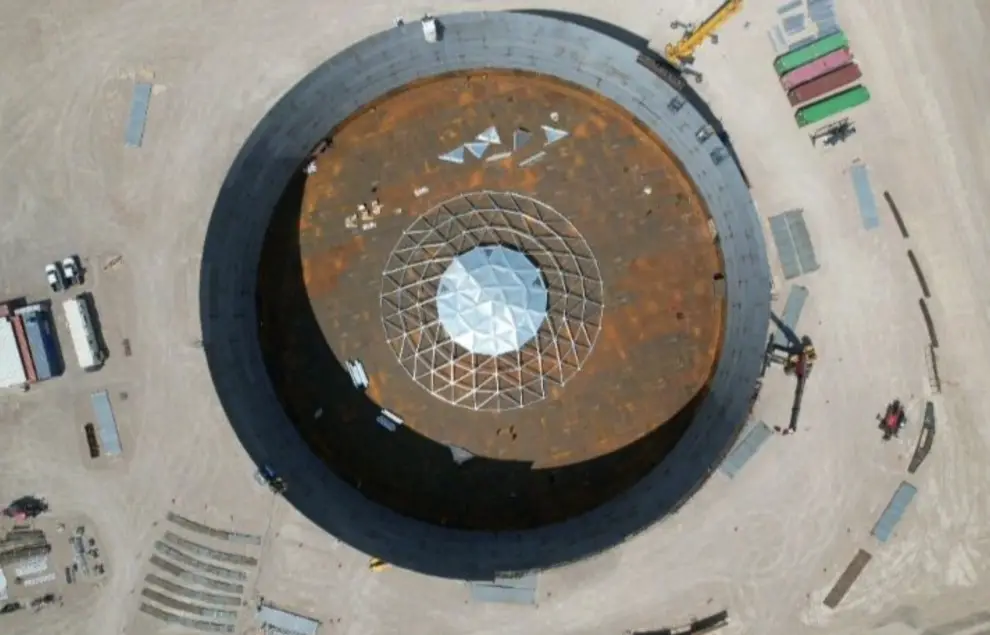
Of the six crude storage tanks planned, two units are already in an advanced stage of roof assembly, marking a new milestone in the infrastructure designed to move crude from Argentina’s Vaca Muerta shale formation to the Atlantic coast.
Each atmospheric storage tank has a diameter of 82 meters (269 feet), a height of 38 meters (125 feet) and a nominal capacity of approximately 120,000 cubic meters. In total, the terminal will reach a storage capacity of 720,000 cubic meters, or about 720 million liters.
The tank battery will be equipped with:
- Fixed or floating roof systems
- Cathodic protection
- Volatile organic compound (VOC) emissions control
- Containment rings for environmental safety and fire prevention
These tanks will serve as the terminal’s operational buffer, enabling intermediate storage and flow regulation prior to marine loading through a single-point mooring buoy or offshore loading system.
Direct link to Vaca Muerta
The 437-kilometer (271-mile) VMOS pipeline will have a 30-inch diameter in its initial phase and will connect the Vaca Muerta fields in Neuquén Basin to the coastal facility in Río Negro province, strengthening export capacity via the Gulf of San Matías.
The first phase of the project contemplates throughput of 180,000 barrels per day (bpd), with start-up scheduled for late 2026.
The design includes scalability to 550,000 bpd in subsequent phases, with a maximum technical capacity of 720,000 bpd, subject to international market demand.
Investment and project scope
Total investment in the VMOS project exceeds $3 billion and includes:
- Pumping stations
- Block valves
- Scraper (pigging) systems
- Complementary marine works
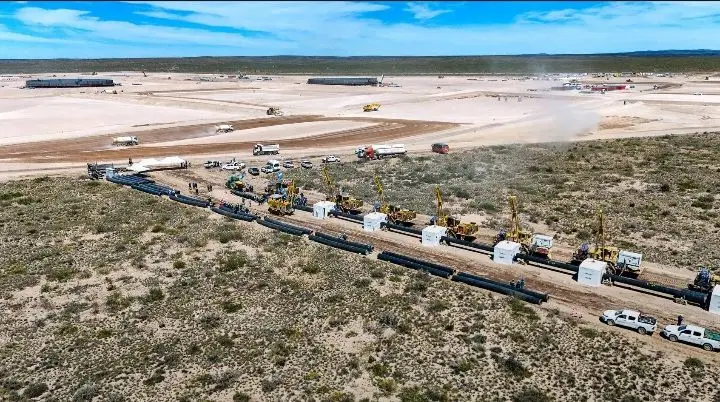
Progress in the structural assembly of the tanks, including shell courses, bottoms and roofs, represents a significant technical milestone within the crude evacuation value chain.
With these developments, the Punta Colorada Terminal is consolidating its role as a strategic storage and dispatch hub within Argentina’s hydrocarbons infrastructure, optimizing territorial integration between the Neuquén Basin — home to Vaca Muerta — and a deepwater port with export projection.