Project Vault + FORGE
The U.S. Chamber of Commerce and AmCham Argentina will sign a joint statement on Thursday, April 30, aimed at operationalizing the Quirno-Rubio critical minerals framework that Argentina and the United States signed in Washington on February 4. It is the first corporate-sector instrument to follow the government-to-government pact.
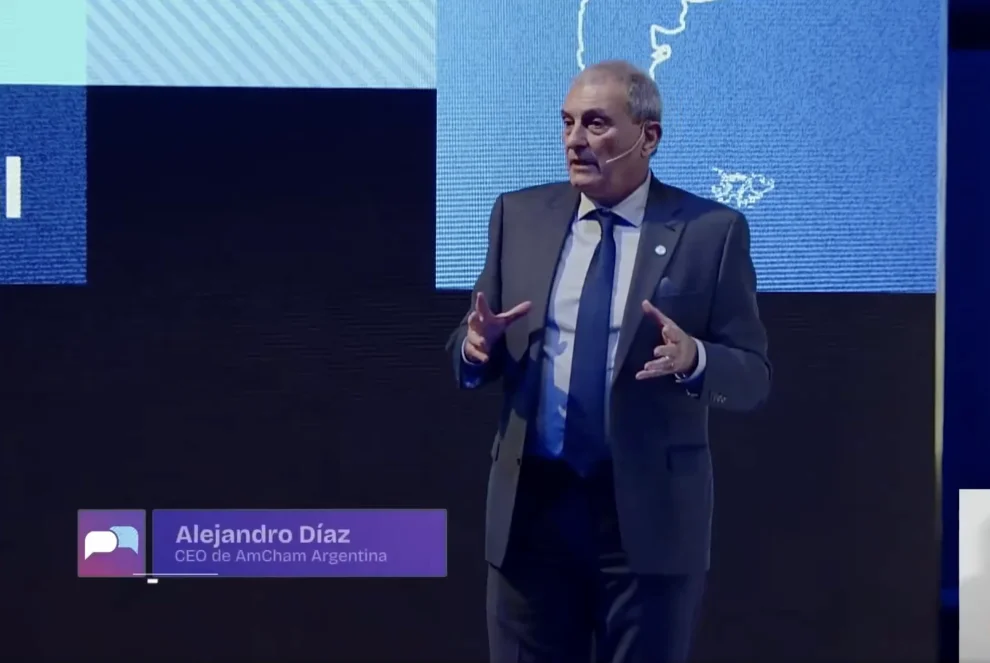
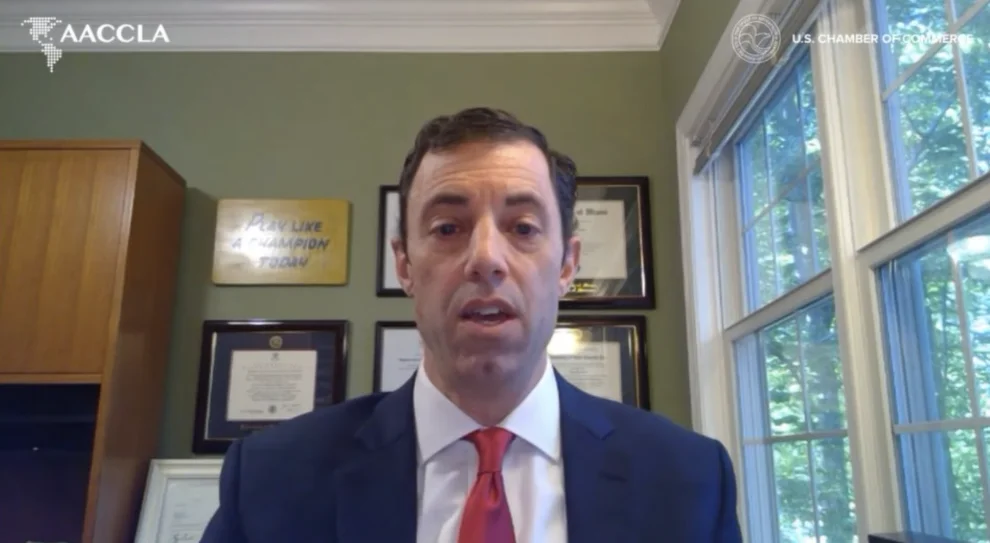
The signing, scheduled for 2 p.m. at AmCham Argentina's Buenos Aires offices, is intended to move the intergovernmental accord into a corporate agenda covering Argentina's copper and lithium assets. Neil Herrington, senior vice president for the Americas at the U.S. Chamber of Commerce, and Alejandro Díaz, CEO of AmCham Argentina, will rubric the document. Daniel González, Argentina's Coordinating Secretary for Energy and Mining, will deliver the opening remarks.
Whether the statement carries operational leverage or adds another declaratory layer will depend on details visible only after signing, among them whether it names specific financing instruments, includes quantifiable investment commitments, and establishes a tracking mechanism with deadlines. The answer matters for an investor community that has watched bilateral momentum accumulate without yet producing closed deals.
The April 30 document is the fourth chapter of a sequence that began in mid-January, when the administration of President Donald Trump, who took office in January 2025 on a platform of energy dominance and supply-chain reshoring, convened Argentina to the first Critical Minerals Summit. The White House framed the move as a response to China's dominant position in strategic mineral supply chains.
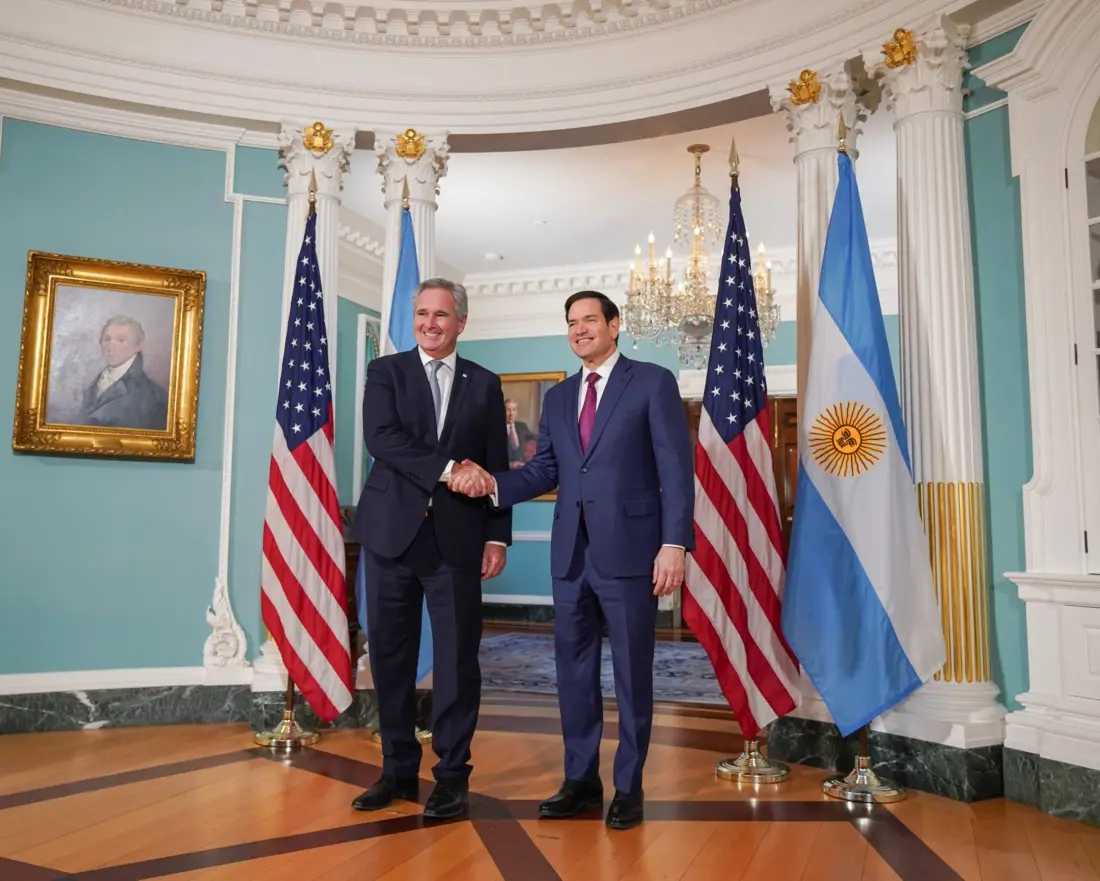
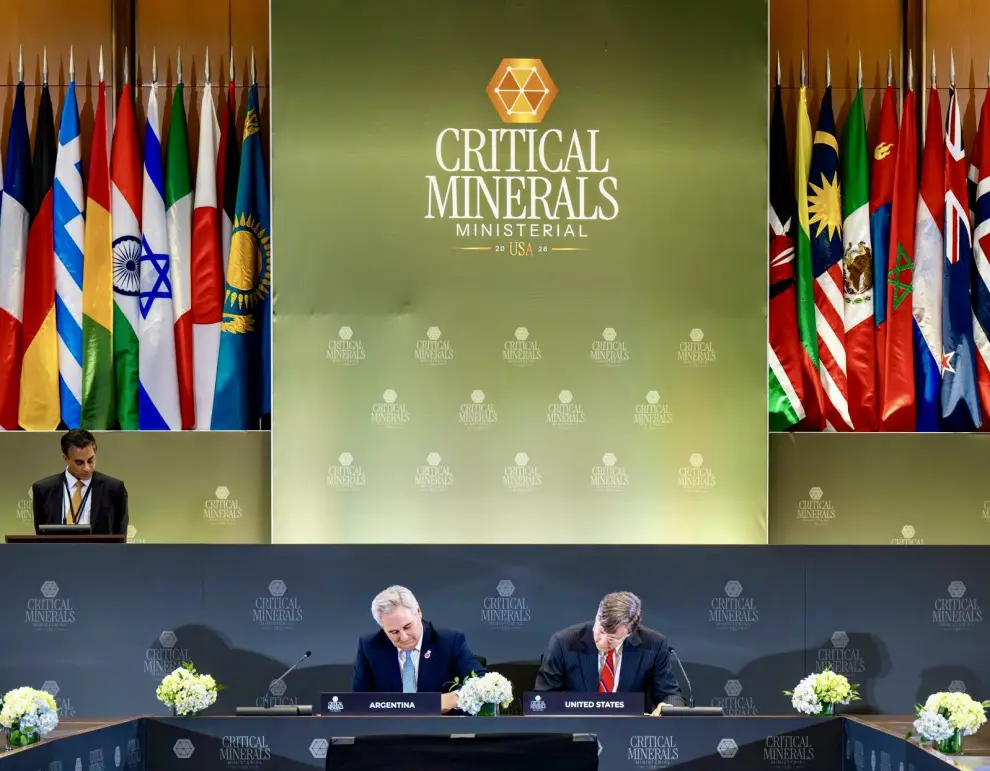
On February 4 in Washington, Foreign Minister Pablo Quirno and U.S. Secretary of State Marco Rubio signed the Framework Instrument for Strengthening the Supply of Critical Minerals Mining and Processing, one of eleven accords the United States closed that day with countries including Ecuador, Peru, Paraguay, and the United Arab Emirates.
In parallel, Rubio announced FORGE (Forum for Resilient Global Economies), the successor forum to the Minerals Security Partnership, chaired by South Korea through June. The third chapter was the Reciprocal Trade and Investment Agreement, which AmCham backed in February with emphasis on the removal of tariffs across 221 lines and a dedicated mining chapter.
The Brazil Template and the Herrington Factor
To understand the format of Thursday's signing, it helps to look at what happened in Washington on March 10. That day, the U.S. Chamber organized the U.S.-Brazil Forum on Critical Minerals, with a joint declaration, technical panels, and a bilateral work agenda. The keynote speaker was Herrington himself, who argued in closing remarks that the economic case for the partnership was too transformational for political differences to get in the way. Herrington also chairs the U.S.-Argentina Business Council (USABC), among other hemispheric bilateral tables. His arrival in Buenos Aires suggests the April 30 signing is not a protocol event but a transfer to the Southern Cone of the format the U.S. Chamber had already tested with Brazil.
Response to the Atlantic Council
The corporate-sector move arrives at a precise moment. An Atlantic Council report published in April held that U.S.-Argentina cooperation on critical minerals remained "declaratory and not operational," with a risk that political momentum could dissipate before producing concrete results.
In Washington, during the week of the IMF and World Bank annual meetings, Integra Capital founder José Luis Manzano identified the bottleneck in processing and logistics. Argentina exports roughly 70% of its lithium to China and reimports the processed material at several times the price, according to an estimate by Inter-American Development Bank (IDB) President Ilan Goldfajn in December 2025. The April 30 joint statement can be read as the organized private sector's response to that gap: moving the political impulse from cabinet tables to investment desks, and into the segments of the value chain where infrastructure still needs to be built.
What Will Be at Stake on April 30
Argentina's copper portfolio is the second board the joint statement could move. El Pachón, MARA, Los Azules, Taca Taca and Josemaría represent potential commitments of more than $20 billion, with Glencore, the Anglo-Swiss mining and commodities trading major, already adhered to Argentina's Large Investment Incentive Regime (RIGI) for $14 billion, according to Foreign Minister Quirno in February. Unlike lithium, Argentine copper has yet to ship a single kilogram. The document will carry real weight if it articulates the financing required to unlock that productive leap.
Beyond the text, which will become public only after the signing, five points will measure the real weight of the move. First, whether the document explicitly references the RIGI, the U.S. Export-Import Bank (EXIM Bank), which reopened credit to Argentina in February, FORGE, or Project Vault as operational instruments. Second, whether it includes quantifiable investment commitments. Third, whether it addresses domestic processing as a node of the value chain. Fourth, whether it provides a follow-up mechanism with deadlines and milestones. Fifth, what role it assigns to Argentina's mining provinces, which under Argentine law hold ownership of subsurface resources and collect royalties directly. The agenda includes a press window between 2:45 p.m. and 3:45 p.m., the natural slot for parsing the fine print.
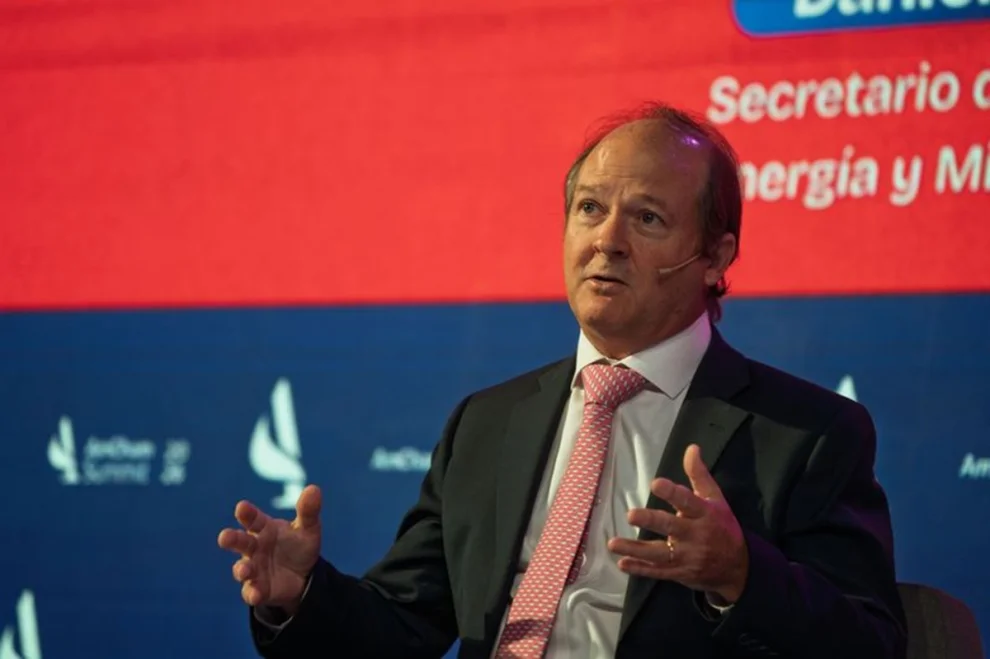
At the April 14 AmCham Summit, González projected that Argentina could reach a combined energy and mining trade surplus of $60 billion in five years, against the $11.2 billion overall trade surplus the country posted in 2025. On Thursday, the organized private sector on both shores will attempt to translate that projection into a concrete institutional commitment.