
Mining


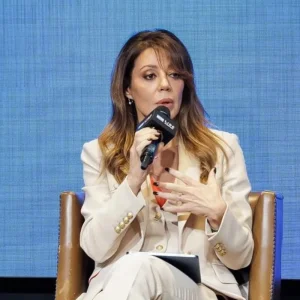
Andes Corporación Minera S.A., the company that operates the Los Azules copper project in the Calingasta department of San Juan province, will join the Board of Pacto Global Argentina, the UN Global Compact’s local network, for the 2026–2028 term.
The appointment was made at the 10th National Assembly of the United Nations initiative, held on October 22 in the City of Buenos Aires under the motto “From ambition to action,” according to the company.
The Global Compact brings together more than 25,000 participants worldwide and more than 1,000 companies and organizations in Argentina. With Andes Corporación Minera on its local Board, the copper industry joins the table where the private sector discusses its sustainability agenda, at a time when the metal has become the physical input of global electrification.
“Being part of the Board of Pacto Global Argentina represents a great responsibility” and a “key opportunity to show that copper mining can lead the sustainable development agenda,” said Michael Meding, general manager of Los Azules and managing director of McEwen Copper. The executive added that having a seat at that table allows the company to “engage directly with other sectors to turn words into concrete actions.”
The Deficit S&P Global Projects for 2040 Equals a Quarter of Copper Demand
The interest in a deposit like Los Azules is explained by the metal’s supply and demand curve. According to the report “Copper in the Age of AI,” which S&P Global published in January 2026, global copper demand will rise from 28 million tonnes in 2025 to 42 million in 2040, a 50% increase. Global copper production would peak in 2030 at about 33 million tonnes, and the gap would reach 10 million tonnes in 2040, even with recycling more than doubling.
Data centers and artificial intelligence drive a large part of that equation. The firm estimates that copper consumption by data centers will rise from 1.1 million tonnes in 2025 to 2.5 million in 2040, within a possible range of 1.7 to 2.7 million depending on how fast those facilities are built.
The International Energy Agency (IEA) looks at the same process from the angle of clean technologies: in its Global Critical Minerals Outlook 2024, it calculated that low-emissions generation, grids, electric vehicles and storage accounted for 24% of copper demand in 2023, a share that would climb to 45% in 2040 in its Net Zero Emissions scenario.
Los Azules stands out against that backdrop of scarcity. According to 2024 S&P Global data cited by the company, its projected annual output would rank it 26th among the world’s 423 copper producers, and the deposit ranks tenth in total resources among undeveloped copper porphyries.
Los Azules Plans to Produce Cathodes On Site, Without a Smelter or Tailings Dams
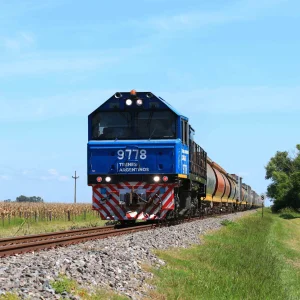
The Feasibility Study (FS) McEwen Copper published in October 2025 calls for heap leaching, solvent extraction and electrowinning (SX/EW) to produce 99.99%-pure copper cathodes at the deposit. The plan envisages an average of 148,200 tonnes per year over a 21-year life of mine (LOM), with 204,800 tonnes per year in the first five years, and initial capital of $3.17 billion.
Because it would leave the mine as refined metal, Los Azules copper would bypass the smelter, the stage that in conventional operations processes concentrate away from the deposit. According to the study, the project will use 74% less water than a conventional milling operation, will have a mine-to-metal carbon intensity 72% below the industry average and will run on 100% renewable energy. The design also includes no tailings dam.
The project has an approved Environmental Impact Declaration (DIA), with construction and operation permits in force since late 2024, and was the first copper project in Argentina to join the Large Investment Incentive Regime (RIGI), with a $2.672 billion investment plan. McEwen Copper also has a collaboration agreement with the International Finance Corporation (IFC), the private sector arm of the World Bank Group, which could lead to debt financing.
McEwen Copper Expects to Decide on Building the Mine in Mid-2027
The assembly’s motto, “From ambition to action,” matches the stage Los Azules is going through. In August, McEwen Copper closed a $240 million loan with a four-year term to advance engineering and early works, and in the same statement set mid-2027 as the target for the final investment decision (FID) and the closing of full project financing, with commercial cathode production slated to start in 2030. In parallel, the company is preparing its listing on the Toronto stock exchange.
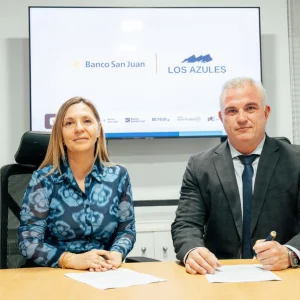
Before that decision, the awards of the mining fleet and of the engineering, procurement and construction management (EPCM) contractor are still pending. Last week, Andes Corporación Minera also signed an agreement with Banco de San Juan and Grupo Petersen’s Mining Unit to finance and train San Juan suppliers, aligned with the IFC Performance Standards and the Global Compact principles.
Andes Corporación Minera’s term on the Board ends in 2028, two years before the scheduled date for Los Azules’ first copper.