
Governor formalized the councilors by decree
Mendoza activated its Mining Council this week, completing the mining-authority framework the western Argentine province has built since 2024 as it positions for incoming investment.
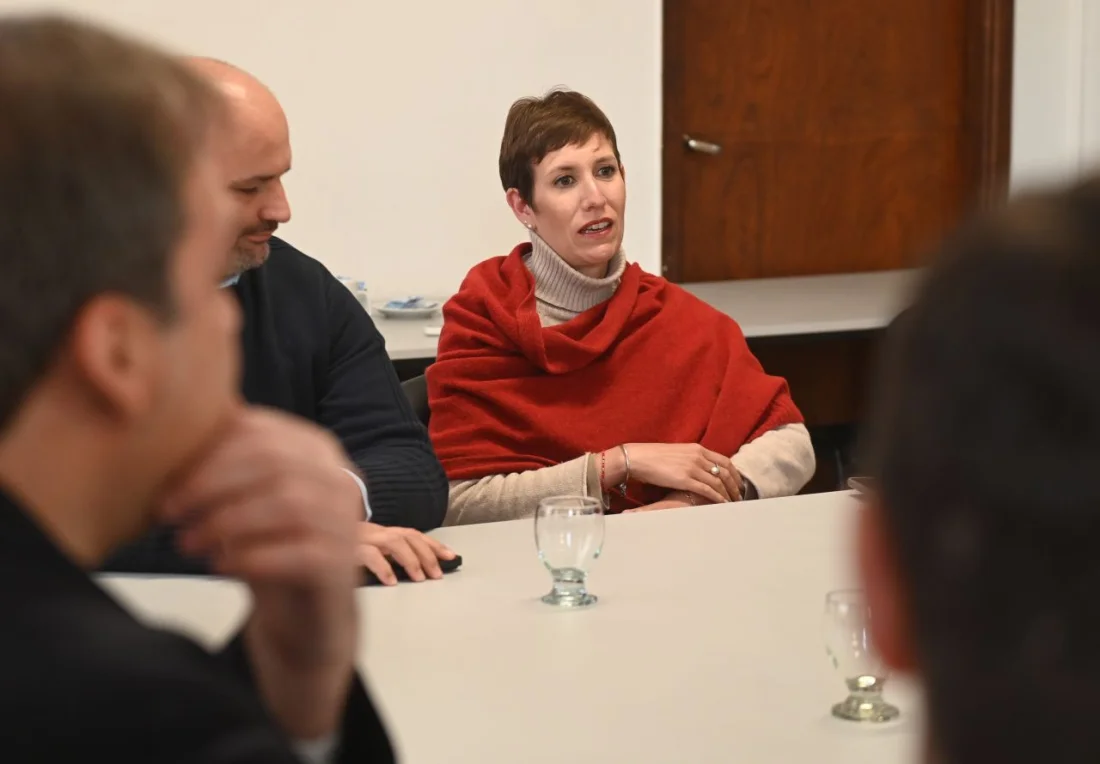
Jimena Latorre, Mendoza's energy and environment minister, chaired the first meeting of the council (Consejo de Minería), a body the province had created on paper but had not yet put into operation. It completes the architecture the administration of Governor Alfredo Cornejo has assembled ahead of a stage the government associates with new mining investment.
The council functions as a second-instance mining authority, sitting below the provincial Mining Directorate, headed by Jerónimo Shantal; both report to the Ministry of Energy and Environment. Its core competence is appellate: it intervenes in appeals against Directorate resolutions that cause irreparable harm and acts as a consultative body when required.
The governor formalized the councilors by decree, naming two lawyers (Diego Eduardo Silvestre and Florencia Sar Sar), a mines-and-geology representative (Andrea Florencia Soledad Calderón, with Claudio Ángel David Dagne as alternate) and a business-chambers representative (Raúl Gustavo Rivarola, with José Ángel Candeloro as alternate). Terms run two years and are unpaid; the body elects a president and vice president annually.
"We have launched the Mining Council, an important step to keep strengthening the institutions that support the development of the activity, with more transparency and legal certainty," Latorre wrote on X.
A New Procedure Code Behind the Architecture
The council caps a framework anchored in the Mining Procedure Code (Law 9,529), passed by Mendoza's legislature in 2024 to replace a 1945 statute. Defended in committee by Latorre and Shantal, it set the Mining Directorate as first-instance authority, digitized paper case files, created a producers' registry to curb informal mining and reinforced the Mining Police with enforceable sanctions. It covers first-, second- and third-category mining and regulates mineral transport on provincial routes.
"With the reform of the Mining Procedure Code we aim to streamline processes without giving up guarantees," Latorre said. "On the contrary, we want every decision to have clear rules, transparency and the backing of solid institutions."
The government maintains that the reform does not touch Law 7722, Mendoza's mining law requiring the provincial legislature to ratify every environmental impact declaration (DIA), which continues to operate as a political filter on projects.
Lithium Clears the Filter for the First Time
Days earlier, Mendoza's Chamber of Deputies gave final approval to the ratification of the environmental impact declaration (DIA) for Don Luis y Otro, a lithium exploration project in the province's south. The vote was 36 in favor and 4 against, with no abstentions; the Senate had approved it on May 26. With both chambers on record, the exploratory stage required under Article 3 of Law 7722 is enabled.
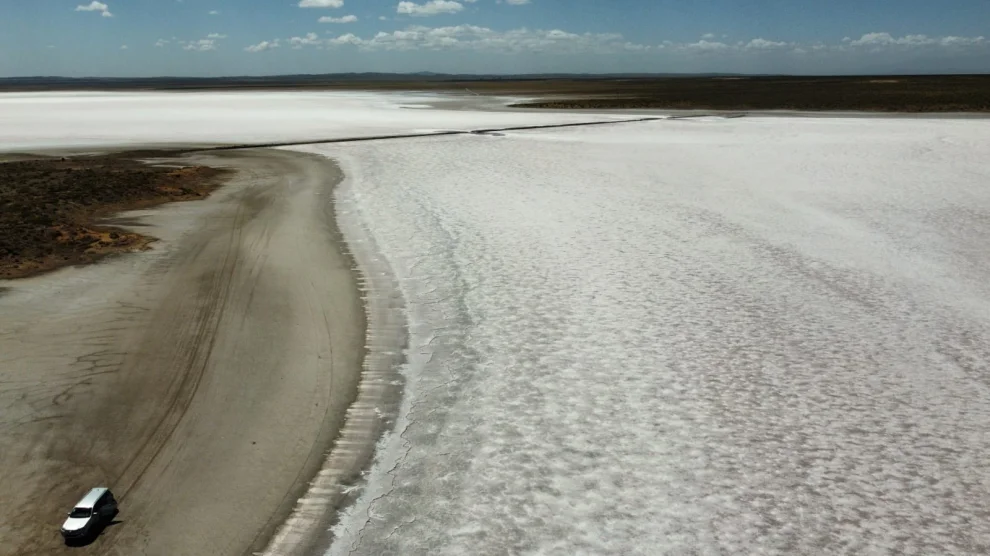
The project covers 234,256.5 hectares in the Salinas del Diamante area, between the San Rafael and Malargüe departments, and will assess lithium-brine potential in a Cuyo evaporitic system outside the Lithium Triangle, the high-altitude Andean salt-flat belt spanning northern Chile, Argentina and Bolivia that holds most of the region's known lithium brine.
It is run by the Mendoza firm El Jarillal in partnership with Ampere Lithium, an Australian company. The technical design relies on direct lithium extraction (DLE), recovering lithium from brine without large evaporation ponds. The approval covers exploration only; a production phase would require new environmental assessments.
Don Luis y Otro is the first lithium-specific project to clear Law 7722 ratification in Mendoza, a province whose mining portfolio has been driven by copper and led by PSJ Cobre Mendocino, its most advanced copper project.
"We keep laying the foundations for Mendoza to advance toward modern, responsible and sustainable mining, based on technical information, clear rules and a development vision for the coming generations," Latorre wrote on X. The step follows a recent presentation of Mendoza's mining agenda by Cornejo and Latorre in Chile.