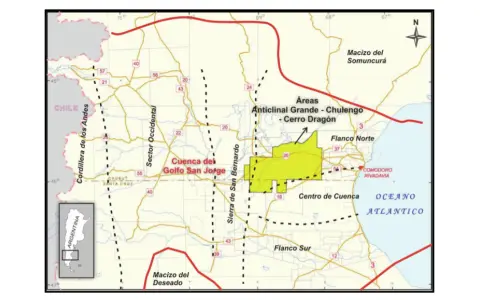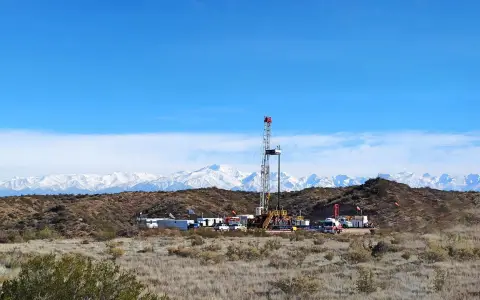
The Mendoza tongue: Province delimits 600-square-kilometer triangle to fast-track its own Vaca Muerta
The province has identified areas of significant thickness and thermal maturity within the “Mendoza tongue” of the formation.
The Chilean state company doubled its profits while advancing a diversification plan, though it is considering the possibility of exporting unconventional oil from Neuquén via the Pacific Ocean through the port of San Vicente.
The CEO of Globant said he will analyze the possibility of joining the Instituto Vaca Muerta, an initiative promoted by YPF to strengthen technical training in unconventional upstream operations. In this way, artificial intelligence is beginning to play a central role in the training of future upstream specialists.
Although the basin remains highly productive, operators are placing less emphasis on drilling more wells and more on extracting value efficiently from existing developments. Technologies such as enhanced oil recovery (EOR), horseshoe wells, and artificial intelligence will be crucial to extending the life of this iconic U.S. shale basin.
The swap with Pluspetrol could act as a catalyst to unlock the project, where key players have already begun positioning themselves. By consolidating control over high-density gas areas, YPF is building the stable, large-scale supply base needed to make a megaproject like Argentina LNG financially viable.
The updated Country Limitation Schedule (CLS) allows short- and medium-term credit for Argentina’s public and private sectors. Within the framework of the Reciprocal Trade and Investment Agreement (ARTI), the EXIM Bank decision is set to support projects in Vaca Muerta, lithium and infrastructure, marking a key financial endorsement in the relationship between Buenos Aires and Washington.
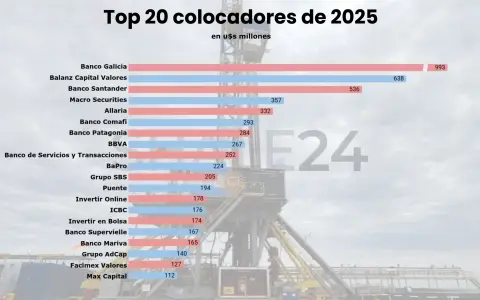
These are critical days for Argentina’s economic dynamics. The energy sector is bringing in dollars through financing, while sectors tied to the RIGI are driving domestic activity. New regulations are creating incentives to capitalize on the favorable momentum in emerging markets.
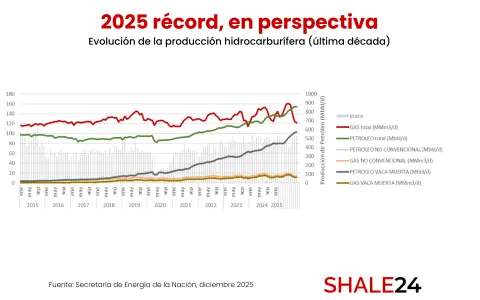
Argentina’s Energy Secretary, María Tettamanti, gave an extensive interview to the International Gas Union’s magazine in its December 2025 edition. She outlined her assessment of the country’s gas sector, ongoing tariff corrections, the deregulation of the wholesale market, and the need to adapt transport infrastructure to the productive reality of Vaca Muerta, which now accounts for 15% of the nation’s gas output.
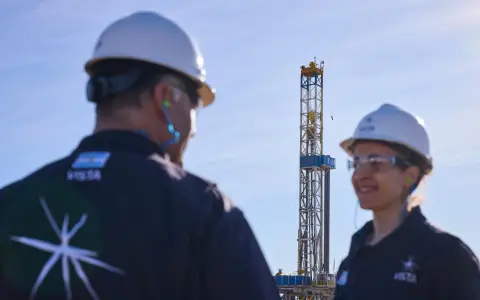
The net contribution of these assets to Vista is significant, adding approximately 21,869 boe/d (based on Q3 2025 production at post-deal stakes) and 54 million boe of additional proven reserves.
The Anglo-Dutch oil company is weighing a sale of its assets in the Neuquén shale formation, valued in the billions of dollars, amid a global reshuffling of its energy portfolio.
The main change is the modification of the export duty framework established under Decree 488/2020. When Brent trades at or below $65, the retention is 0% (no export duty). When it reaches or exceeds $80, the maximum rate of 8% applies. In the intermediate range (between $65 and $80), the rate increases gradually.
YPF and Pluspetrol sealed a cashless asset swap that will allow the state-controlled oil company to consolidate full control of three key areas in Vaca Muerta, while the private firm repositions itself in high-potential blocks through Vaca Muerta Inversiones.
The government implemented a new framework to guarantee gas supply during peak-demand months, shifting the import and commercialization of liquefied natural gas (LNG) to the private sector and eliminating state intermediation.
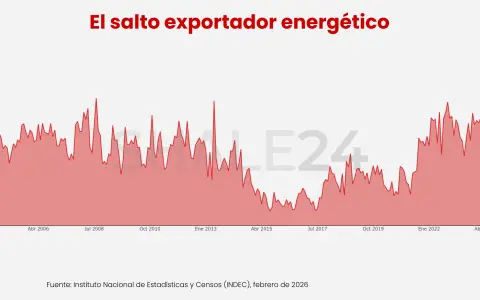
In 2025, Argentina recorded the largest energy trade surplus in its history. In the coming years, that record could be surpassed as projects approved and under review through the Incentive Regime for Large Investments (RIGI) move forward. Some analysts forecast an energy trade balance generating a combined $48 billion by 2030 and $67 billion by 2035.
Argentina’s economy is entering a strategic moment, driven by the rise of its energy and mining sectors, within a global context where major powers are seeking critical resources from allies to strengthen “friendly” supply chains.