
Oil & Gas

Argentine energy exports to Asia Pacific reached $1.27 billion between January and July, more than double the region's purchases across all of 2025.
The shipments represented 20.7% of the $6.13 billion Argentina exported in energy over the period. Asian participation has run at 4.3% in 2023, 3.5% in 2024 and 7.9% in 2025, which makes the seven-month figure a step change rather than a fluctuation: it measures how quickly Vaca Muerta barrels are reaching refiners outside the Atlantic basin.
The figures come from the Secretariat of Energy's registry of imports and exports by company and destination country, processed by Shale24 across the full series. The measurement corresponds to declared customs value at the time of loading. Annualized at the pace of the period, the flow works out to about $2.18 billion.
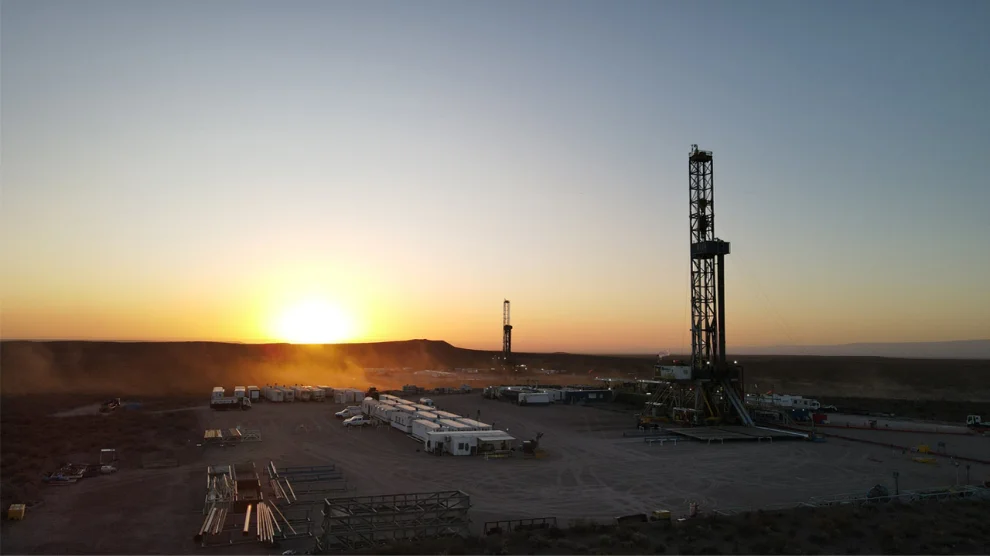
Crude Accounts for Nearly Three-Quarters of the Flow
Crude oil contributed $930 million of the $1.27 billion, against $267 million across all of 2025.

In volume terms, Medanito, the light, sweet grade produced in the Neuquén Basin, moved 40,584 bbl/d to Asia between January and July excluding Australia, against 6,738 bbl/d a year earlier. With Australia included, the bloc absorbed 52,815 bbl/d out of a total 236,278 bbl/d exported.
All of those cargoes were Neuquén Medanito, with a marginal remainder from Río Negro province. Shale24 recorded the route opening in July, when the first cargoes to China and Thailand cleared Puerto Rosales, Buenos Aires province, Argentina's primary Atlantic crude export terminal.
Petroleum coke was the second product at $225 million over the seven months. Natural gasoline contributed $31 million, fuel oil $25 million, propane $23 million, butane $22 million and virgin naphtha $11 million.
Seven Destinations, Three of Them New
China led the ranking at $403 million. Thailand came second at $338 million from a zero base in 2025, followed by Australia at $186 million, Malaysia at $142 million, Singapore at $101 million, India at $62 million and Vietnam at $36 million.
The buyer roster widened from four countries in 2025 to seven. Thailand, Malaysia and Vietnam are the additions. India switched baskets: it bought $76 million of crude in 2025 and this year is taking liquefied gases and coke, with no crude cargoes.
On the sell side, Vista Oil & Gas Argentina and Vista Energy LACH, both corporate vehicles of Vista Energy, an independent Vaca Muerta-focused producer, concentrate shipments to Australia, Malaysia and Singapore and share Thailand. Pluspetrol Cuenca Neuquina, a unit of Pluspetrol, an Argentine independent oil and gas producer, supplied 197,795 of the 240,350 cubic meters of crude that went to China.
Compañía de Hidrocarburo No Convencional, a Techint Group company, supplies Thailand and is the only exporter to Vietnam. Pampa Energía, a diversified Argentine energy company, splits volumes between Thailand and China. The wider roster continues a trend Shale24 recorded in June, when the number of operators exporting Medanito multiplied.
Monthly Volatility Sits Behind the Annual Trend
The monthly series peaked in May at $405 million, its highest reading since January 2025 and 30.9% of that month's energy exports. The flow fell to $120 million in June and $41 million in July, or 6.1% of the monthly total. The July registry records no Asian crude cargoes: the month's destinations were Chile, the United States, Peru, Uruguay and the Netherlands.
The monthly readings warrant caution. Asian participation swung between 3.4% in February and 13.1% in May during 2025 without the annual trend moving. The seven-month average for 2026 is more than double the full-year 2025 figure.
South Korea Lines Up as the Eighth Destination
South Korea's entry rests on this circuit. National Security Adviser Wi Sung-lac said after the July 31 summit between Presidents Javier Milei and Lee Jae-myung that South Korean refiners had arranged trial imports of Argentine crude totaling 880,000 barrels this year, with regular purchases planned from 2027, as Shale24 reported on August 3. HD Hyundai Oilbank, which operates the Daesan refining complex, made the first purchase.
A company spokesperson confirmed the import was completed in August and said the refiner is weighing further cargoes depending on the economics and on compatibility with its facilities.