
Energy Policy
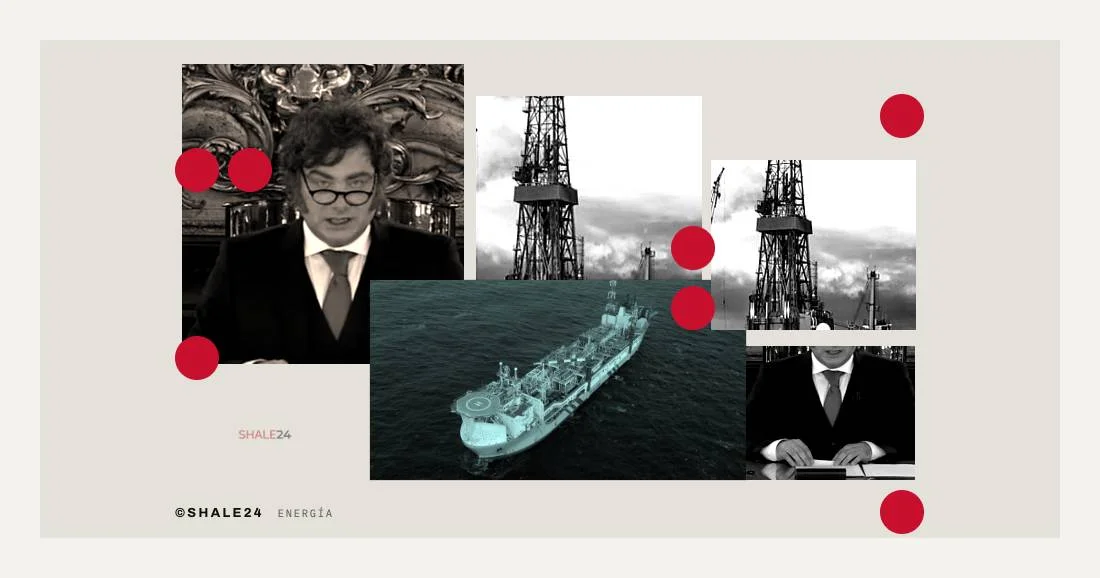
President Javier Milei has announced three sovereignty measures targeting the Sea Lion oil project, including penalties that would extend to the development's suppliers.
The package, delivered in a national broadcast on Thursday, rests on three instruments of different rank and different timeframes: a decree signed the same day, an emergency decree expanding the Defence Ministry's resources, and a bill Milei will send to Congress. The centre of the message was hydrocarbon activity on the continental shelf.
Only the first two take effect on the executive's own authority. The provision with the widest commercial reach, equal treatment of contractors and operators, requires congressional approval that has not yet been scheduled.
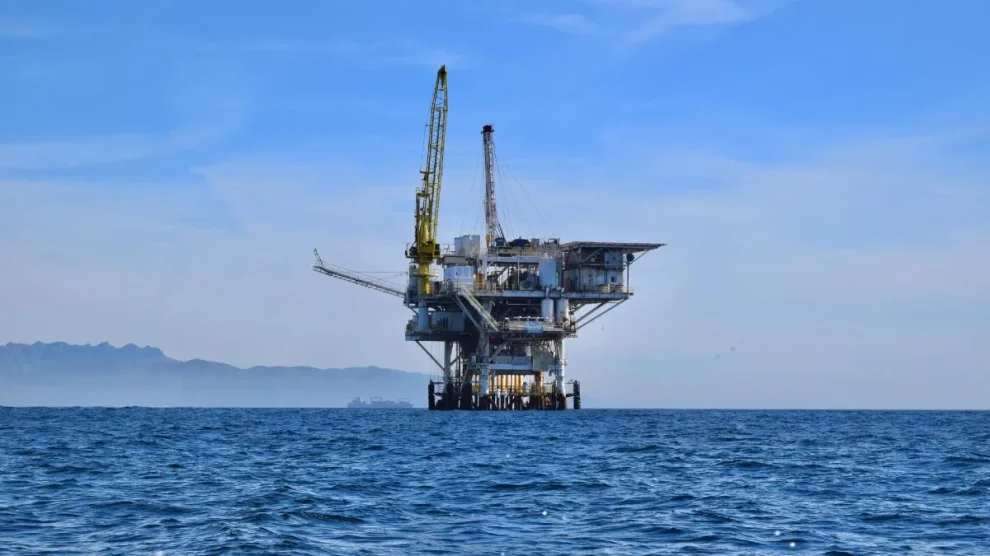
Milei said the state would deploy "all the tools of the state, diplomatic, economic, judicial and legal" to deter actors operating without Argentine authorisation, and announced that companies involved directly or indirectly in projects in the islands would be barred from operating in the country.
What the Executive Signed
The first instrument is a decree intended to give "greater speed" to the sanction procedures under Law 26,659, Argentina's 2011 statute barring unauthorised hydrocarbon exploration and production on its continental shelf. As Milei described it, the aim is to strengthen early detection and information exchange between agencies in order to accelerate sanctions against companies carrying out that activity, and against their shareholders, directors and suppliers.
The second is an emergency decree, an instrument Argentina's executive branch can issue without prior congressional approval, expanding the Defence Ministry's resources for two declared purposes: building an integrated naval base in Tierra del Fuego province and increasing telecommunications capacity. Milei described the base as "the most important logistics hub in the South Atlantic."
What Goes to Congress
The third instrument is a national sovereignty defence bill with three stated objectives.
The first amends Law 26,659 to toughen sanctions and penalties against companies linked to unauthorised operations. The provision with the widest operational reach is that suppliers to those projects would face the same penalties and prohibitions as the companies they assist, that offenders could not contract in Argentine territory with either the public or the private sector, and that trial in absentia would apply where relevant. The regime would also extend to other activities in the islands affecting natural resources beyond hydrocarbons.
The second creates a National Security Council, with a mandatory cross-government national security policy coordinating the foreign ministry, defence, intelligence and economy, and a framework for critical infrastructure protection and for aerospace and maritime protection.
The third asks Congress to grant that council powers to respond with economic and diplomatic tools against state or non-state actors that threaten national security.
Much of the first objective's scope is already written. Article 2 of Law 26,659 has covered shareholders, contractors and logistics providers since 2011, and Secretariat of Energy Resolution 194/2013 blocks the registration of contractors and shareholders of operators declared unlawful.
The Operator's Calendar Says Something Else
Milei grounded the urgency in the progress of Sea Lion, the development operated by Israel's Navitas Pet roleum with 65% and in which Rockhopper Exploration, the AIM-listed U.K. company, retains 35%. He said the project has a date to begin production "at some point in the coming months" and that, absent a state response, within a few months the companies would have the physical capacity to extract the crude.
The timetable the companies themselves have declared to the market is different. In its August 24 statement, Rockhopper reported that work in the islands is advancing on the jetty, the coastal base, accommodation and supporting infrastructure to receive the drilling rig, that drilling begins in early 2027, and that first oil from phase 1 of the Northern Development Area remains scheduled for the first quarter of 2028. In the same statement the company reported that the operator had exercised its option to acquire a second floating production, storage and offloading unit (FPSO), the OSX-1, for about $125 million, destined for the Central Development Area, with a final investment decision (FID) expected in the first half of 2028 and production toward the end of 2030.
The distance between the two calendars is commercially material. Sea Lion reached FID only in December 2025, with $1.8 billion of post-FID funding required to reach first oil, and Rockhopper values its 35% interest at a post-tax NPV10 of $2.2 billion before the second FPSO is factored in.
What is under way now, then, is the preparatory phase: civil works in the islands, fabrication of long-lead equipment and refitting of the FPSO Aoka Mizu, which is sailing to a Southeast Asian shipyard with arrival expected in early September. Navitas has also said it is weighing a strategic partner for its 77-well plan, a party that would fall under Article 2 if it held assets or registrations in Argentina.
The Diplomatic Front
Milei put numbers on the last three years of diplomatic work: 18 resolutions and declarations from international bodies and forums supporting the Argentine claim, and more than 60 formal proposals in response to unilateral British actions. On the corporate front, he said the foreign ministry had sent close to 180 discouragement letters to companies and to more than 29 countries involved in projects in the islands.
He also referred to the U.S. position. Asked in the Oval Office on August 31 whether Washington was reviewing its stance on the islands, President Donald Trump said he reviews every position and that this was one of many. The formal U.S. position remains neutrality on the sovereignty dispute while recognising de facto British administration, and the reported review originated in a Pentagon proposal tied to NATO defence spending rather than in the sovereignty question itself.
On the other side of the South Atlantic the calendar is also moving. The islands' administration has approved work on a sovereign wealth fund for oil royalties and will open a public consultation in early 2027, the same window in which the drilling rig is due to arrive.