
Financial engineering in Vaca Muerta
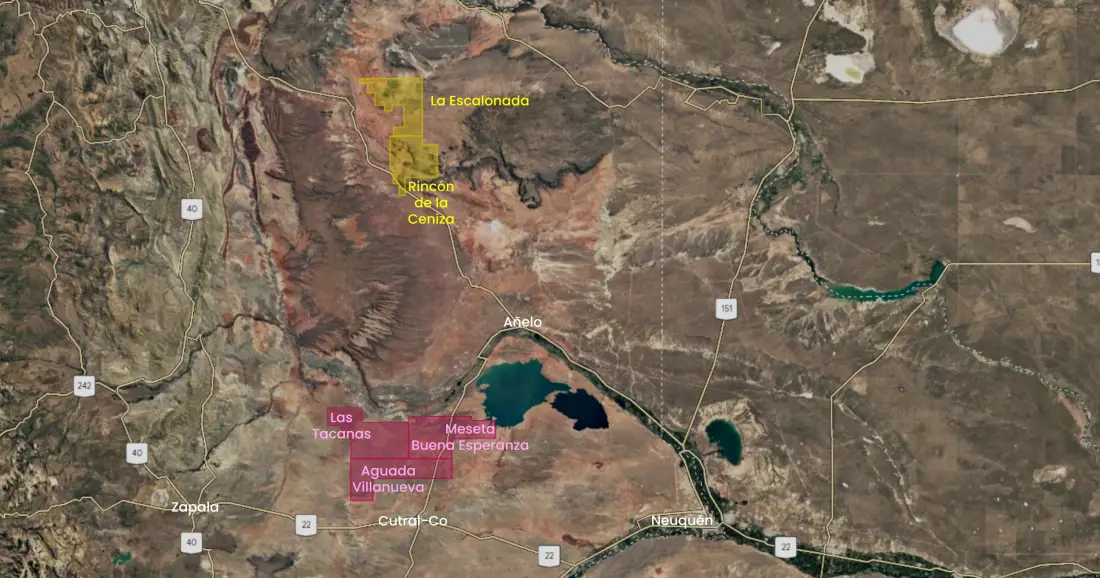
In a high-precision corporate move, YPF and Pluspetrol sealed an asset swap agreement that not only optimizes their respective portfolios but also serves as a master key to leverage the Argentina LNG project.
Under the agreement, YPF acquires full control — the remaining 50% stake — of the Meseta Buena Esperanza, Aguada Villanueva and Las Tacanas blocks. These areas were not chosen at random. They are strategically located within the “dry and wet gas” window of the Vaca Muerta formation, a technically critical zone to supply feedstock for the Argentina LNG megaproject.
In return, Pluspetrol strengthens its leadership position in the shale oil segment by becoming a shareholder in Vaca Muerta Inversiones, gaining exposure to the La Escalonada and Rincón de Ceniza blocks. The area borders Bajo del Choique, the asset Pluspetrol previously acquired from ExxonMobil, allowing for stronger geological and logistical synergies.
Vaca Muerta and Argentina LNG in investors’ sights
The national oil company’s move to full control represents the legal and operational step required before farming down stakes to other players — such as Abu Dhabi’s ADNOC and Italy’s ENI — enabling new partners to inject capital directly into the production development needed to export 12 million metric tons per year of liquefied natural gas.
The entry of heavyweight international players would not only provide financing but also deliver critical market validation for the Argentina LNG project in the eyes of global buyers.
By securing control of wet gas areas, YPF assures prospective partners that feedstock for the liquefaction plant will come from fields operated under the highest efficiency standards in the industry, similar to those that have already allowed Vaca Muerta to grow at annual rates of 31.8% in oil output and 18.3% in gas production.
This reshuffling marks the beginning of an era in which Vaca Muerta ceases to be a purely domestic asset and becomes fully integrated into the international energy market. Pluspetrol’s exit from gas-focused areas and its concentration on oil, alongside YPF’s positioning as a key facilitator for the inflow of foreign capital, points to a 2026 in which geological efficiency finally meets the financial sophistication needed to scale Argentina’s potential globally.
For Pluspetrol, the move consolidates a highly profitable unconventional oil cluster. For YPF, it clears the bureaucratic path toward the internationalization of the Neuquén Basin.
The strategic play comes amid a backdrop of production euphoria following December 2025, a month that left the industry with record output levels and new highs in operational efficiency.
The urgency and scale of the swap are explained by the figures reported in December 2025. With national oil production reaching 878,800 barrels per day and unconventional output accounting for 67.5% of the total, Vaca Muerta showed that the phase of “potential” is firmly in the past, giving way to an industrial reality of global scale.
Natural gas is also advancing steadily, with production reaching 148.6 million cubic meters per day, driven by a 13.3% month-on-month increase in the Neuquén Basin during the final month of last year. These growth rates, combined with the consolidation of a regulatory environment such as the Large Investment Incentive Regime (RIGI), have created the ideal window of opportunity for YPF to execute its plan to concentrate 100% of its efforts on unconventional resources.