
Opinion

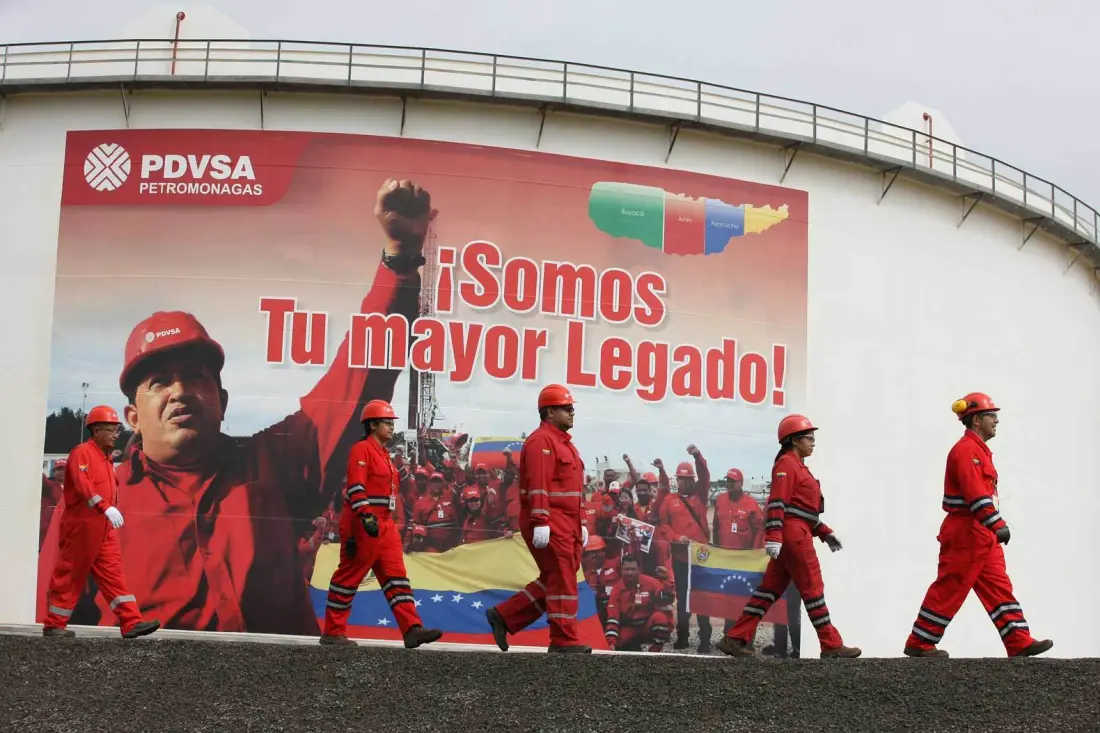
Recent developments in Venezuela reaffirm a core thesis in the energy sector: oil, as the world’s primary energy vector, remains at the center of global geopolitics. Contrary to narratives that predicted the end of the hydrocarbons era in the medium term, market realities show that crude oil not only remains relevant but is strategically critical to the energy security of major powers.
The decline of a giant: From efficiency to operational collapse
Venezuela holds the world’s largest oil resource base, with proven reserves totaling about 303 billion barrels. However, there is a vast gap between subsurface wealth and surface-level capacity. Twenty-five years ago, the country operated with enviable strength, producing roughly 3.2 million barrels per day of crude and 3.1 billion cubic feet per day of natural gas.
Today, the outlook is critical. Production has fallen to around 900,000 barrels per day and 2.2 billion cubic feet per day of gas. It is essential to stress that this decline is not the result of natural or geological depletion of the basins, but of a multi-causal crisis. The decisive factor has been the technical and financial decapitalization of state oil company PDVSA.
Mismanagement led to the loss of its most valuable asset: a skilled workforce of about 18,000 professionals who now contribute their know-how in basins such as Texas or Guyana, leaving the domestic industry without the technical rigor needed to advance operations.
Technical complexity: The challenge of extra-heavy crude
To understand why restoring Venezuelan production is not straightforward, it is necessary to examine the physical and chemical properties of its resources. Venezuelan basins, particularly the Orinoco Belt, are dominated by heavy and extra-heavy crudes, with API gravities ranging from 8 to 16 degrees.
Unlike light crude, these hydrocarbons are highly viscous and dense, with elevated sulfur and metals content. This creates two critical challenges:
- Mobility: They require intensive use of diluents, such as heavy naphtha or light hydrocarbons, to reduce viscosity and enable pipeline transport. Without these chemicals, flow is technically unviable.
- Refining: They demand higher energy intensity and complex deep-conversion processes in refineries to be transformed into commercial fuels.
The United States is the world’s largest oil producer, but output from the Permian Basin is largely light and extra-sweet crude, known as light tight oil. U.S. refining infrastructure, particularly about 60 complex-configured plants out of a total of 130 refineries, was designed decades ago to process heavy and sour crudes from sources such as Canada, Mexico and Venezuela.
This technical complementarity makes Venezuelan crude an ideal feedstock for the U.S. Gulf Coast refining system. As a result, demand for heavy crude remains an inherent requirement of the U.S. system.
The financial wall and the investment challenge
Venezuela’s oil system is financially exhausted. PDVSA carries consolidated financial debt of about $34.7 billion, but total liabilities, including arbitration awards and interest, could exceed $150 billion.
According to consultancy Wood Mackenzie, the roadmap to recovery is highly ambitious:
- Between $10 billion and $20 billion would be required just to increase production by an additional 500,000 barrels per day in the Orinoco region.
- Returning to 1998 production levels would require investments ranging from $10 billion to $58 billion, with an execution horizon of five to 10 years. While there are optimistic views, including from the Trump administration, that target output of 2 million barrels per day within two years, technical realities suggest that infrastructure and services bottlenecks will require sustained, capital-intensive efforts.
Geopolitics and the Asian connection
The strategic shift toward a “Drill, baby, drill” approach seeks to consolidate U.S. energy dominance and lower domestic costs by expanding supply. At the same time, it disrupts flows to China, which in recent years has been the main support for Venezuelan production, absorbing about 80% to 85% of total output.
China’s independent refineries, known as teapots and concentrated in Shandong province, are specifically configured to process Venezuelan heavy crude, which they purchase at steep discounts. In addition, Venezuela maintains structural debt to China estimated at $60 billion, largely repayable through crude oil shipments.
Conclusion: The human factor as the main bottleneck
In sum, rebuilding Venezuela’s oil industry is not just a matter of injecting capital or lifting sanctions. The greatest challenge lies in restoring technical sovereignty. With human talent dispersed around the world and integrated into multinational companies, attracting that expertise back will take time and require exceptional conditions of institutional stability.
Viewing the Venezuelan crisis solely through a political or energy lens ignores the complexity of an industry that, to regain relevance, must overcome unprecedented technical, financial and operational hurdles in the history of the energy sector.