
The Nuclear Sector Roadmap
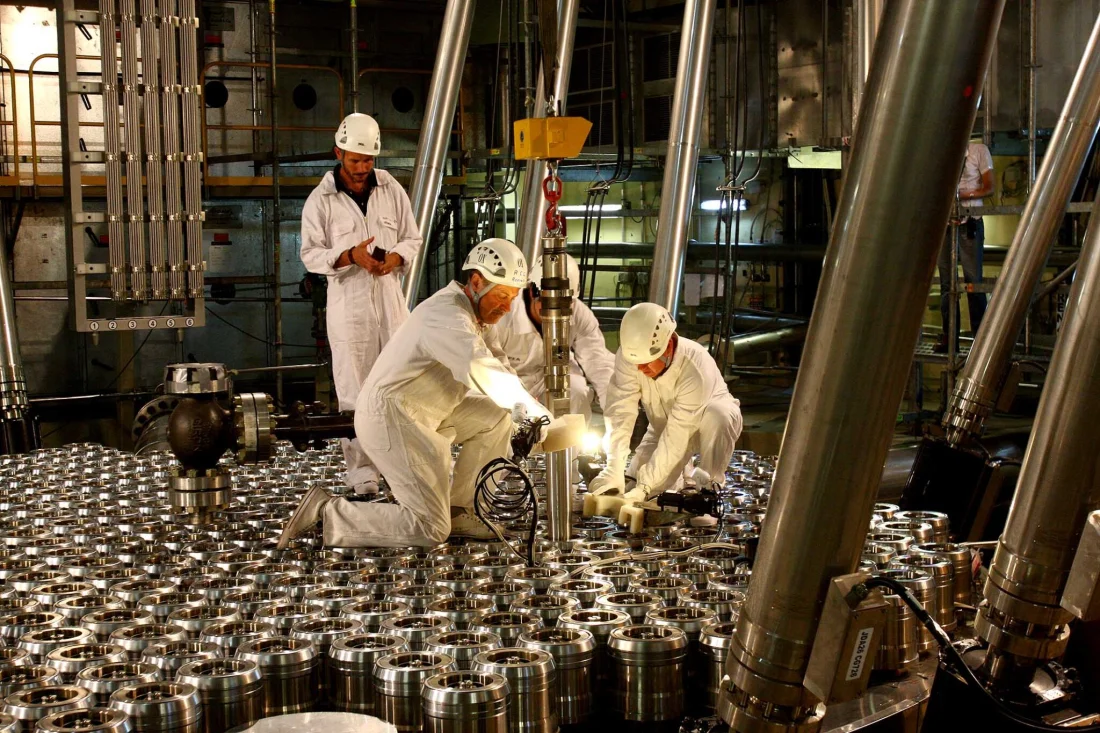
Argentina has set a nuclear policy doctrine that reorders three decades of state control around a single goal: opening the sector's assets to private capital.
The country masters the full nuclear fuel cycle, a capability fewer than ten nations hold, but has never turned it into an export industry at scale. The Guidelines that the Secretariat of Nuclear Affairs presented on May 31 target exactly that gap.
What the document changes is less the four objectives the agency publicized than how it redefines asset ownership and the role of private capital. And a point of sequence the presentation plays down is material: the administrative channel for private parties to reach those assets was already running weeks before the doctrine appeared. The doctrine followed the open window, not the other way around.
Doctrine, Not a Construction Plan
The Guidelines define themselves as a conceptual framework rather than an execution timetable with deadlines and budget lines. The text does not list which plants get built or with what funding; it sets the criteria under which projects are designed, assessed, authorized or discontinued.
The distinction is not semantic: every future initiative must pass the filter the text fixes before advancing, and projects already under way without verifiable results are exposed to review.

A commercial filter runs through the whole document. A project with technical feasibility but no customer, the text states, should be read not as incomplete success but as a cost in the strict economic sense.
Fiscal discipline is set as a binding condition rather than a programmatic preference, and the state keeps political stewardship separate from production. The Guidelines are reviewed every two years, with extraordinary reviews if structural circumstances warrant.
The Private-Access Window Opened First
In early May, the CNEA, Argentina's National Atomic Energy Commission, opened a procedure for "preliminary access" to requests tied to eventual private-initiative proposals, under the Private Initiative Regime established by Decree 713/2024.
The mechanism lets domestic and foreign firms request information and authorization to visit the commission's sites, plants and facilities — a step ahead of any eventual bid for tangible and intangible assets. By the time the Secretariat presented the Guidelines at month's end, that channel had been working for weeks.
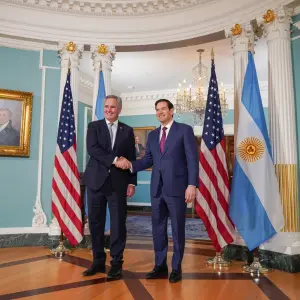
The opening coincided with a visit by a U.S. State Department delegation, which toured the Atucha complex and the atomic centers at Ezeiza, Constituyentes and Bariloche.
The timing raised questions across Argentina's scientific and energy community about the scope of the opening. For an investor, it signals that external interest already has a physical presence at the installations that could pass into private hands.
What Stays State, What Goes Private
The text sorts nuclear-system companies by function. Power-plant operators keep an institutional status to be assessed case by case, the tier where the state retains the most room to hold control.
Fuel-cycle and component companies, and specialized technical-services firms, "find no functional justification for state ownership of their productive assets," the document states; for those two categories, the policy recommends a progressive transition to private capital.
The model it names is concrete. CONUAR S.A., majority privately owned with a minority CNEA stake, has manufactured the fuel elements for Argentina's reactors for more than four decades without generating extra cost for the state.
The recommendation is that the sector converge on that shareholding template, a private majority partner that puts up the capital and takes the risk, with the CNEA as minority partner contributing technology and trained personnel.
The doctrine also lands on a privatization already decided. The administration of President Javier Milei, in office since December 2023 on a deregulation platform, has set the sale of 44% of Nucleoeléctrica Argentina, operator of the Atucha I, Atucha II and Embalse plants, with 5% earmarked for an employee share-ownership program and 51% retained by the state.
The three plants supplied 7.4% of national electricity in 2024 and total 1,763 MW of installed capacity, according to the 2025 Nuclear Energy Sector Report. As of March 2026 the process still had no published tender, a continuity of the situation left by the departure of Demián Reidel from the operator's presidency.
The Fuel Cycle Is the Export Bet
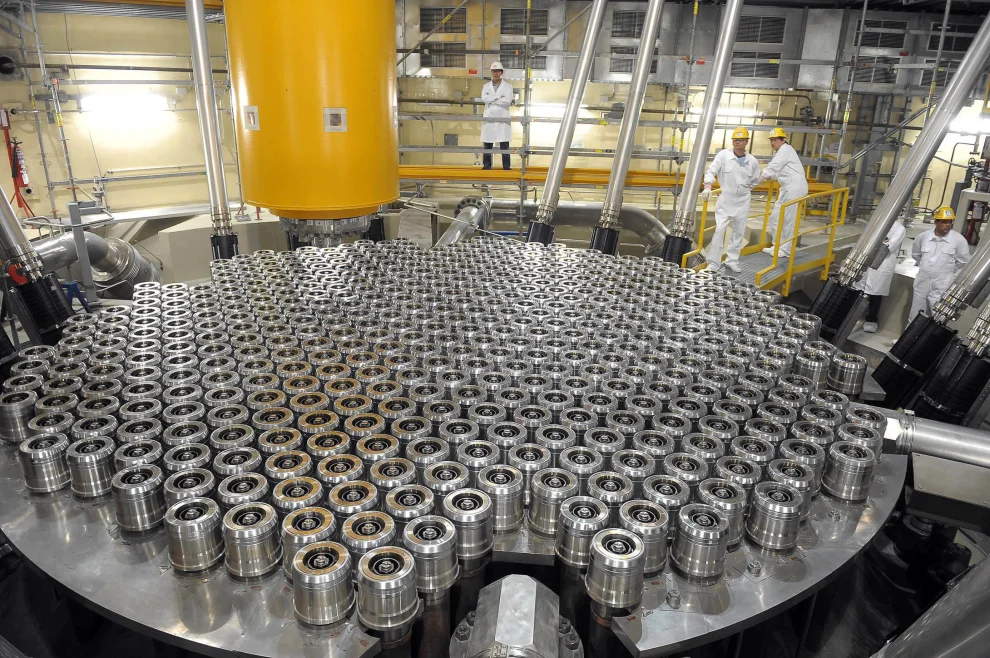
To read the export priority, the document maps the full fuel cycle, the chain running from uranium in the rock to spent fuel. It has three segments: the front end (mining, conversion, enrichment and fabrication), use in the reactor, and the back end (storage and waste disposal).
Argentina holds domestic capability across most links: Dioxitek converts concentrate into uranium dioxide, CONUAR fabricates the fuel elements, and the CNEA retains enrichment technology at Pilcaniyeu, now running intermittently.
On that map the text makes an explicit exclusion. Unprocessed uranium concentrate is not a priority, because it is a low-margin segment offering Argentina no comparative advantage. The priority shifts to conversion and enrichment, where global supply is concentrated among a few providers and the value added is higher. Because Argentina's reactors run on natural uranium and need no enrichment, those segments are aimed at the export market.
Riding the Data-Center Demand Wave
The document frames the opportunity against an international moment turning back toward nuclear power. The pipeline of conditional supply agreements between data-center operators and small modular reactor (SMR) projects grew from 25 gigawatts (GW) at the end of 2024 to 45 GW, according to an April report from the International Energy Agency (IEA).
The World Bank's lifting of its ban on financing nuclear projects adds to the shift. Even so, the text asks for informed participation in SMRs without rushing investment that local power demand cannot support — an explicit brake on the enthusiasm.
The underlying bet, with political leadership separated from operations and private capital as the partner that takes the risk, is to turn 75 years of accumulated technical capability into an industry with sustained exports and a verifiable return. The document sets the horizon. The Private Initiative procedure and the Nucleoeléctrica sale have already begun to fill it.