
Oil & Gas

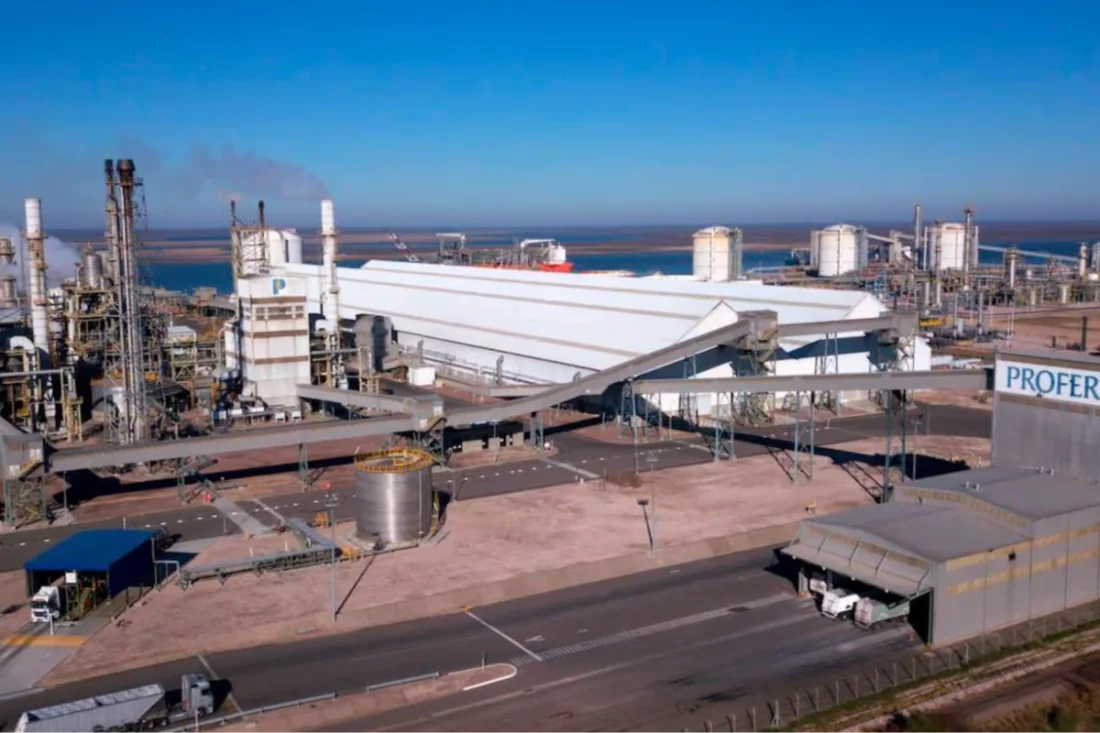
Profertil, Argentina's only urea producer, has selected Italian contractor Saipem to provide engineering services for a 4,450-tonne-per-day (t/d) urea plant expansion in Bahia Blanca.
The project is one of two competing bets to turn Vaca Muerta gas into fertilizer in a country that consumes 2.4 million tonnes of urea a year but produces only 1.3 million. Bahia Blanca, in Buenos Aires province, is Argentina's main industrial port and petrochemical hub.
According to Saipem, the work will be carried out with Techint E&C, an engineering and construction subsidiary of the Techint Group. The contract runs for 11 months and covers technical services, preparation of the technology licensors' design packages and a structured proposal for the next phases of development.
Profertil said this stage does not amount to a final investment decision (FID). There is no confirmed date to start construction or commission the new unit.
Three Licensors, One Process Chain
The reported configuration combines Topsoe technology for ammonia, Saipem's own Snamprogetti technology for urea and thyssenkrupp Uhde technology for granulation. Ammonia is the intermediate from which urea is made, and natural gas is the feedstock for the whole chain.
Saipem has worked on the site before. According to the company, Profertil's Bahia Blanca plant was built between 1998 and 2001 with Snamprogetti urea technology and was then the world's largest single-train urea plant, at 3,250 t/d. The unit now under study would have a nominal capacity 37% higher than that original design.
The licensor lineup also sets the project apart from the city's other urea venture. Fértil Pampa's plant will use KBR ammonia technology and urea technology from Stamicarbon, part of Italy's Maire group, which already has two projects worth more than $5.2 billion under way in Argentina.
A Contractor With Deep Roots in Bahia Blanca
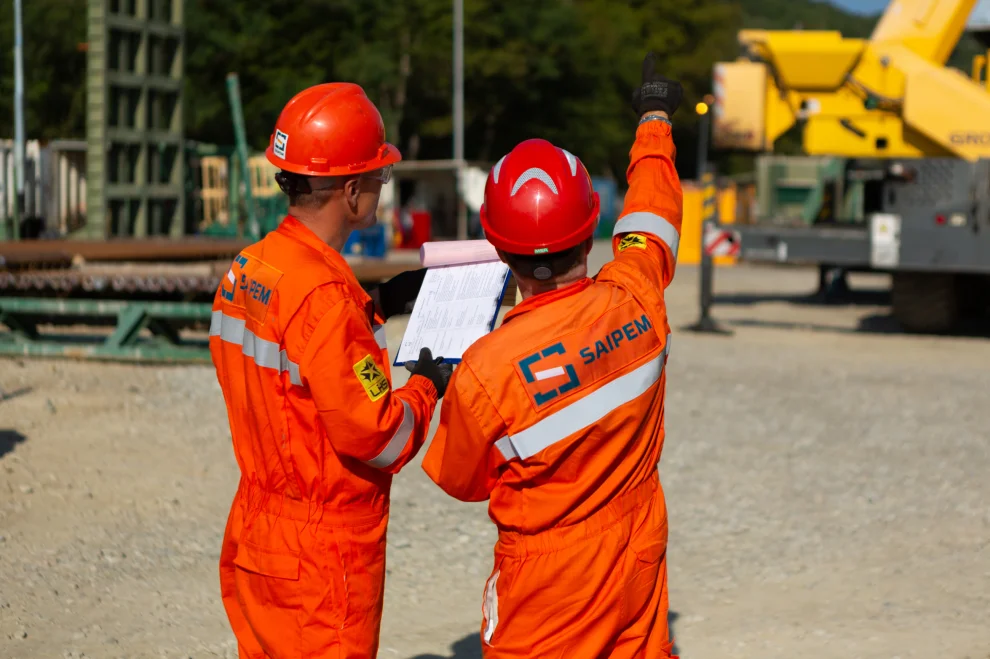
Saipem is a Milan-based engineering, construction and drilling contractor for the energy industry, listed on the Milan stock exchange. It designs and builds onshore plants such as fertilizer complexes, refineries and LNG terminals, and is one of the world's largest offshore contractors, with its own fleet for laying subsea pipelines and installing platforms.
The company was founded in 1957 within Italy's state-controlled Eni group, serving for decades as its services arm. Eni cut its stake in a 2015 restructuring and now shares the role of reference shareholder with CDP Equity, the Italian state's investment vehicle. Saipem's urea know-how comes from Snamprogetti, the group's engineering firm, which developed its namesake urea process in 1962 and was absorbed by Saipem in the 2000s.
Saipem is also going through the biggest corporate change in its history. In July 2025 it signed a binding agreement to merge with Norway's Subsea7 and create Saipem7, a group with a €43 billion order backlog and revenue of about €20 billion. Completion, scheduled for the second half of 2026, is now subject to an in-depth antitrust review by the European Commission.
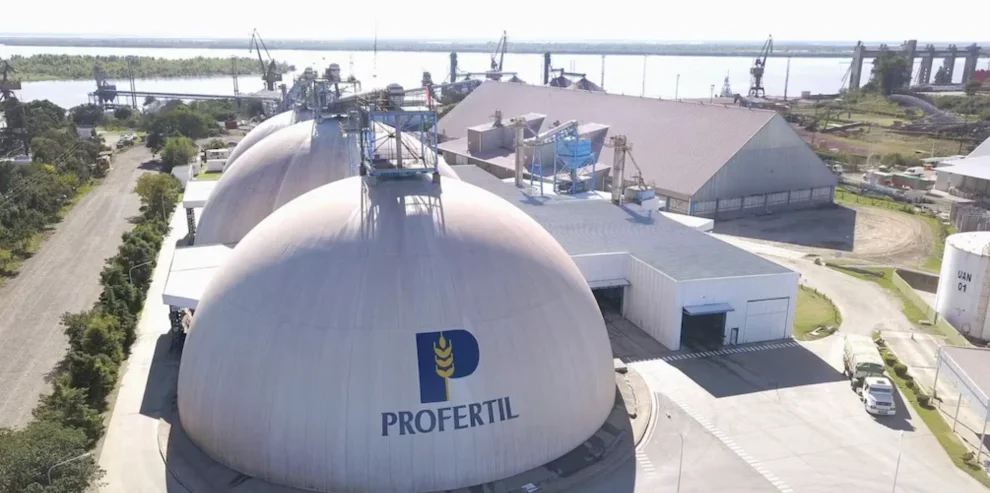
In Argentina, Saipem's flagship project is the very plant Profertil now wants to expand. The turnkey contract was signed in January 1998, led by Snamprogetti and Techint, and production began in 2001. According to Saipem's project sheet, the complex comprises a 2,050 t/d ammonia train, a 3,250 t/d urea train and two granulation trains of 1,850 t/d each. It was the world's first plant to exceed 3,000 t/d of urea in a single line and served as the model for plants Saipem later built in Pakistan and Qatar, already above 3,800 t/d.
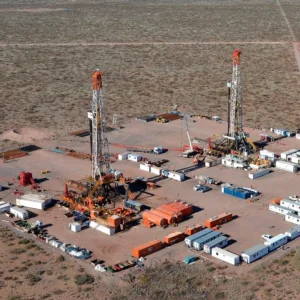
Saipem has also worked in Argentine onshore drilling. In September 2016 it won a contract for a hydraulic rig and in January 2017 added a second, for eight months, as part of a package of awards worth $240 million that also covered Bolivia, Morocco and Saudi Arabia.
The relationship with Profertil continued after start-up. The same Saipem–Techint partnership that built the plant carried out its expansion in 2005. It bid again when Profertil, then owned equally by YPF and Canadian fertilizer major Nutrien, launched an international tender in August 2019 to select technology and engineering for a second unit, then estimated at $1.2 billion. Their bid beat that of AESA, YPF's engineering and construction subsidiary, which had partnered with Tecnimont. The contract was never signed: Profertil requested substantial technical changes not included in the tender terms, and the parties moved to an exclusivity agreement to redesign the project.
With the new assignment, the Saipem–Techint pairing returns to the same site in Ingeniero White, Bahia Blanca's port district, nearly three decades after that first contract. Tecnimont, its rival at the time, is now building Pampa Energía's plant in the same industrial hub.
Profertil's Current Output and the Investment Under Review
From its Ingeniero White plant, Profertil produces more than 1.32 million tonnes of granulated urea and 790,000 tonnes of ammonia a year. In the first half of 2026 it produced 617,000 tonnes of urea, up 15.9% year-on-year, with an average selling price of $699 per tonne in the second quarter versus $444 a year earlier, according to Adecoagro's earnings report.
Mariano Bosch, CEO of Adecoagro, the South American agribusiness group that now controls Profertil, confirmed that an expansion requiring $1.5 billion to $2 billion is under evaluation following the change in the company's ownership. He told investors the market is structurally short: Argentina consumes 2.4 million tonnes of urea a year and produces 1.3 million, all of it at Profertil. He also noted that building a plant of this kind takes about four years. The bet rests on the availability of Vaca Muerta gas, which reaches Bahia Blanca by pipeline and is the main input of the process.
Adecoagro holds 90% of Profertil and the Association of Argentine Cooperatives (ACA), a federation of farm cooperatives, holds the remaining 10%, following the exit of YPF and Nutrien. Profertil has not officially disclosed the planned investment for the new plant. At full rates, 4,450 t/d equals about 1.62 million tonnes a year, which would lift the complex's capacity to roughly 2.94 million tonnes.
RIGI Deadline and Pampa's Head Start
Adecoagro is expected to file in the coming months for the project to join Argentina's Large Investment Incentive Regime (RIGI). Decree 105/2026, published in Argentina's Official Gazette on Feb. 19, extended the deadline to apply to July 8, 2027.
The rules allow expansions of existing projects, provided they increase installed production capacity. It is the same route French miner Eramet announced for its Centenario-Ratones lithium expansion. The timeline is tight: counting from the announcement, the 11-month engineering contract runs to late August 2027, after the application window closes.
In the same city, Pampa Energía, a diversified Argentine energy company, is ahead. Its subsidiary Fértil Pampa approved an FID on July 17 for a $2.7 billion plant with capacity of 6,000 t/d, or 2.1 million tonnes a year, which has already been admitted to the RIGI. The plant is being built by Tecnimont and SACDE, an Argentine construction company and a related party of Pampa, over 41 months, with start-up expected in late 2029. Pampa has presented the project as a new outlet for Vaca Muerta gas.
According to Pampa, South America imports about 11.5 million tonnes of urea a year, with Brazil alone taking 7 million to 8 million tonnes. If both projects go ahead, Bahia Blanca would add 3.72 million tonnes to Profertil's current capacity and exceed 5 million tonnes a year, more than double Argentina's current consumption. For the Profertil expansion, the next steps are a potential RIGI application and an FID. Pampa has already taken both.