TotalEnergies to Buy 70% of San Lorenzo SAF Output for Eight Years, Marín Says
At the Rosario Board of Trade, YPF's chief executive projected $500 million in annual exports from the Santa Fe biorefinery by 2030 and gave the first public account of how the idle plant became a SAF project
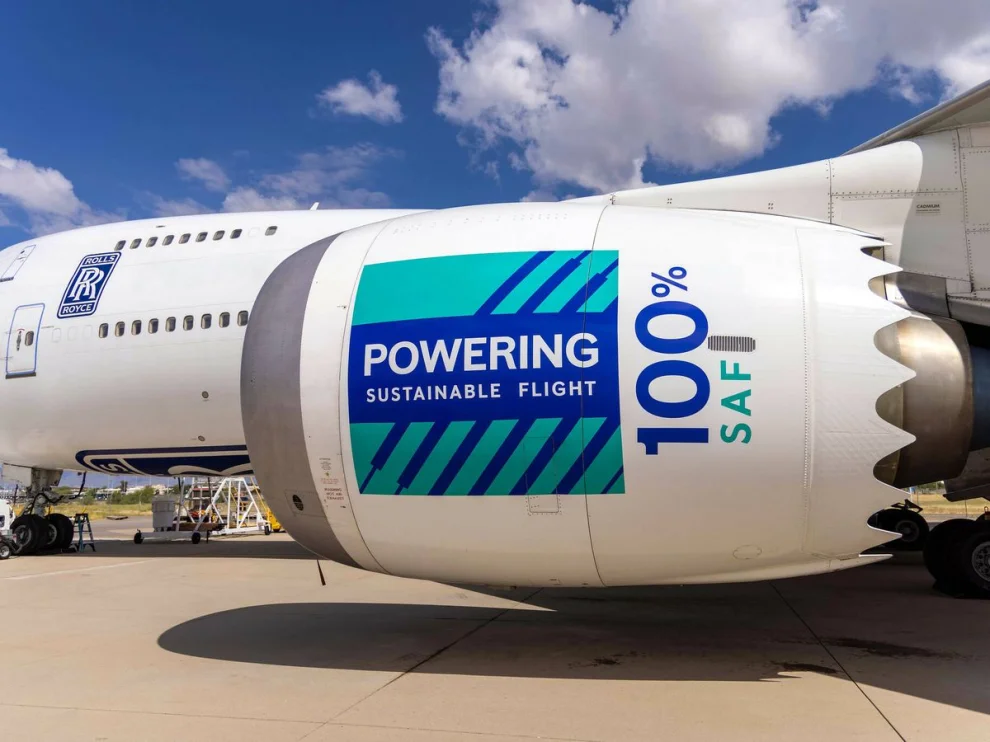
TotalEnergies will take 70% of the sustainable aviation fuel (SAF) from YPF's planned San Lorenzo biorefinery for eight years, YPF chief executive Horacio Marín said.
The figure fills a gap in the October 7 announcement of the long-term offtake contract, which disclosed neither duration nor volume share. It also explains why the contract carries so much weight in the project's financing: the $400 million biorefinery is structured as project finance, and a buyer committed for close to a decade is what lenders want to see before they lend.
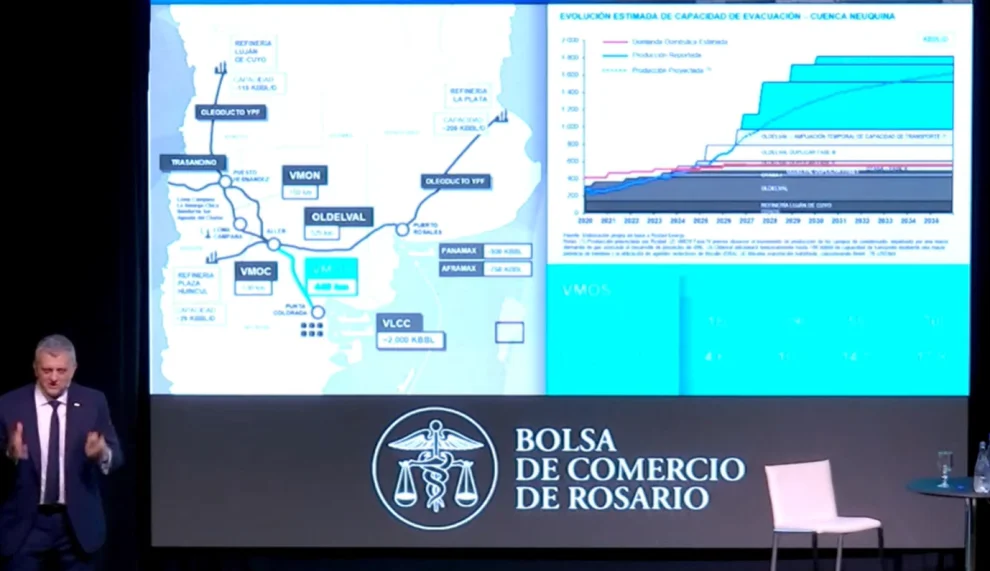
Marín spoke on October 16 at the Rosario Board of Trade, the exchange at the center of Argentina's grain export hub, where he gave the first public account of how Santa Fe Bio came together. The company is a 50/50 joint venture between YPF, Argentina's state-controlled oil and gas company, and Essential Energy, a Rosario-based biofuels company, set up to convert the San Lorenzo complex into a biorefinery producing SAF and hydrotreated vegetable oil (HVO), a renewable diesel substitute.
The refinery sits 25 km north of Rosario in Santa Fe province, on National Route 11 with direct access to the Paraná River. YPF founded it in 1938. It passed through several private owners after the company's 1993 privatization and has not refined crude since 2018.
In Rosario, Marín filled in the missing figure: TotalEnergies will buy 70% of SAF output during the first eight years
Marín said the project began with a visit to Buenos Aires by Santa Fe Governor Maximiliano Pullaro "a year, a year and a half ago." At the same meeting, the province had signed up for YPF Ruta, YPF's fleet fuel-management system. Marín said Pullaro later told him the province cut its operating costs by 11% in a month with it.
Pullaro then asked what YPF planned to do with San Lorenzo. "I hate seeing things abandoned. Believe it or not, I was an operations guy, and I don't like seeing the equipment rust," Marín recalled. His answer came with a deadline: "Give me six months. If we don't find a biofuel business, I'll give it back to you. I'm not going to speculate."
The business materialized. YPF and Essential Energy signed a memorandum of understanding in December 2024, and YPF's board approved the creation of Santa Fe Bio in August 2025. Planned investment is $400 million, and Marín said the plant will export $500 million in 2030. "There was something abandoned," he said, adding that "people are happy" because the project is creating jobs where there were none.
Marín also set limits on what the project means for Santa Fe: "We're not going to change the province, but it helps." He said the complex is already producing again: "We're already producing diesel from vegetable oil." The SAF biorefinery itself remains under development. Since December, Santa Fe Bio has also been receiving, consolidating and shipping feedstock for biorefineries in other countries from its Paraná River port.
In Rosario, Marín filled in the missing figure: TotalEnergies will buy 70% of SAF output during the first eight years Marín was explicit about the division of roles: 'YPF doesn't operate it; Pucciarello does,' he said, referring to Essential Energy CEO Federico Pucciarello
Eight Years of SAF Under Contract
On October 7, Santa Fe Bio and TOTSA TotalEnergies Trading SA, the trading arm of the French energy major TotalEnergies, signed a long-term sale and purchase agreement (SPA). According to YPF's announcement, the trader will buy most of the plant's output under a firm commitment and hold a right of first refusal on the remaining volumes. The announcement gave no duration or percentage.
In Rosario, Marín supplied both: TotalEnergies will buy 70% of SAF output during the first eight years. He described SAF as jet fuel made from biofuels and said it sells at "a very significant premium" to its fossil equivalent. "I ran the numbers today before coming here, and I won't even tell you. What they pay is impressive," he said.
The numbers can be reconstructed. The biorefinery will have estimated capacity of 170,000 tonnes per year of SAF and HVO. At $500 million in annual exports, each tonne would fetch an average of about $2,940, according to Shale24 calculations. That is in line with market assessments projecting an average of $2,746 per tonne for SAF in Northwest Europe through the first quarter of 2027. The same assessments put SAF at roughly twice the price of conventional jet fuel in that region in the second quarter of 2026.
At those prices, 70% of eight years of output equals about $2.8 billion in revenue, seven times the cost of the plant.
Essential Energy Runs the Plant
Marín was explicit about the division of roles: "YPF doesn't operate it; Pucciarello does," he said, referring to Federico Pucciarello, Essential Energy's Rosario-born CEO. Equity is split evenly, but control, operations and maintenance rest with the partner that specializes in biofuels.
Marín presented the partnership as a case study but avoided calling it a success. "I don't like to say success, but it's an example of how we can team up with someone who knows the biofuels business," he said, describing the deal as "fair for both" and noting it was "approved by the board."
Why SAF Fits and Urea Did Not
San Lorenzo featured in the portfolio-management section of Marín's presentation, alongside YPF's asset sales. In the same segment, he explained why YPF sold its stake in Profertil, the Argentine urea producer: "Urea, even though we can sell it through YPF Agro, isn't our core business."
The difference lies in how each business is designed. Profertil was a production asset serving the domestic market that YPF held with a partner. Santa Fe Bio was built to export, is operated by a third party, and has a buyer for most of its output before it enters service. Marín has said YPF will make SAF for export and does not intend to compete with biofuels sold in Argentina.
The first phase includes a feedstock pretreatment plant of up to 250,000 tonnes per year and upgrades to tanks and logistics. The second phase is the biorefinery itself, with start-up scheduled for end-2029. The project plans to apply for Argentina's Large Investment Incentive Regime (RIGI), and its financing rests on the TotalEnergies contract as commercial backing.
Marín asked Pullaro for six months to find a business. He came back with a buyer that will take seven of every ten tonnes of SAF for eight years, before the plant has opened its first valve.