
Countdown to Argentina's LNG Exports
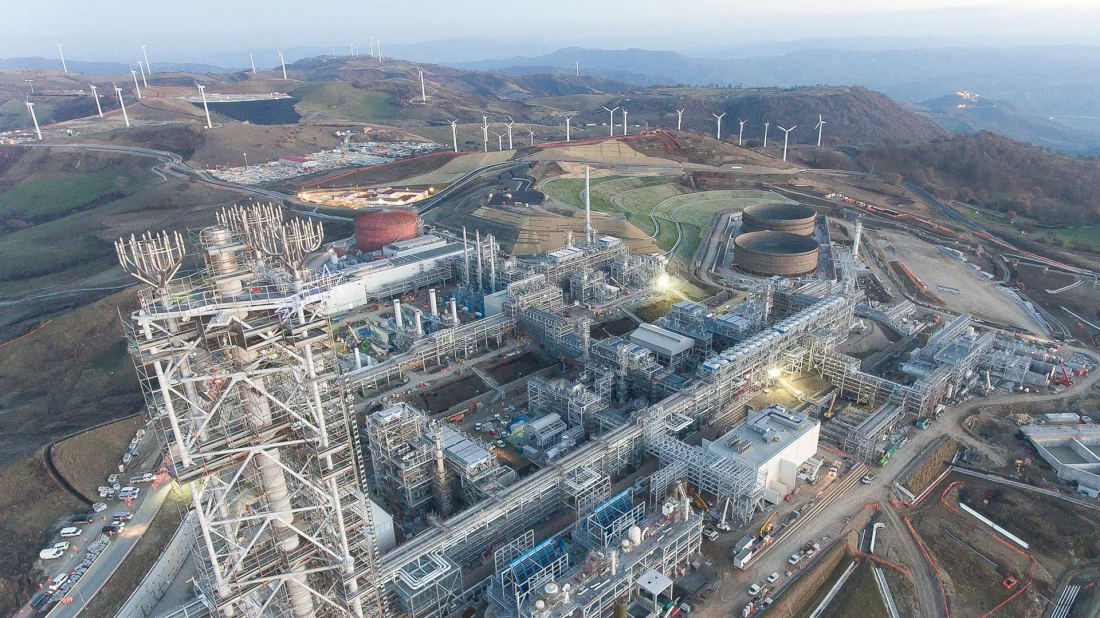
Tecnimont, one of the world's largest plant-engineering contractors, has been pre-awarded the detailed engineering for Argentina LNG's first gas separation plant in Neuquén.
The pre-award, disclosed by YPF chief executive Horacio Marín to Shale24, went to the consortium Tecnimont forms with Sacde, and still hinges on the project's final investment decision (FID). Tecnimont is the engineering, procurement and construction (EPC) arm of Maire S.p.A., an Italian group listed in Milan under the ticker MAIRE, and one of the largest engineering contractors in the world, even if the name means little on this side of the Atlantic.
What is confirmed so far is narrow: a pre-award for one engineering package, subject to an FID that YPF, Argentina's state-controlled oil and gas company, and its partners aim to take in the second half of the year. What it signals about the project's industrial map is a reading the awards have not yet settled.
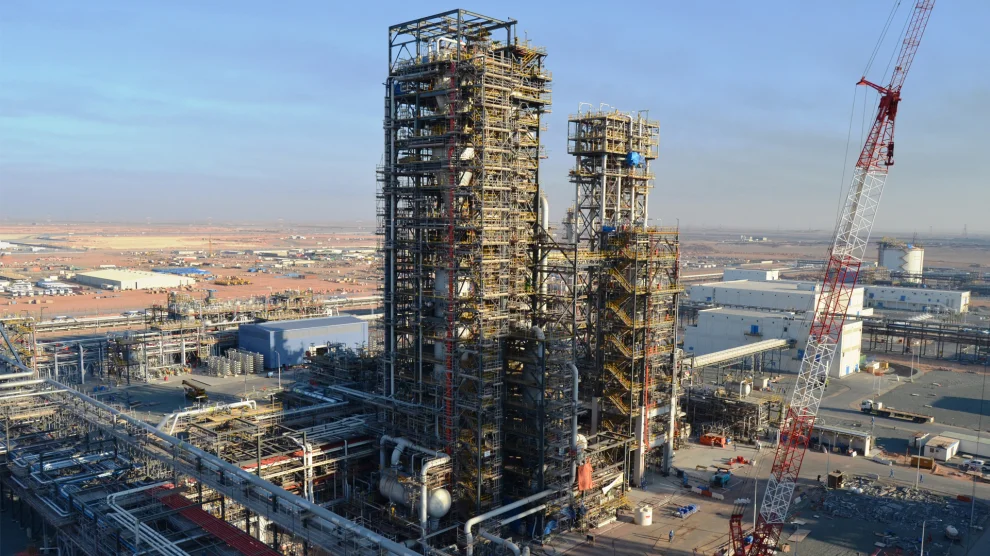
A Milan-based giant
The group behind Tecnimont is one of the world's largest engineering contractors, even if its name travels poorly outside the industry. It began as Maire Tecnimont and took its current name, Maire, in April 2024.
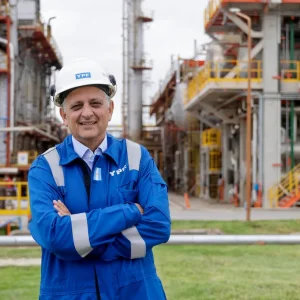
It employs around 10,500 people across some 50 countries and is led by chief executive Alessandro Bernini. Its roots reach back to a 1930s Fiat division for industrial works; the modern Tecnimont was incorporated in 1973, and the group listed in Milan in 2007.
The company is not a single block but a set of specialized pieces. Tecnimont designs and builds turnkey plants. Alongside it operate NextChem, focused on the energy transition, hydrogen and carbon capture; Stamicarbon, which licenses proprietary technology; and KT-Kinetics Technology, devoted to process engineering. Together, those firms report having delivered some 1,520 plants.
A portfolio aimed at the Gulf, not Argentina
Maire is at its strongest. It posted revenue of €7.1 billion in 2025, double the figure of three years earlier, and carries an order backlog of €12.7 billion, of which close to 40% is tied to sustainability projects. Its market value is around €5 billion, and its 2035 plan, dubbed "Reshaping Energies," aims to double revenue again to €13 billion.
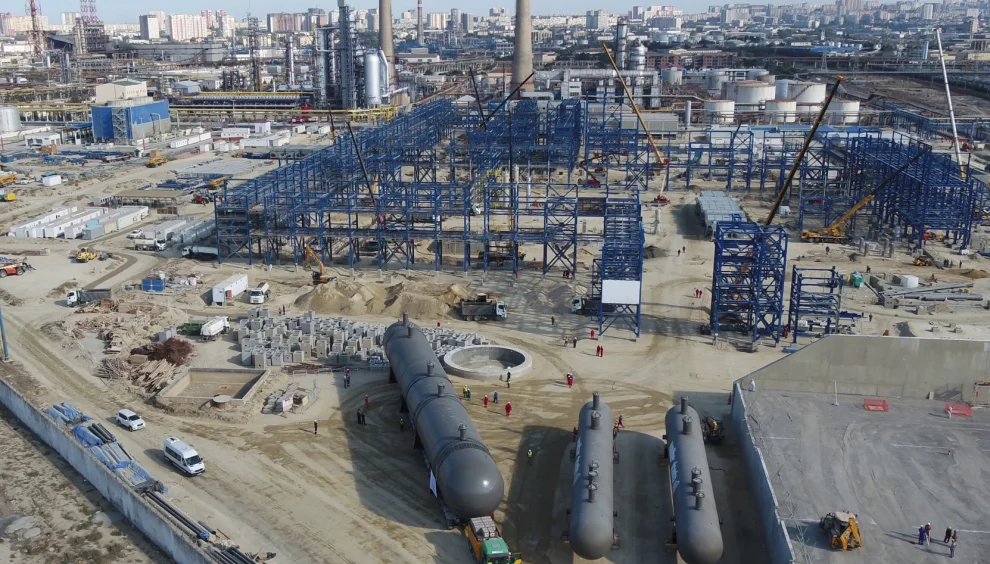
The shape of that portfolio is what best explains its interest in Vaca Muerta. The bulk is split between the Middle East, at 38%; Asia, at 33%; and Africa, at 22%. Europe contributes 6%. The Americas, by contrast, account for just 1%. For a group that size, Argentina LNG is not one more contract: it is the gateway to a region where it has almost no presence.
The firm's specialty explains the rest. Tecnimont ranks among the world's largest builders of petrochemical plants, with command of much of the global market for polyethylene units, and brings experience in fertilizers, refining and gas treatment. Its trade is process plants — the same family as the Neuquén separation unit and the future Punta Colorada plant that Marín likened to a refinery.
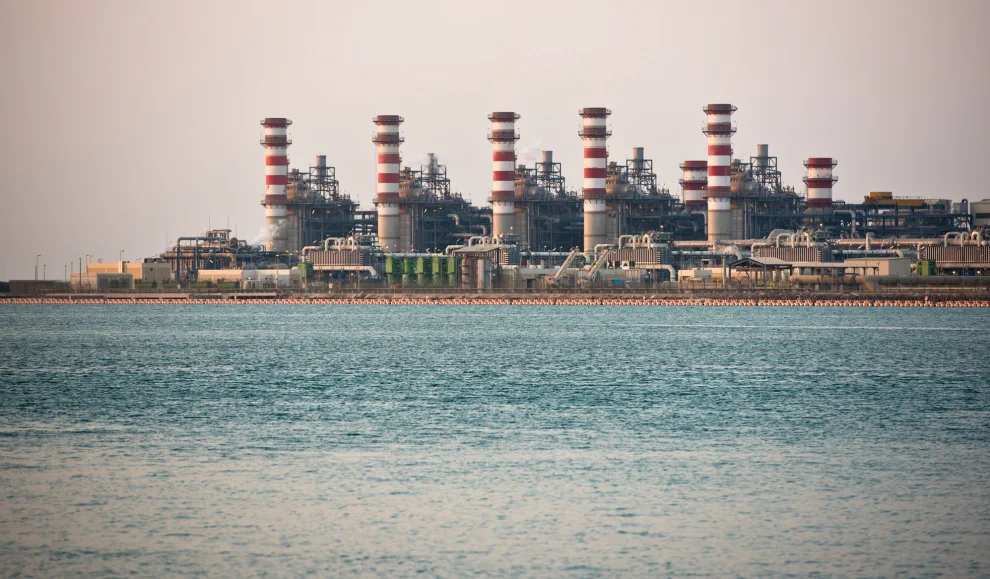
The track record backs it. Tecnimont built part of the expansion of the Borouge complex in Abu Dhabi, worth about $3.5 billion; took contracts at the SATORP complex, owned by Aramco and TotalEnergies in Saudi Arabia, for close to $2 billion; and took part in the SOCAR Polymer hub in Azerbaijan. These are works akin to what Argentina's development requires, a project that began its basic engineering in October 2025.
The Italian engineering travels with ENI
The pre-award, however, is not explained by technical skill alone. In Argentina LNG, the party that awards the large works is not YPF but ENI, the Italian energy company — and ENI tends to move around the world with its own industrial ecosystem in tow.
Maire is Italy's main engineering group, and its subsidiaries have been working for ENI at home: they took the hydrogen plant at the Livorno refinery and engineering work on other ENI assets. The Neuquén contract extends to Vaca Muerta a relationship that already existed across the ocean.
That logic anticipates more than a name. If ENI runs the awards and pulls its trusted suppliers with it, Italy's footprint on the project could widen as the next packages are handed out, beginning with the large Río Negro plant the consortium will define in the coming months. Seen that way, the choice of Tecnimont is less a surprise than a signal.
A tension remains worth noting. Maire builds its story of the future on the energy transition (the destination of 40% of its backlog and of its NextChem division) yet rests its scale-up on a fossil-gas megaproject. Bernini frames it as a "multi-source" energy world, where oil, gas, renewables and low-emission solutions coexist rather than exclude one another. Vaca Muerta, with its abundant, low-cost gas, fits that equation.
The consortium with Sacde
To land in Neuquén, Tecnimont did not come alone. It partnered with Sacde, one of Argentina's two largest construction companies alongside Techint. Sacde is the former IECSA, the infrastructure firm that passed in 2017 to Marcelo Mindlin and other shareholders linked to the Pampa Energía group, a diversified Argentine energy company, and has since become one of the flagships of the country's energy construction.
Its Vaca Muerta résumé is dense: it expanded the Vaca Muerta Norte gas pipeline for TGS, Argentina's main southern gas pipeline operator; built one of the compressor plants on the Perito Moreno pipeline (formerly known as Néstor Kirchner); and worked on the gas-treatment facilities at Tratayén, Neuquén province, complexes whose scale resembles small refineries.
That combination is what gives the consortium its logic. Tecnimont supplies the global-scale process engineering; Sacde, the on-the-ground execution, the logistics across rough plateau terrain and the heavy civil-works trade in exactly the kind of separation and treatment plants in which it has specialized inside the basin.
It is the usual division of these megaprojects (international engineering in front, local builder on the field), and its final scope will depend on the investment decision that YPF and its partners are seeking to take in the second half of the year for the whole Vaca Muerta LNG project.