
Key project

For months, the sector had been warning that the bottleneck was not in production but in what happens to the gas once it leaves the well. Vaca Muerta produces rich gas — loaded with ethane, propane, butane and natural gasoline — and most of that gas flows unprocessed through pipelines until it reaches the final user, diluted in the methane stream.
The value of the liquids is lost.
Worse still: the concentration of heavier components has a technical tolerance limit in pipelines, and that limit is getting closer as oil production, and the associated gas that comes with it, continue to grow.
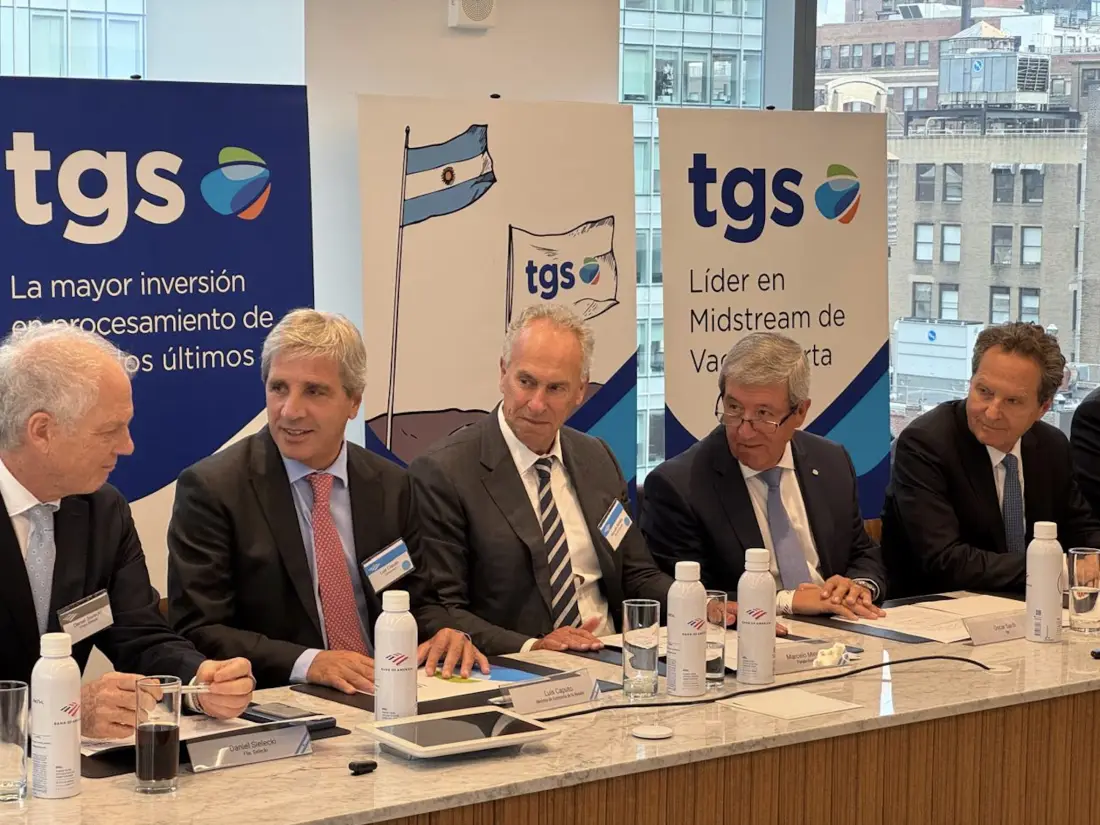
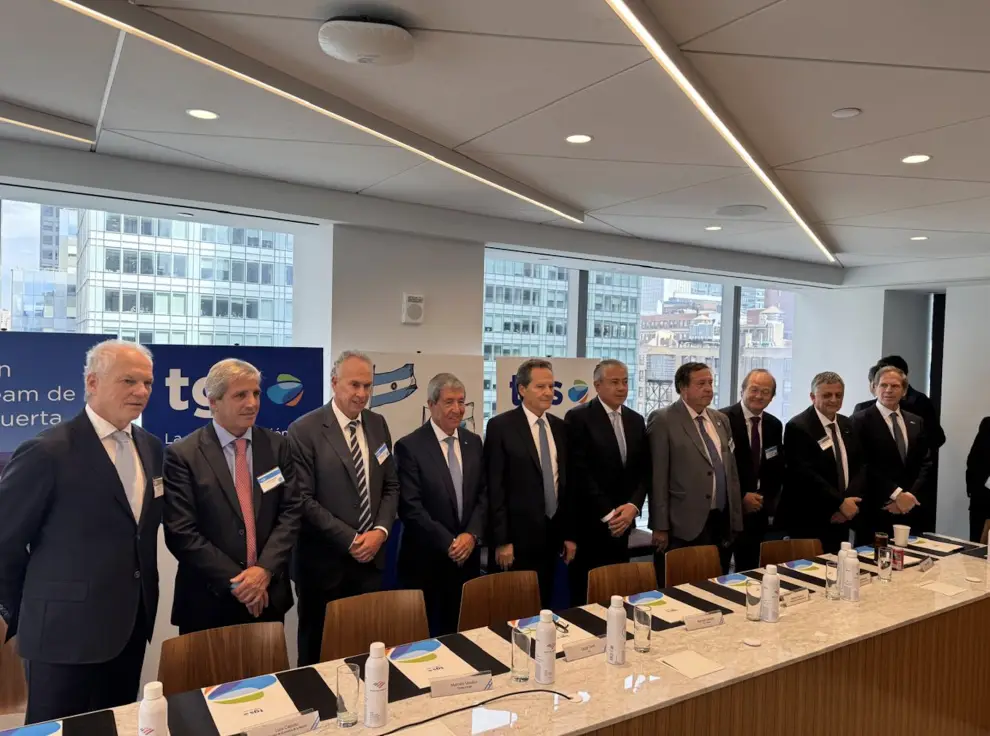
With Argentine Economy Minister Luis Caputo present, Transportadora de Gas del Sur chose Argentina Week in New York to announce that it is moving to address that problem with the largest investment in its history. The NGLs Project contemplates a $3 billion investment — a figure that exceeds estimates circulating in the industry in recent months — and an infrastructure chain that will connect the productive heart of Neuquén province with the docks of Bahía Blanca after 45 months of construction.
According to Shale24, the company plans to make the final investment decision within 60 days.
The chain: from Tratayén to the Atlantic
The project is structured in three linked stages. The first intervention will take place at the Tratayén plant, where TGS already operates gas conditioning modules. Two additional modules will be added, bringing the total to four and increasing processing capacity to 43 million standard cubic meters per day — more than 50% above the plant’s current capacity of 28 MMm³/d reached between December 2024 and February 2025.
From Tratayén southward, the project includes the construction of a 573-kilometer, 20-inch pipeline that will cross the provinces of Neuquén Province, Río Negro Province, La Pampa Province and Buenos Aires Province before reaching the General Cerri Complex in Bahía Blanca.
The southern end of the system will be a new fractionation plant with capacity for 2.7 million tons per year of C3+ products — propane, butane and natural gasoline — plus a maritime terminal equipped with dedicated storage tanks for each fraction, optimized for international shipping.
The project will be presented under the RIGI framework — the regime under which the $3 billion investment will be structured — and will be financed through the company’s cash flow and loans from global banks.
“Argentina has not completed a liquids processing project in more than 25 years, and this is the largest in the country’s history. It is a key investment to solve one of the bottlenecks that could limit the development of Vaca Muerta and consolidate the country’s export leap,” said Marcelo Mindlin, president of Pampa Energía and co-controlling shareholder of TGS.
“I have never seen as much interest and enthusiasm for Argentina as we saw during Argentina Week in New York. For that enthusiasm to translate into foreign investment, local business leaders must take the first step and set the example with projects like the one we are announcing today from TGS,” Mindlin said.
Marcelo Sielecki, representing the co-controlling family, framed the announcement in a long-term perspective. “The NGLs Project is a central initiative within our vision. Carrying it out will allow us to consolidate a project of scale, with a positive impact on the trade balance and on the country’s energy and industrial development.”
Why now: one of the key factors
The timing has a precise technical explanation. Associated gas — the gas that inevitably emerges when producing oil in the black-oil and liquids-rich windows of Vaca Muerta — doubled its volume in 2025 and reached a new record in January 2026. With oil production projections of around 1.5 million barrels per day by 2030, associated gas could reach between 40 and 50 MMm³/d. At that level, injecting unprocessed rich gas into the main pipeline system reaches its physical limit.
There is also an economic equation the sector knows well. While gas sells for between $3 and $4 per million BTU, NGLs trade on the international market between $10 and $12. Processing transforms a byproduct into a high-value export product.
CEO Oscar Sardi emphasized the concrete impact of the project. “We are promoting a strategic investment of great relevance for Argentina’s energy development, spanning four provinces with a 45-month execution timeline. Our priority is the socioeconomic impact, as we estimate the creation of 4,000 direct jobs and 15,000 indirect jobs.”
On the export dimension, Sardi was specific: “This investment will generate $1.2 billion in annual exports, consolidating a genuine source of foreign currency.”
TGS said it already has signed agreements with several of the main operators in Vaca Muerta and advanced negotiations with other companies in the sector, indicating that the project does not start from scratch commercially.
The broader framework: part of the Vaca Muerta ecosystem
The TGS announcement is not an isolated development. Within the Vaca Muerta ecosystem, other projects with a similar architecture — a processing plant in the basin, a liquids pipeline and a coastal export terminal — are being developed in parallel, all targeting the same NGL market.
The convergence of initiatives raises a debate already circulating in the industry: whether it makes sense to build several parallel “highways” or to coordinate shared infrastructure that concentrates volumes and reduces the unit cost of transportation.
For now, TGS has decided to move forward with its own development. If timelines are met, construction could begin in the coming months and bring the first products to market around 2029–2030 — just as Vaca Muerta’s associated gas production begins to put stronger pressure on existing takeaway capacity.