
Upstream RIGI in Vaca Muerta

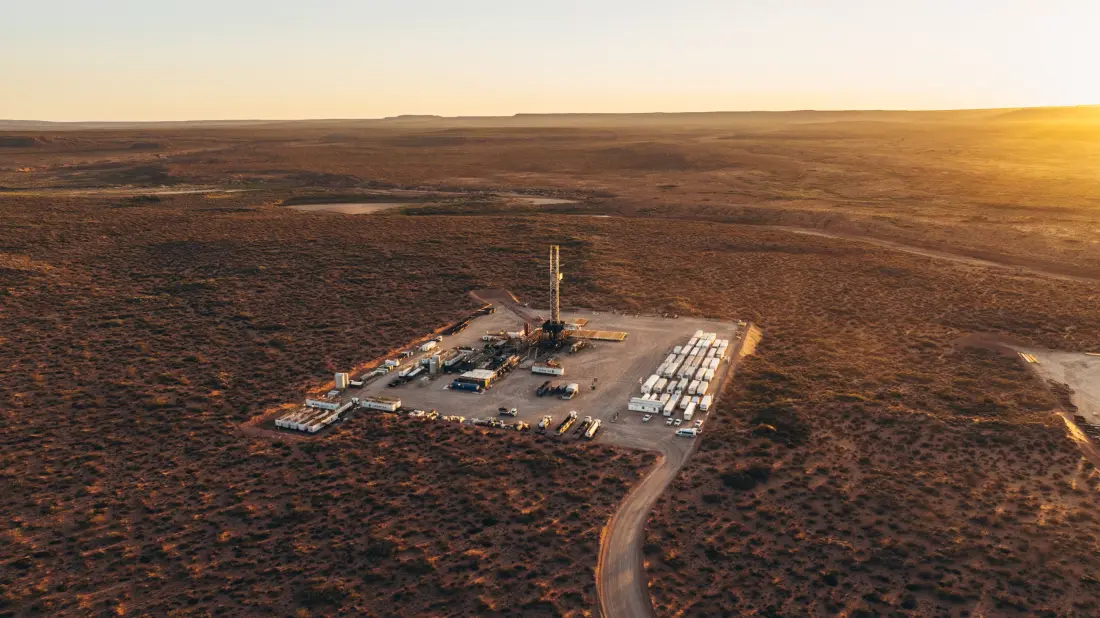
When Pampa Energía submitted its first application in July 2025 to Argentina’s Régimen de Incentivo para Grandes Inversiones (RIGI), the investment figure on the table was $426 million. The plan envisioned a Central Processing Facility (CPF) with capacity for 45,000 barrels per day, along with oil and gas pipelines linking the Rincón de Aranda block to the basin’s main trunk systems in Vaca Muerta. It was a significant project, but limited to what the regime allowed at the time.
What Argentina’s Ministry of Economy received Monday — and what Economy Minister Luis Caputo later confirmed on X — is something far more robust. Pampa formally submitted a RIGI request covering the full upstream development of Rincón de Aranda, with estimated investment exceeding $4.5 billion. The figure includes both the infrastructure already proposed and the block’s production development itself, including the northern section that until now fell outside the regime’s scope.
The difference between the two figures is not only one of scale. It also reflects a regulatory shift introduced by Decree 105/2026, which in late February incorporated the exploitation and production of new hydrocarbon developments into the incentive regime. With that decree, what had previously been two projects — infrastructure on one side and production on the other — was consolidated into a single development.
A project that reshapes Pampa’s profile
Rincón de Aranda is a 240-square-kilometer block in the shale oil window of Vaca Muerta, the massive unconventional formation in Argentina’s Neuquén Basin. Pampa acquired the asset in mid-2023 from TotalEnergies and since then has turned it into the largest single-asset investment in the company’s 20-year history.
The bet came early, and the results have been striking. The block began 2025 producing less than 1,000 barrels per day and closed the fourth quarter at 17,100 barrels per day — a 355% year-on-year increase. The annual average reached 9,500 barrels per day, compared with 900 in 2024.
The company led by Marcelo Mindlin operated with four drilling rigs simultaneously during the acceleration phase — today it maintains two high-specification rigs — connected 10 well pads and reduced lifting costs from $24 per barrel in the initial phase, when crude was transported by truck, to $8 after connecting to the La Amarga Chica Norte pipeline.
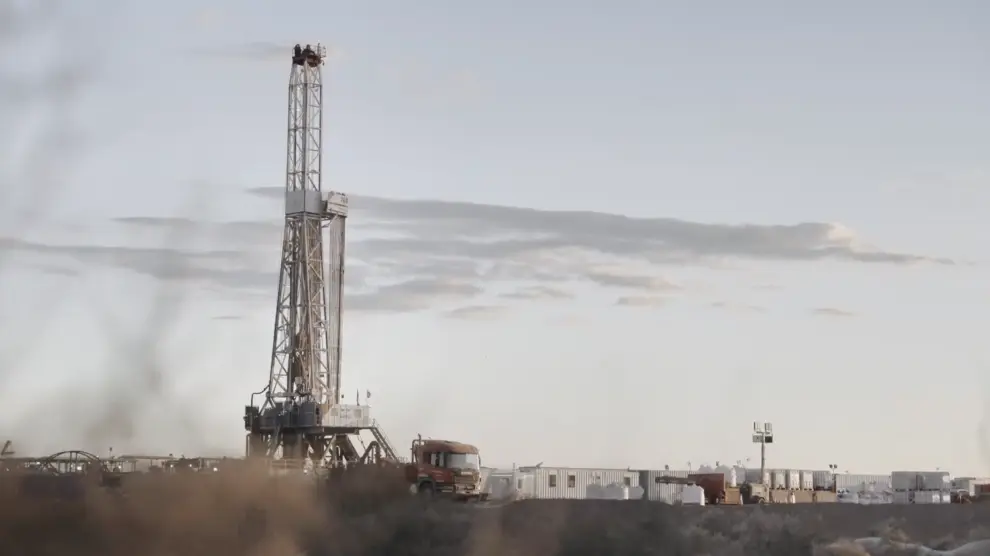
With the final CPF and connection to the trunk pipeline system, projections indicate lifting costs could fall to $5 per barrel. On that basis, each well in the block posts an initial production of around 1,600 barrels per day and an estimated cumulative recovery of between 1.2 million and 1.3 million barrels.
Against that backdrop, Rincón de Aranda accounted for $776 million of the group’s total $1.1 billion in capital expenditures in 2025. The company expects a similar level of investment this year: $771 million allocated to the block alone. The project also helped Pampa surpass, for the first time in its history, the threshold of $1 billion in annual adjusted EBITDA.
The North Zone: what upstream RIGI makes possible
The request submitted Monday represents a jump from $426 million to $4.5 billion and will focus on the northern section of the block. This part of the area, without the fiscal, customs and foreign-exchange benefits of the regime, had tighter project economics and a longer investment horizon. With the upstream expansion of RIGI, that zone now enters the equation.
Horacio Turri, Pampa’s executive vice president for Exploration and Production, made the point during the company’s fourth-quarter results presentation on March 2. The extension of the regime to production will have “a significant impact on the development of the northern zone, affecting both the ramp-up curve and the total recoverable crude.”
In that context, more than 100 additional wells are under consideration. If the application is approved, they would fall under the regime’s umbrella of fiscal stability for 30 years, a reduction in the corporate income tax rate from 35% to 25%, free access to foreign currency generated by exports and exemption from export duties starting in the third year.

Without upstream RIGI, the company’s already committed target was to reach 28,000 barrels per day by mid-2026 and a plateau of 45,000 barrels per day in 2027. With the northern zone enabled, that plateau could be sustained longer and the block’s total recoverable volumes would increase significantly.
The effect of that difference is also reflected in reserves. Proven (P1) reserves at Rincón de Aranda grew 352% during 2025, and shale resources came to represent 69% of Pampa’s total proven reserves — 296 million barrels of oil equivalent, up 28% from the previous year.
The first test of the expanded RIGI
Decree 105/2026 established that, to qualify for upstream RIGI, projects must exceed a minimum investment threshold of $600 million and involve incremental production rather than assets already in operation. The rule also requires physical segregation and traceability through independent measurement systems between volumes produced under the regime and those that are not — a significant operational requirement for a block that already has active production.
Pampa easily surpasses that threshold. With $4.5 billion committed and an asset that has already demonstrated execution capacity, Rincón de Aranda is emerging as a reference shale oil project to test how the regime functions in practice for upstream development.
Since its launch, RIGI has accumulated 10 approved projects totaling $25.479 billion, concentrated in infrastructure, liquefied natural gas and mining. Pampa’s filing is the first to take advantage of the window opened by the February decree at the time of submission.
Exports, reserves and financing logic
The project’s export profile is already visible in the numbers. About 47% of the company’s oil sales were exported in the third quarter of 2025, a share that tends to rise as production scales up and transportation infrastructure expands.
As for financing the capital expenditures, Chief Financial Officer Adolfo Zuberbuhler was explicit during the earnings call: the base plan does not contemplate new debt issuance for Rincón de Aranda. The expansion is financed with internal cash and operating cash flow — a stance that underscores the project’s financial strength but also highlights the appeal of RIGI, as its foreign-exchange benefits and lower tax burden improve returns without requiring additional leverage.
With the deadline to join the regime open until July 2027, approval of Pampa’s application will likely set the pace at which other operators with similar projects in the Neuquén Basin decide to follow the same path.