
Impact on oil prices
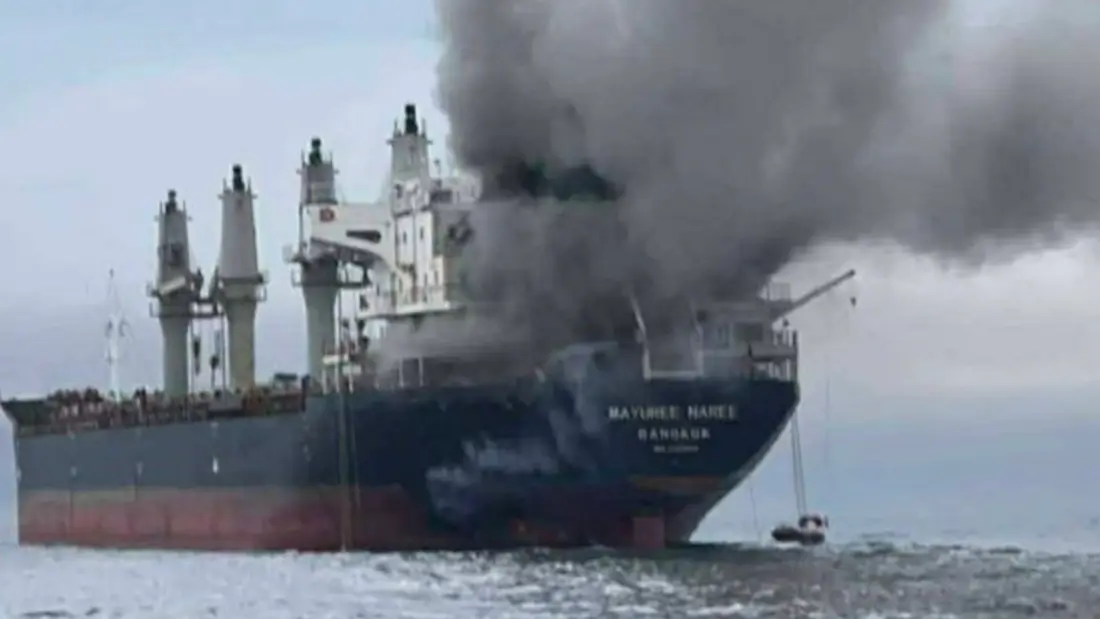
Ten days after Operation Epic Fury destroyed Iranian military and nuclear facilities and killed Ali Khamenei, the Strait of Hormuz remains technically open.
No navy has formally blocked it. There is no line of Iranian frigates physically sealing the channel. And yet, of the 138 vessels that crossed the passage daily before Feb. 28, only about 13 are now moving through it. The rest are anchored outside, waiting for instructions that never arrive.
What happened in that waterway — barely 50 kilometers wide at its narrowest point — was not a blockade. It was something more efficient, and far harder to undo.
The sequence unfolded quickly. Hours after the first strikes, Iran’s Islamic Revolutionary Guard Corps (IRGC) transmitted warnings over VHF radio to vessels in transit: none would be allowed to pass. There was no formal declaration and no recognized legal basis — the Strait is an international transit route — but the threat was concrete.
On March 1, the tanker Skylight was hit by a projectile north of Khasab, in Oman. Two Indian sailors were killed. That same day, the MKD VYOM was struck by a drone boat that caused an explosion in its engine room. Another Indian crew member did not survive.
It did not take many more incidents. Insurers processed the signal and withdrew coverage. P&I policies — the standard form of maritime liability insurance — ceased to apply to transits through the Strait starting March 5. Without insurance, no serious shipping company sends a vessel. Without vessels, the channel empties even if no one has formally closed it.
“All [Iran] had to do was several drone strikes in the vicinity of the Strait of Hormuz, and all of a sudden, insurers and shipping companies decided that it was unsafe to traverse that very narrow S-curve of that waterway," said Helima Croft, an analyst at RBC Capital Markets, speaking to NPR. “It's really an insurance-driven shutdown.”
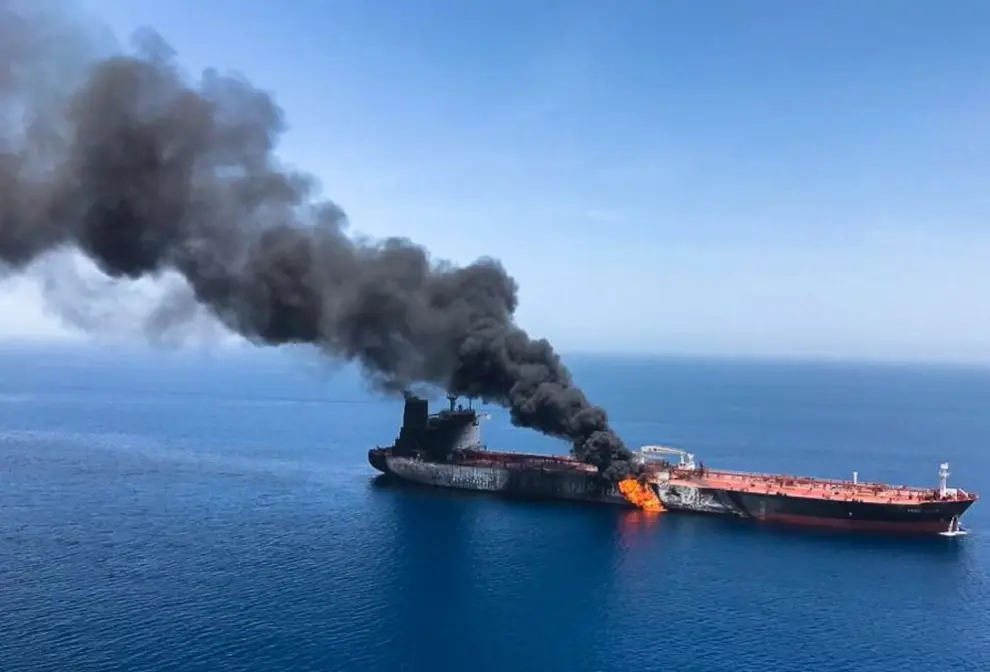
The tactical progression: from drones to mines
Iran’s conventional naval fleet has already suffered significant losses since the conflict began. But the naval arm of the Revolutionary Guard — the Islamic Revolutionary Guard Corps Navy — operates under a different doctrine: mobility, dispersion and asymmetry. Swarms of fast boats, coastal missiles and low-cost drones produced at industrial scale.
According to the Centre for Information Resilience, Iran has the capacity to manufacture around 10,000 drones per month. At that pace, pressure on the Strait could be sustained for months even if ballistic missile reserves run out earlier.
Within that framework, the next step was predictable. On Tuesday, U.S. forces sank 16 Iranian vessels identified as minelayers near the Strait after intelligence confirmed that Iran had begun deploying naval mines in the navigation channels. Reports from CNN and CBS News, citing U.S. intelligence sources, say only “a few dozen” mines have been deployed so far. The Islamic Republic retains more than 80% of its minelaying capability and an estimated stockpile of between 2,000 and 6,000 mines of various types.
The exact number matters less than the logic behind the move.
Naval mines do not need to destroy anything to be effective. They need to generate doubt. A single undetected device beneath a loaded supertanker in those narrow waters would produce a catastrophe that no shipping company, operator or insurer would want on its record. Iran’s strategy, according to defense analysts, is built on manufacturing “sustained friction” rather than seeking a decisive naval victory. A perfect minefield is not required. Uncertainty is.
The “blocker” that also exports
There is a structural tension in Iran’s position that markets are still processing. Iran exports its own crude through the same Strait it is effectively closing to others.
Shipments to China — which absorbs more than 90% of Iranian exports according to Kpler — continue. As of March 4, Tehran has allowed passage only to vessels sailing under Chinese flag or bound for Chinese ports, reflecting the political support China has offered Iran since the conflict began.

The result is something resembling a blockade with a guest list: Iran decides who enters and who does not. A full closure would damage Iran’s own economy, which depends on oil as its primary source of foreign currency.
That creates an implicit limit to escalation — but also an incentive to prolong the situation as long as crude prices remain elevated. It is the same mechanism that makes the conflict so difficult to resolve: Iran has reasons not to back down entirely and reasons not to escalate too far. In that logic, the Strait is more valuable half open than fully closed.
The U.S. dilemma: a promise and a deleted post
Tuesday afternoon in Washington, D.C., U.S. Energy Secretary Chris Wright posted on X that “the U.S. Navy successfully escorted an oil tanker through the Strait of Hormuz to ensure oil remains flowing to global markets.”
Crude prices dropped more than 17% during the session. Less than half an hour later, the post had disappeared.
White House press secretary Karoline Leavitt confirmed to reporters what military sources had already told Fox News: nothing of the sort had occurred. The United States Department of Energy attributed the episode to a video that had been “incorrectly captioned by Department of Energy staff.”
The confusion was not merely bureaucratic. It reflects a real tactical challenge. Escorting tankers through the Strait under current conditions would require maintaining a permanent convoy operation within range of coastal missiles, long-range drones and an expanding minefield.
During the Tanker War of the 1980s, the United States and the United Kingdom could assemble roughly 30 escort vessels in an environment where the threat was relatively predictable. Today, analysts at Navy Lookout estimate that at best it would be possible to run a single convoy in each direction every 14 days.
The Persian Gulf stretches nearly 800 kilometers. Supertankers move slowly. Iran has enough coastal missiles to make the transit costly in more than one sense.
Gen. Dan Caine, chairman of the Joint Chiefs of Staff, summarized the situation with unintended precision: if assigned the mission, the military would evaluate the options. The escort mission had not been assigned. The options remain under evaluation.
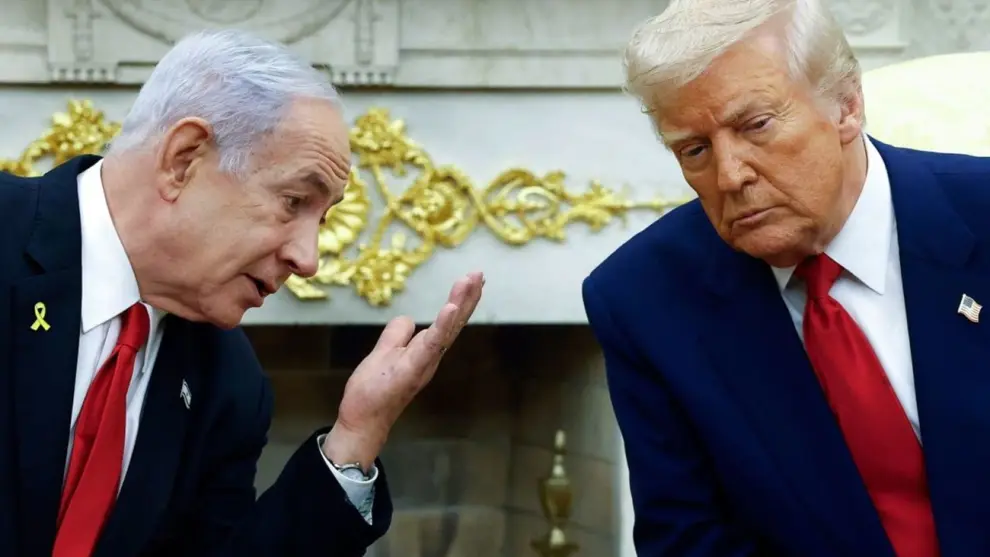
Donald Trump responded to reports confirming the mines with an ultimatum on Truth Social: if Iran does not remove them the next strike will be “twenty times harder.” Markets, accustomed to discounting presidential rhetoric in real time, barely reacted.
The market: volatility and time
Oil briefly touched $119.50 per barrel at the height of the crisis. On Wednesday it was trading in a range between $81 and $88, in a session combining signals of verbal de-escalation with confirmation of the minefield.
The U.S. Energy Information Administration projects Brent crude will remain above $95 for the next two months before easing toward $80 in the third quarter — a forecast that assumes a gradual reopening of the Strait, an assumption that now looks optimistic.
The International Energy Agency on Tuesday proposed the largest release of strategic reserves in its history: 400 million barrels. The Group of Seven holds roughly 1.1 billion barrels in total, with the United States contributing about 450 million.
Analysts at Bloomberg Intelligence estimate that a coordinated release of that magnitude would replace barely 2 million barrels per day for six months — against a real deficit of between 18 million and 20 million barrels per day. The measure buys time. It does not close the gap.
In Tehran, meanwhile, clerics in the Assembly of Experts were deliberating over who would replace Khamenei. The name of Mojtaba Khamenei, the late leader’s son, was circulating as a likely candidate, according to The New York Times. What the new leadership decides to do with the Strait — maintain it as leverage, escalate or begin to ease restrictions — is the variable models still cannot process.
The Strait of Hormuz has been technically open for ten days. And completely closed.