
Joint Venture
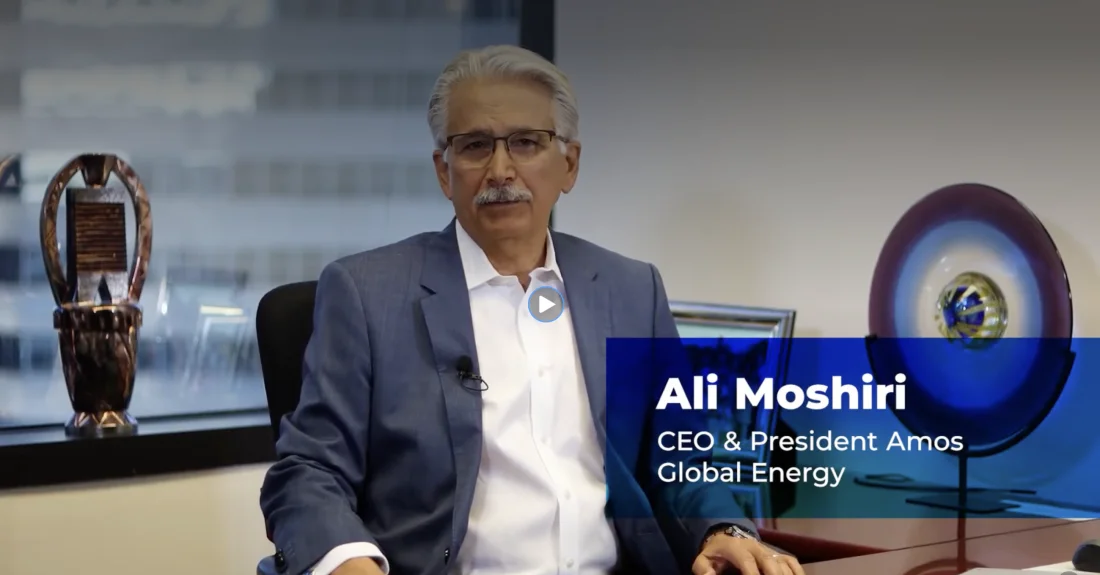
Ali Moshiri, the former president of Chevron's Africa and Latin America division, is returning to Argentina — not through Vaca Muerta this time, but through the mature conventional fields of the San Jorge Gulf Basin.
His firm, Amos Global Energy Management (AGEM), has formed a joint venture with former YPF executive Doris Capurro and Patagonian conventional operator Roch to acquire three conventional blocks in Santa Cruz province in a play built around secondary and tertiary recovery. The deal has not yet been formally announced.
The basin's Atlantic export routes — which bypass the Strait of Hormuz and the Suez Canal — give the play an additional structural dimension as Middle East supply disruption continues to push crude prices higher, making financially viable what did not close at previous price levels.
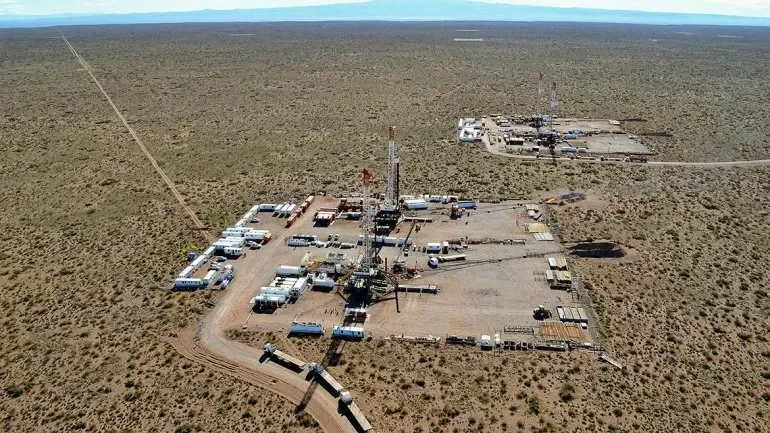
The consortium operates through Roch Proyectos S.A.U., which also includes a U.S. fund identified by Shale24 as Explorador, whose public identity could not be independently confirmed. The three blocks — Cañadón Yatel, El Guadal–Lomas del Cuy, and Cerro Piedra–Cerro Guadal Norte — sit in the northern sector of Santa Cruz province within the San Jorge Gulf Basin, Argentina's second-largest hydrocarbon-producing region after the Neuquén Basin. The blocks were among 10 mature areas YPF transferred to Fomento Minero de Santa Cruz (FOMICRUZ), Santa Cruz province's state energy and mining company, in June 2025 as part of YPF's 4x4 plan — a strategic program to concentrate capital on four core Vaca Muerta areas while divesting non-core assets. The 10 areas combined were producing approximately 27,760 bbl/d in September 2025, ahead of the production decline recorded during the operational transition period.
Moshiri's Return to Argentina
Moshiri spent 39 years at Chevron, joining as a reservoir engineer in 1978 and retiring in 2017 as president of the Africa and Latin America division. His most cited Argentina transaction is the Loma Campana joint venture — a $1.2 billion agreement with YPF signed in 2013 that became the first major international partnership to unlock Vaca Muerta's development. He founded AGEM in 2019 as a Delaware corporation based in Houston, with a mandate to identify, acquire, and operate undervalued upstream assets in Latin America where institutional capital does not reach — due to regulatory constraints, political risk perception, or deal-size thresholds.
AGEM's existing portfolio reflects that thesis. In Venezuela, the firm signed an agreement to acquire Sinopec's 32% stake in PetroParia, a joint venture operating in the Golfo de Paria, an offshore producing region in the northeastern part of the country, pending U.S. and Venezuelan regulatory approval. AGEM is also raising up to $2 billion in a new Venezuela-focused fund alongside Gramercy Funds Management, a global emerging markets investment manager, contingent on sanctions relief. A 2019 attempt to enter Vaca Muerta through Gas y Petróleo del Neuquén (GyP), Neuquén province's state oil and gas company, did not materialize. The San Jorge Gulf Basin acquisition marks a different Argentine entry point.
Capurro and Roch
Doris Capurro served as YPF's vice president for institutional affairs from 2012 to 2015 — a tenure that spanned the negotiations culminating in the Loma Campana agreement with Chevron, placing her and Moshiri on opposite sides of the same table more than a decade ago. After leaving YPF in 2015, she founded LUFT Energía, an Argentine energy investment fund that participated in structuring the first wind farm awarded under RenovAr, Argentina's competitive renewable energy auction program, operating in partnership with Pampa Energía, a diversified Argentine energy company, and Castlelake, a U.S. private equity fund. Her entry into conventional upstream represents a portfolio shift: from renewables to mature crude.
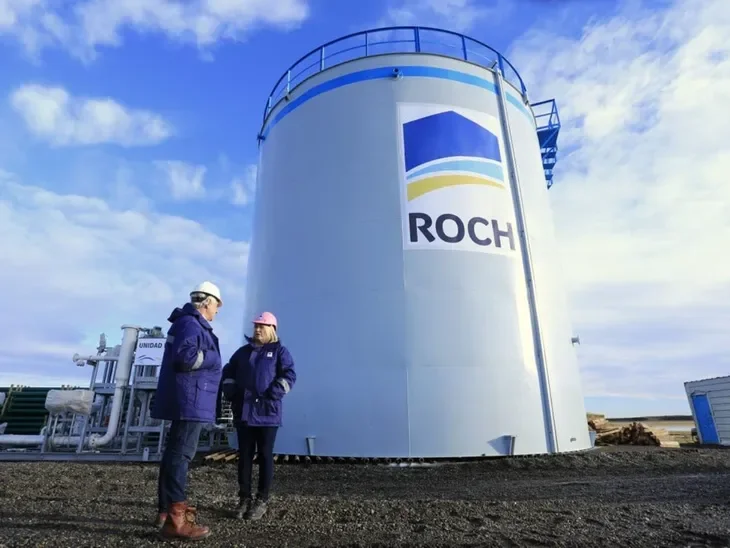
Roch brings decades of conventional operations in the basin and an active local supply chain, materially reducing mobilization and start-up costs for new drilling campaigns.
Sub-30% Recovery Factor Drives the EOR Thesis
The investment case rests on a specific technical premise. The San Jorge Gulf Basin has been in continuous production for more than a century and carries a recovery factor below 30% — meaning more than 70 of every 100 barrels originally in the reservoir remain in the subsurface, well below the 40–60% recovery factors achievable in mature basins with active EOR programs. Secondary recovery through water injection is already deployed across 56% of current basin production, maintaining reservoir pressure and displacing hydrocarbons toward producing wells.
The next step is tertiary recovery through Enhanced Oil Recovery (EOR) — principally polymer injection, which improves volumetric sweep efficiency by thickening the injected water and reducing channeling around residual oil. The technique has established precedent in the basin: polymer programs at Capsa's Diadema and Pampa del Castillo fields — Capsa being an Argentine conventional producer with one of the longest operating track records in the San Jorge Gulf Basin — and the polymer injection scheme YPF developed at Manantiales Behr, a major conventional block in the basin's central zone, before divesting it, are the basin's reference cases.
Infrastructure is installed and fully amortized across the basin — processing facilities, tank batteries, gathering systems, and more than 5,000 km of interconnected pipelines — reducing the per-well cost of incremental production relative to greenfield development. The crude is Escalante grade, a heavy conventional crude with established export markets on Argentina's Atlantic coast.
The central operational challenge is water cut management. In the basin's most mature fields, the water-oil ratio exceeds 94%, with more than 15 barrels of water produced for every barrel of crude — a ratio that makes produced-water handling a cost center as significant as drilling in mature field operations. Well selection for reinjection, cyclic injection calibration, and produced-water volume handling are the variables that determine whether a field's decline curve is arrested or accelerated.
In remarks published in January 2026, Moshiri described the partnership's origin: he and Capurro reconnected after years apart, she proposed investing in three conventional YPF fields in Santa Cruz, and the deal came together from there. "Even though I left Chevron with Vaca Muerta," he said, "I'm coming back with conventional."
For Roch Proyectos, the entry timing is deliberate. Crude prices, pushed sharply higher by the Middle East conflict, open a window that makes the EOR economics work — and Escalante crude's Atlantic routing, bypassing both the Strait of Hormuz and the Suez Canal, positions the basin's output as a supply-security play for European and Asian buyers looking to reduce exposure to Hormuz-dependent barrels.