
An oil executive close to Donald Trump
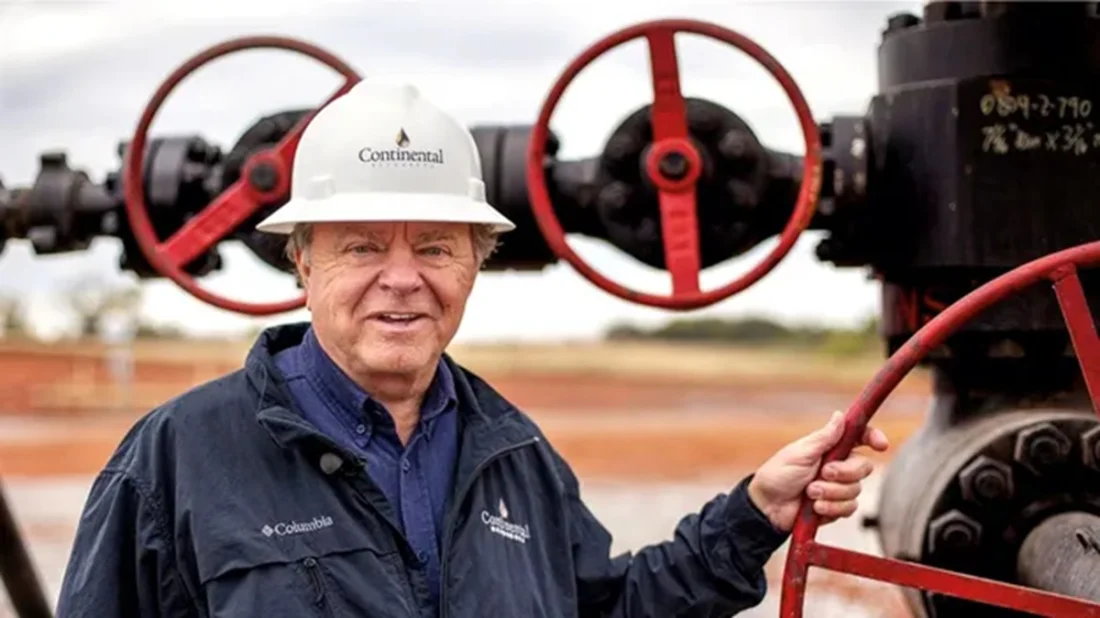
There is a line that Harold Hamm, founder of Continental Resources, repeats with the same calm regardless of the context. He said it in January, when Brent crude was trading at $59 per barrel and he announced the shutdown of his rigs in the Bakken Formation for the first time in more than three decades: "We’re price takers, as you’re aware — not price makers.”
He repeated it weeks later in New York City, during Argentina Week, in the halls of Bank of America. In an interview with Forbes ahead of his presentation, he was asked about the conflict in Iran and the surge in crude prices. "We've been through a lot of cycles over the past 60 years with our company, seen high prices and low prices, and we adapt very well," he added.
What changed between one statement and the other is not the philosophy. It is the number. At the time of writing, Brent is trading around $112 per barrel. The breakeven for an average well in the Bakken is about $58. The margin is more than $50 per barrel, and Continental Resources has yet to publicly confirm whether it has restarted drilling in North Dakota.
The rock and the country
The key to Hamm’s argument on Vaca Muerta fits into a single sentence from that same interview: “The rock doesn’t know which country it’s in.” What has changed is not the geology, which according to Hamm himself is the same as it was seven or eight years ago, when Continental first began evaluating Argentina and decided to wait. What has changed is the framework.
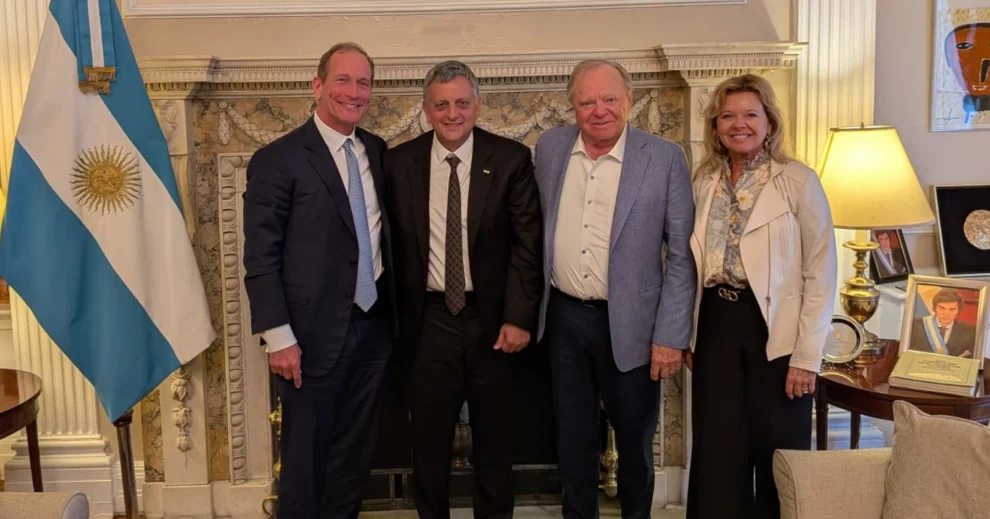
On the administration of Javier Milei, Hamm said: “The leadership in the country, the shift that's going on there, has been been great.” He added that, "you have to have the right geopolitical situation and I think the collaboration between our country and Argentina has improved greatly with the current administration here and also there in Argentina. So it's much better, and I think it bodes well for the future.” World-class geology combined with a new bilateral relationship with Washington has unlocked what the rock alone could not.
The decision is already operational. Continental Resources acquired stakes in four blocks from Pan American Energy (PAE) and signed agreements with Pluspetrol to operate in Los Toldos II Oeste.
Doug Lawler was explicit about next steps: "In the next few years we'll be working with our partner Pan-American Energy, which is a very sophisticated and talented company, to learn and to hopefully grow our position. We anticipate that with the two investments that we've made in Vaca Muerta that we will be ramping up investment and production, and we're very excited to grow the asset over time and look forward to other partnerships, other acquisitions, and further development.
Hamm confirmed it in more direct terms: "We're examining a lot of different opportunities right now, we believe in those assets, and we think there's a great deal of potential."
“It's a world-class asset”
Hamm’s strongest definition of the Neuquén formation came when he was asked about Argentina’s role in the current geopolitical context: "It'll play a big part in supplying the world, without a doubt. It's a world-class asset and it's got more potential than any place we've seen.”
Lawler had previewed that tone weeks earlier by comparing the scale of Vaca Muerta’s shale resource to that of the Permian Basin, the most prolific oil field in the United States, with projections placing Argentine production between 1.5 million and 2 million barrels per day in the coming years.
Within that framework, the company is not ruling out gas. “Our company is primarily oil. About 54% of our production is oil. But we got a lot of gas as well, so that's something we understand well and can work that side too.” Hamm said.
Argentina currently produces about 1 million barrels of oil per day, and the Continental founder sees room to keep scaling up: “There are a lot of challenges that go into production: transportation, logistics, and a lot of other things to overcome. But we're problem solvers. That's what we do. The culture of the possible is Continental.”
The Bakken question
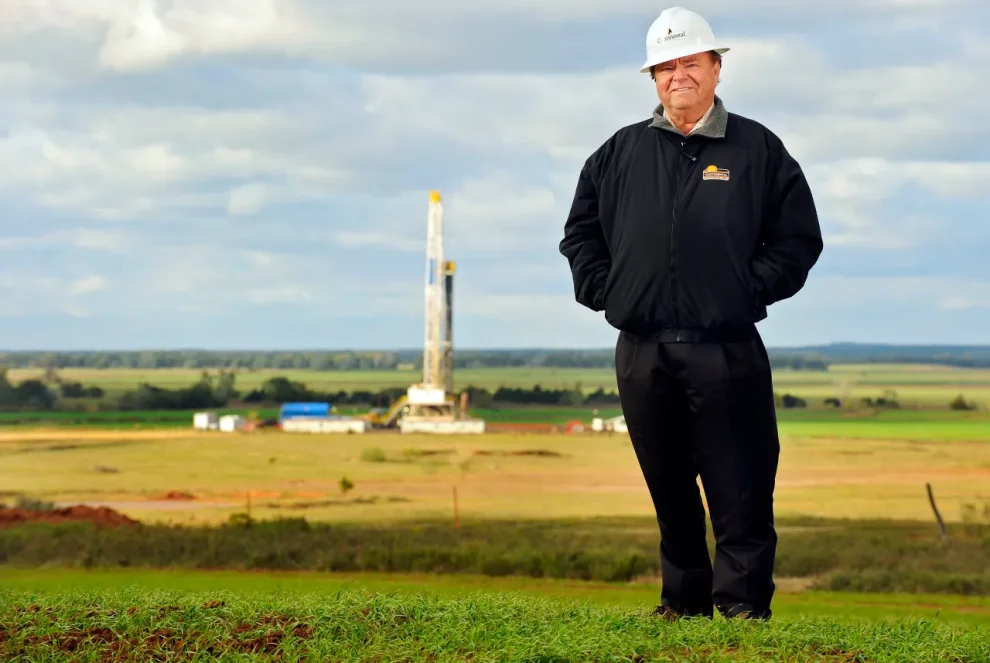
The timeline of the shutdown in North Dakota includes a detail that did not go unnoticed. Continental had three active rigs in the Bakken at the start of the year. The first was shut down in January. The other two were scheduled to go offline in March—exactly when the Strait of Hormuz was closed and crude began a surge of more than 80% in less than three weeks.
The company continued producing from its existing wells, which operate independently of new drilling. Even so, Continental is the second-largest producer in the Bakken, with roughly 16% of total output from a basin that produces about 1.2 million barrels per day.
Any restart has direct implications for North Dakota’s production and for how the market reads the response of U.S. shale producers to current prices.
With Brent at $112, the same Hamm who said “there’s no need to drill when margins disappeared” now has more than $50 per barrel in margin. He has not publicly said what he will do with it. What he did say, in New York, looking south, is that Argentina “has a long way to go” and that Continental wants to be part of that journey.