
Morning Call with Julián Guarino
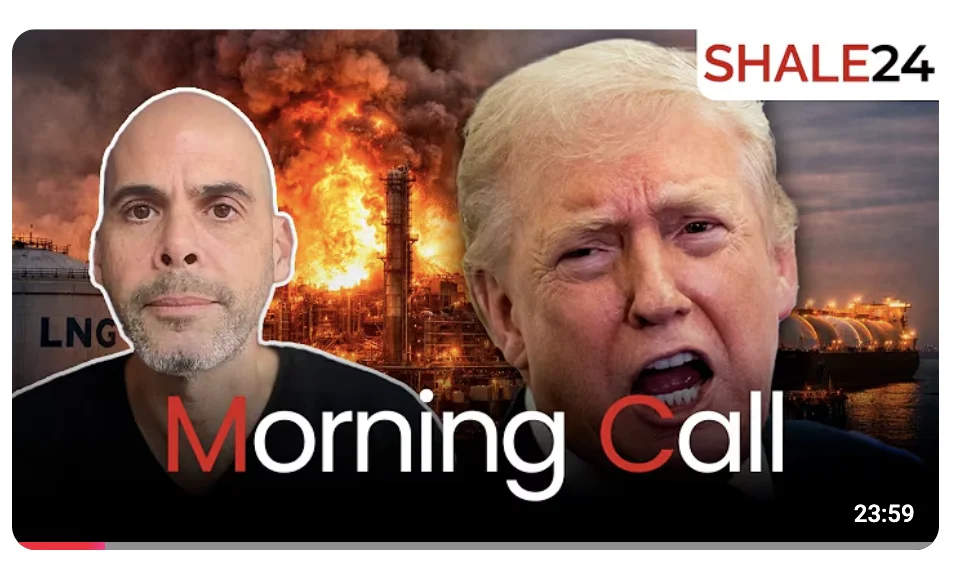
Markets have a particular way of processing uncertainty: they compress it into a base-case scenario and put a price on it. For the conflict with Iran, that base case is a short war. Goldman Sachs projects Brent crude at $85 for April, assuming three weeks of disruption in the Strait of Hormuz.
The problem, as Julián Guarino noted in Friday’s Shale24 Morning Call, is that two variables are in play and the market is treating them as one. The first is the duration of the conflict. The second is the recovery time for Gulf energy infrastructure. That second variable does not depend on when a ceasefire is reached.
Brent was trading around $110 per barrel at the start of the March 20 session, according to data from Investing.com, after hitting a high of $119 the previous day — more than $42 above its level a year earlier. The pullback from the peak followed comments by Benjamin Netanyahu about reopening the Strait.
In the Shale24 Morning Call, however, that reading was challenged: a very short-term diplomatic signal does not repair damaged liquefaction trains in Ras Laffan or restore Qatar’s export capacity within weeks.
Two variables, one price
Saad al-Kaabi, CEO of QatarEnergy, confirmed on March 19 in remarks to Reuters that damage at Ras Laffan implies 12.8 million tonnes per annum (MTPA) offline for three to five years. Wood Mackenzie estimated the same day that each additional month of disruption removes roughly 1.5% of annual global LNG availability. Those timelines do not change with a peace agreement. Physical infrastructure has its own clock.
That is compounded by damage to alternative routes. Saudi Arabia and Qatar attempted to activate export options once the Strait of Hormuz was blocked — through which about 20% of globally traded oil and LNG flows — but Iran struck infrastructure along the Red Sea to disrupt those efforts. On March 19, an Iranian missile was intercepted over Yanbu, the Saudi port that had emerged as a potential export bypass. With Hormuz blocked and Yanbu under threat, alternatives have narrowed to a list of incomplete options.
In the Shale24 Morning Call, the working estimate was up to five months to restore Gulf oil and LNG flows overall, even in a rapid ceasefire scenario. Goldman Sachs, by contrast, operates with an accelerated normalization model: if disruption in Hormuz extends to two months, its year-end forecast rises only from $71 to $93 per barrel. The gap between those two horizons — physical infrastructure versus financial modeling — is, in the Morning Call’s view, where the risk not yet fully reflected in prices lies.
The “break glass” plan — and its limits
The Trump administration is operating with full awareness of that mismatch. Its response reveals as much as the problem itself. Treasury Secretary Scott Bessent confirmed on March 19 in an interview with Fox Business that the U.S. activated what he called a “break glass” plan: it lifted sanctions on Russian oil in transit — around 130 million barrels, valid through April 11 — and said it could soon do the same for roughly 140 million barrels of Iranian crude currently at sea. According to Bessent, that Iranian volume equals 10 to 14 days of supply. Speaking to Axios, he was explicit about the logic: in essence, the U.S. would use Iranian barrels against Iran to keep prices down while the campaign continues.
In the Shale24 Morning Call, that statement was read as the clearest signal yet that Washington did not design an energy plan for a prolonged war. The U.S. is striking Iranian facilities while simultaneously easing sanctions on that same country’s oil to contain the price spike triggered by its own campaign. Nicholas Mulder, a sanctions expert at Cornell University, put it bluntly in comments to Axios: the U.S. has to reduce sanctions to offset the side effects of its own war. The relief horizon for those measures is measured in weeks. The structural damage to Gulf infrastructure is measured in months and years.
The line Israel crossed — and what it triggered
On March 18, Israel struck South Pars, the world’s largest natural gas field according to Iran International, shared between Iran and Qatar in the Persian Gulf. It was the first direct attack on production infrastructure since the conflict began on Feb. 28, crossing an implicit line both sides had respected until then. Trump said on Truth Social that the U.S. “knew nothing” about the strike, promised Israel would not hit South Pars again and threatened to destroy the field entirely if Iran continued attacking Qatar — although The Wall Street Journal and NBC News cited sources contradicting Washington’s account of prior knowledge.
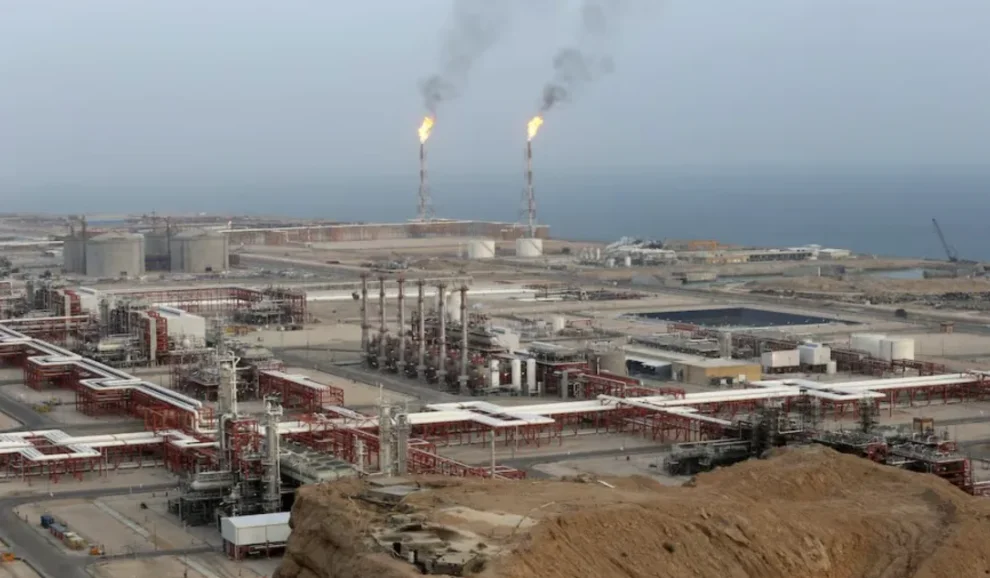
Iran’s retaliation was immediate: strikes on Ras Laffan in Qatar, refineries in Riyadh, and facilities in the United Arab Emirates and Kuwait. The Shale24 Morning Call emphasized that the escalation was not only military but also market-driven: Iran demonstrated it can internationalize the costs of war by targeting infrastructure in third countries not directly involved in the conflict. Qatar, Saudi Arabia and the UAE are paying the price for a war they did not start.
Europe’s winter as a parallel clock
A third vector highlighted in the Shale24 Morning Call is Europe. With Ras Laffan offline for years and the Strait of Hormuz blocked, the global LNG market is operating without redundancy. Europe’s seasonal storage refill period runs from April through October. If Qatar does not return to production before that cycle, Europe could enter the winter of 2026-2027 with insufficient reserves, according to the Shale24 analysis.
The Dutch gas benchmark and the Asian LNG benchmark JKM rose nearly 50% and 39%, respectively, in a single session following Qatar’s first force majeure declaration on March 2. These are not isolated panic spikes — they reflect a market beginning to recognize that structural LNG supply has changed. What the Shale24 Morning Call adds is that this recognition remains incomplete. The market is pricing a war. It is not yet fully pricing infrastructure that takes years to rebuild.
Brent fell from $119 to $105 on March 19 after Netanyahu said Israel was helping reopen the Strait. The price reacted to the diplomatic signal. Qatar’s infrastructure, however, remains unchanged.